
Before Memmo my notes were scattered across PDFs. Now a workspace pulls everything into one place — I see exactly what's still left to study.
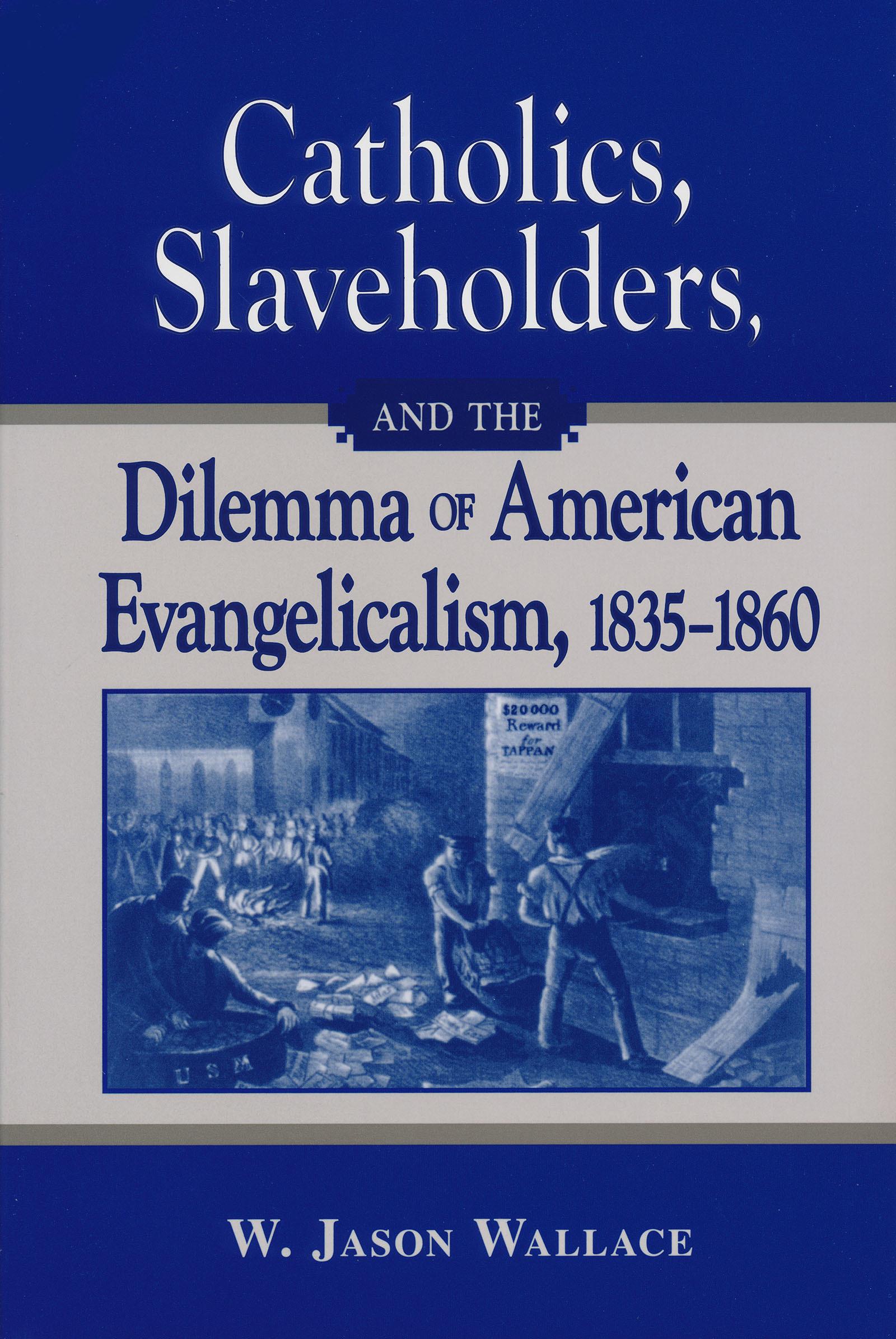
Although slaveholding southerners and Catholics in general had little in common, both groups found themselves relentlessly attacked in the northern evangelical press during the decades leading up to the Civil War. In Catholics, Slaveholders, and the Dilemma of American Evangelicalism, 1835-1860, W. Jason Wallace skillfully examines sermons, books, newspaper articles, and private correspondence of members of three antebellum groups—northern evangelicals, southern evangelicals, and Catholics—and argues that the divisions among them stemmed, at least in part, from disagreements over the role that religious convictions played in a free society.
Focusing on journals such as The Downfall of Babylon, Zion's Herald, The New York Evangelist, and The New York Observer, Wallace argues that northern evangelicals constructed a national narrative after their own image and, in the course of vigorous promotion of that narrative, attacked what they believed was the immoral authoritarianism of both the Catholic and the slaveholder. He then examines the response of both southerners and Catholics to northern evangelical attacks. As Wallace shows, leading Catholic intellectuals interpreted and defended the contributions made by the Catholic Church to American principles such as religious liberty and the separation of church and state. Proslavery southern evangelicals, while sharing with evangelicals in the North the belief that the United States was founded on Protestant values, rejected the attempts by northern evangelicals to associate Christianity with social egalitarianism and argued that northern evangelicals compromised both the Bible and Protestantism to fit their ideal of a good society. The American evangelical dilemma arose from conflicting opinions over what it meant to be an American and a Christian.
Before Memmo my notes were scattered across PDFs. Now a workspace pulls everything into one place — I see exactly what's still left to study.
Memmo's summaries are gold before exams. I don't have to re-read 800 pages two weeks before — just the important parts.
The AI chat has saved me the night before an exam more than once. I just keep asking until I get it — no waiting on a study group to reply.
The quizzes hit exactly what I need to know. Memmo tracks what I get stuck on — so I only practice what's worth it.
Flashcards with spaced repetition are magic. Memmo knows when I'm about to forget something and brings it back.
The AI podcasts are my favorite. I listen on my way to school and get a recap without sitting at a computer.

Handbok i kvalitativa metoder
281 kr

Hållbar utveckling: en introduktion för ingenjörer och andra problemlösare
334 kr

Brymans Samhällsvetenskapliga metoder
390 kr

Projektledning
491 kr

Den orättvisa hälsan: om socioekonomiska skillnader i hälsa och livslängd
326 kr

Vetenskapsteori för nybörjare
196 kr

Organizational Leadership
429 kr

På väg mot läraryrket
172 kr

Det sociala livet i skolan: Socialpsykologiska perspektiv
253 kr

Betygsättningens didaktik
151 kr

Personality
402 kr

Studying Leadership
404 kr

Managing Innovation
477 kr

Introduktion till samhällsvetenskaplig metod
347 kr

The Psychology of Sex and Gender
698 kr

Evidens och kunskap för socialt arbete
207 kr

Introduction to Leadership
605 kr