
Before Memmo my notes were scattered across PDFs. Now a workspace pulls everything into one place — I see exactly what's still left to study.
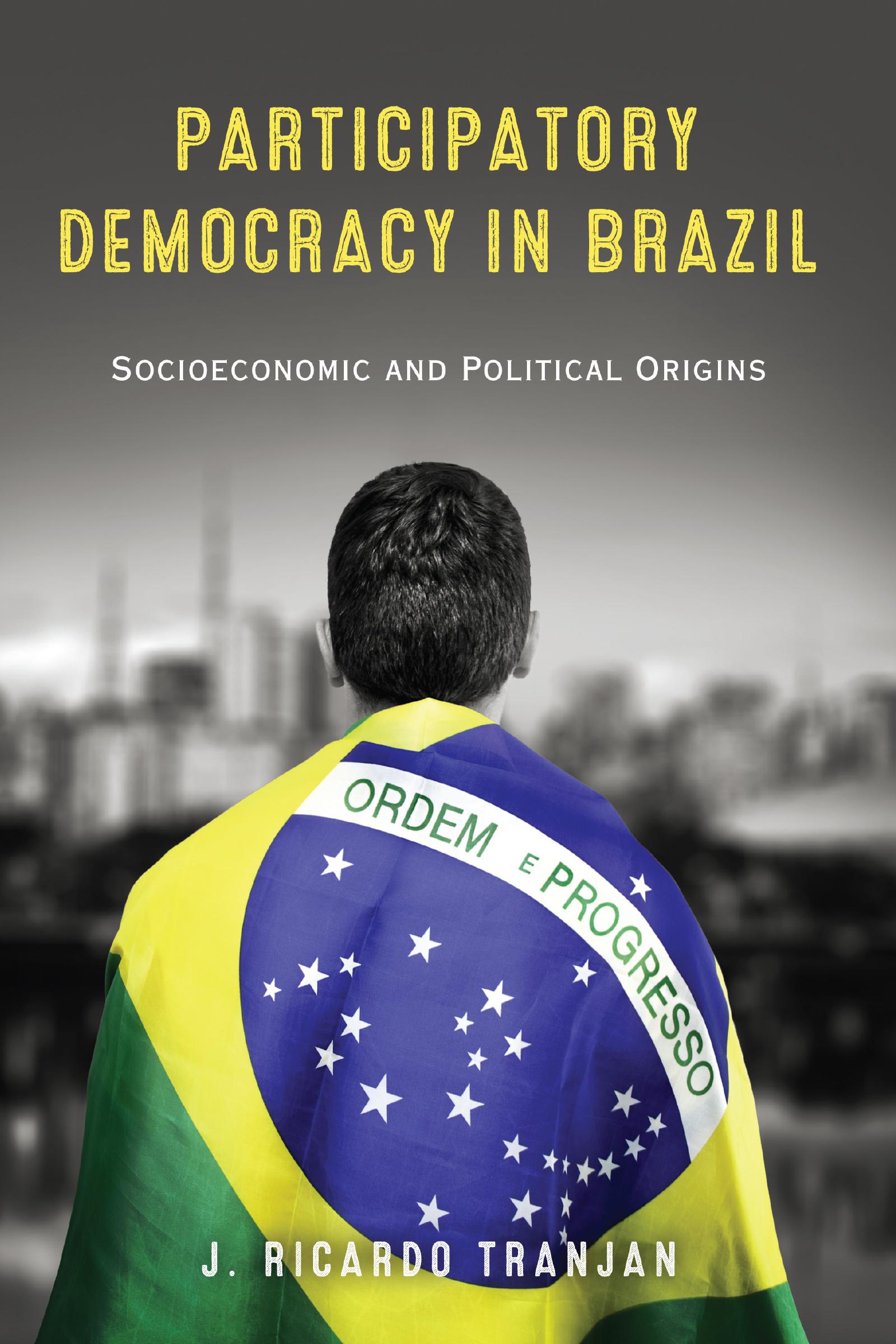
The largely successful trajectory of participatory democracy in post-1988 Brazil is well documented, but much less is known about its origins in the 1970s and early 1980s. In Participatory Democracy in Brazil: Socioeconomic and Political Origins, J. Ricardo Tranjan recounts the creation of participatory democracy in Brazil. He positions the well-known Porto Alegre participatory budgeting at the end of three interrelated and partially overlapping processes: a series of incremental steps toward broader political participation taking place throughout the twentieth century; short-lived and only partially successful attempts to promote citizen participation in municipal administration in the 1970s; and setbacks restricting direct citizen participation in the 1980s. What emerges is a clearly delineated history of how socioeconomic contexts shaped Brazil’s first participatory administrations.
Tranjan first examines Brazil’s long history of institutional exclusion of certain segments of the population and controlled inclusion of others, actions that fueled nationwide movements calling for direct citizen participation in the 1960s. He then presents three case studies of municipal administrations in the late 1970s and early 1980s that foreground the impact of socioeconomic factors in the emergence, design, and outcome of participatory initiatives. The contrast of these precursory experiences with the internationally known 1990s participatory models shows how participatory ideals and practices responded to the changing institutional context of the 1980s. The final part of his analysis places developments in participatory discourses and practices in the 1980s within the context of national-level political-institutional changes; in doing so, he helps bridge the gap between the local-level participatory democracy and democratization literatures.
Before Memmo my notes were scattered across PDFs. Now a workspace pulls everything into one place — I see exactly what's still left to study.
Memmo's summaries are gold before exams. I don't have to re-read 800 pages two weeks before — just the important parts.
The AI chat has saved me the night before an exam more than once. I just keep asking until I get it — no waiting on a study group to reply.
The quizzes hit exactly what I need to know. Memmo tracks what I get stuck on — so I only practice what's worth it.
Flashcards with spaced repetition are magic. Memmo knows when I'm about to forget something and brings it back.
The AI podcasts are my favorite. I listen on my way to school and get a recap without sitting at a computer.

Handbok i kvalitativa metoder
281 kr

Hållbar utveckling: en introduktion för ingenjörer och andra problemlösare
334 kr

Brymans Samhällsvetenskapliga metoder
390 kr

Projektledning
491 kr

Den orättvisa hälsan: om socioekonomiska skillnader i hälsa och livslängd
326 kr

Organizational Leadership
429 kr

Vetenskapsteori för nybörjare
196 kr

På väg mot läraryrket
172 kr

Det sociala livet i skolan: Socialpsykologiska perspektiv
253 kr

Betygsättningens didaktik
151 kr

Personality
402 kr

Studying Leadership
404 kr

Managing Innovation
477 kr

Introduktion till samhällsvetenskaplig metod
347 kr

The Psychology of Sex and Gender
698 kr

Evidens och kunskap för socialt arbete
207 kr

Introduction to Leadership
605 kr