
Before Memmo my notes were scattered across PDFs. Now a workspace pulls everything into one place — I see exactly what's still left to study.
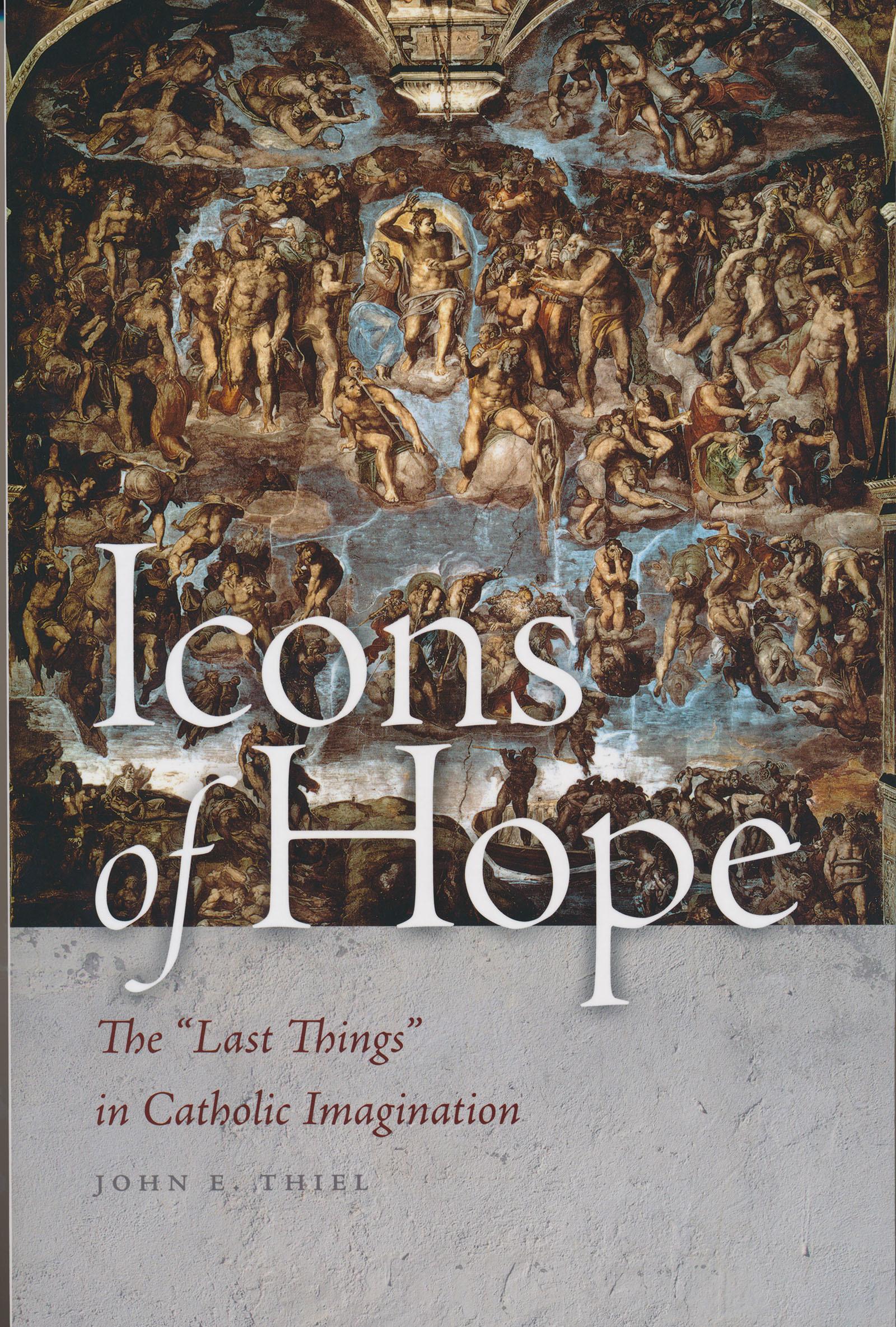
In Icons of Hope: The “Last Things” in Catholic Imagination, John Thiel, one of the most influential Catholic theologians today, argues that modern theologians have been unduly reticent in their writing about “last things”: death, judgment, heaven, and hell. Beholden to a historical-critical standard of interpretation, they often have been reluctant to engage in eschatological reflection that takes the doctrine of the “last things” seriously as real events that Christians are obliged to imagine meaningfully and to describe with some measure of faithful coherence. Modern theology’s religious pluralism leaves room for a speculative style of interpretation that issues in icons of hope—theological portraits of resurrected life that can inform and inspire the life of faith.
Icons of Hope presents an interpretation of heavenly life, the Last Judgment, and the communion of the saints that is shaped by a view of the activity of the blessed dead consistent with Christian belief in the resurrection of the body, namely, the view that the blessed dead in heaven continue to be eschatologically engaged in the redemptive task of forgiveness. Thiel offers a revision of the traditional Catholic imaginary regarding judgment and life after death that highlights the virtuous actions of all the saints in their heavenly response to the vision of God. These constructive efforts are fostered by Thiel’s conclusions on the disappearance of the concept of purgatory in large segments of contemporary Catholic belief, a disappearance attributable to the emergence of a noncompetitive spirituality in postconciliar Catholicism, which has eclipsed the kinds of religious sensibilities that made belief in purgatory a practice in earlier centuries. This noncompetitive spirituality—one that recovers traditional Pauline sensibilities on the gratuitousness of grace—encourages an eschatological imaginary of mutual, ongoing forgiveness in the communion of the saints in this life and in the life to come.
Before Memmo my notes were scattered across PDFs. Now a workspace pulls everything into one place — I see exactly what's still left to study.
Memmo's summaries are gold before exams. I don't have to re-read 800 pages two weeks before — just the important parts.
The AI chat has saved me the night before an exam more than once. I just keep asking until I get it — no waiting on a study group to reply.
The quizzes hit exactly what I need to know. Memmo tracks what I get stuck on — so I only practice what's worth it.
Flashcards with spaced repetition are magic. Memmo knows when I'm about to forget something and brings it back.
The AI podcasts are my favorite. I listen on my way to school and get a recap without sitting at a computer.

Handbok i kvalitativa metoder
281 kr

Hållbar utveckling: en introduktion för ingenjörer och andra problemlösare
334 kr

Brymans Samhällsvetenskapliga metoder
390 kr

Projektledning
491 kr

Den orättvisa hälsan: om socioekonomiska skillnader i hälsa och livslängd
326 kr

Vetenskapsteori för nybörjare
196 kr

Organizational Leadership
429 kr

På väg mot läraryrket
172 kr

Det sociala livet i skolan: Socialpsykologiska perspektiv
253 kr

Betygsättningens didaktik
151 kr

Personality
402 kr

Studying Leadership
404 kr

Managing Innovation
477 kr

Introduktion till samhällsvetenskaplig metod
347 kr

The Psychology of Sex and Gender
698 kr

Evidens och kunskap för socialt arbete
207 kr

Introduction to Leadership
605 kr