
Before Memmo my notes were scattered across PDFs. Now a workspace pulls everything into one place — I see exactly what's still left to study.
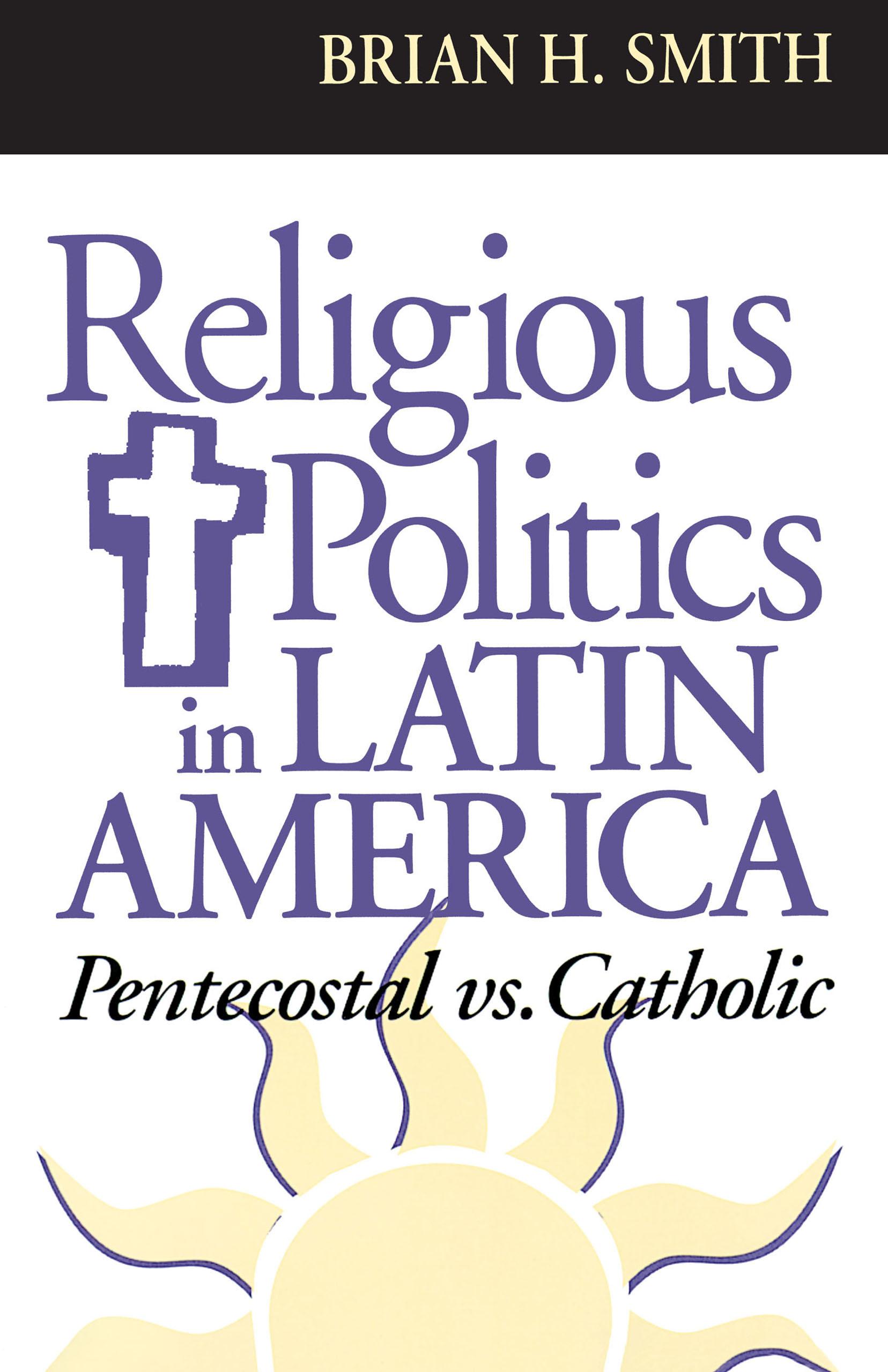
Brian H. Smith's book surveys recent religious and political developments in Latin American Christianity, especially in the rapidly growing Pentecostal churches and in Catholicism. He finds that despite efforts by the Vatican to make the Latin American Church less involved in politics (in the wake of liberation theology) by the papal appointment of a whole new generation of conservative bishops since 1980, Catholicism is still very much a political force throughout the region.
Catholic bishops, in spite of their conservative religious ideology, have felt obligated to preach the social doctrine of the Church and have vigorously denounced new economic models for enriching a minority of the population at the cost of the majority who are poor. Bishops also have denounced corruption in governments that has grown to epidemic proportions in recent years, and have strongly opposed legislative proposals that are anti-Catholic.
Regardless of these efforts by Catholic prelates to maintain government support for the Church's institutions and its traditional moral concerns in law, Protestantism - especially in Pentecostal denominations among low-income sectors - has grown at a significant rate in the past twenty years.
Although traditionally reluctant to involve themselves in politics, Pentecostals in recent years have become more active either by forming new Christian parties or by joining or supporting existing political movements. Their political agenda overlaps in some areas with that of Catholics. These shared concerns could lead to a coalition between Catholic and Pentecostal leaders that could have a real impact on public policy, given that over ninety percent of the population is now affiliated with one of these two denominations.
However, Pentecostal religious and political leaders are also pushing publicly for full separation of church and state (which exists now only in Cuba and Mexico) and for all religions to have equal status in law. Both these similarities and the differences in the political agenda of Catholics and Pentecostals could complicate public policy debate in the years ahead and certainly short-circuit any attempts to remove religion as a significant, and sometimes divisive, influence in politics in newly constituted liberal democracies in Latin America.
Before Memmo my notes were scattered across PDFs. Now a workspace pulls everything into one place — I see exactly what's still left to study.
Memmo's summaries are gold before exams. I don't have to re-read 800 pages two weeks before — just the important parts.
The AI chat has saved me the night before an exam more than once. I just keep asking until I get it — no waiting on a study group to reply.
The quizzes hit exactly what I need to know. Memmo tracks what I get stuck on — so I only practice what's worth it.
Flashcards with spaced repetition are magic. Memmo knows when I'm about to forget something and brings it back.
The AI podcasts are my favorite. I listen on my way to school and get a recap without sitting at a computer.

Handbok i kvalitativa metoder
281 kr

Hållbar utveckling: en introduktion för ingenjörer och andra problemlösare
334 kr

Brymans Samhällsvetenskapliga metoder
390 kr

Projektledning
491 kr

Den orättvisa hälsan: om socioekonomiska skillnader i hälsa och livslängd
326 kr

Vetenskapsteori för nybörjare
196 kr

Organizational Leadership
429 kr

På väg mot läraryrket
172 kr

Det sociala livet i skolan: Socialpsykologiska perspektiv
253 kr

Betygsättningens didaktik
151 kr

Personality
402 kr

Studying Leadership
404 kr

Managing Innovation
477 kr

Introduktion till samhällsvetenskaplig metod
347 kr

The Psychology of Sex and Gender
698 kr

Evidens och kunskap för socialt arbete
207 kr

Introduction to Leadership
605 kr