
Before Memmo my notes were scattered across PDFs. Now a workspace pulls everything into one place — I see exactly what's still left to study.
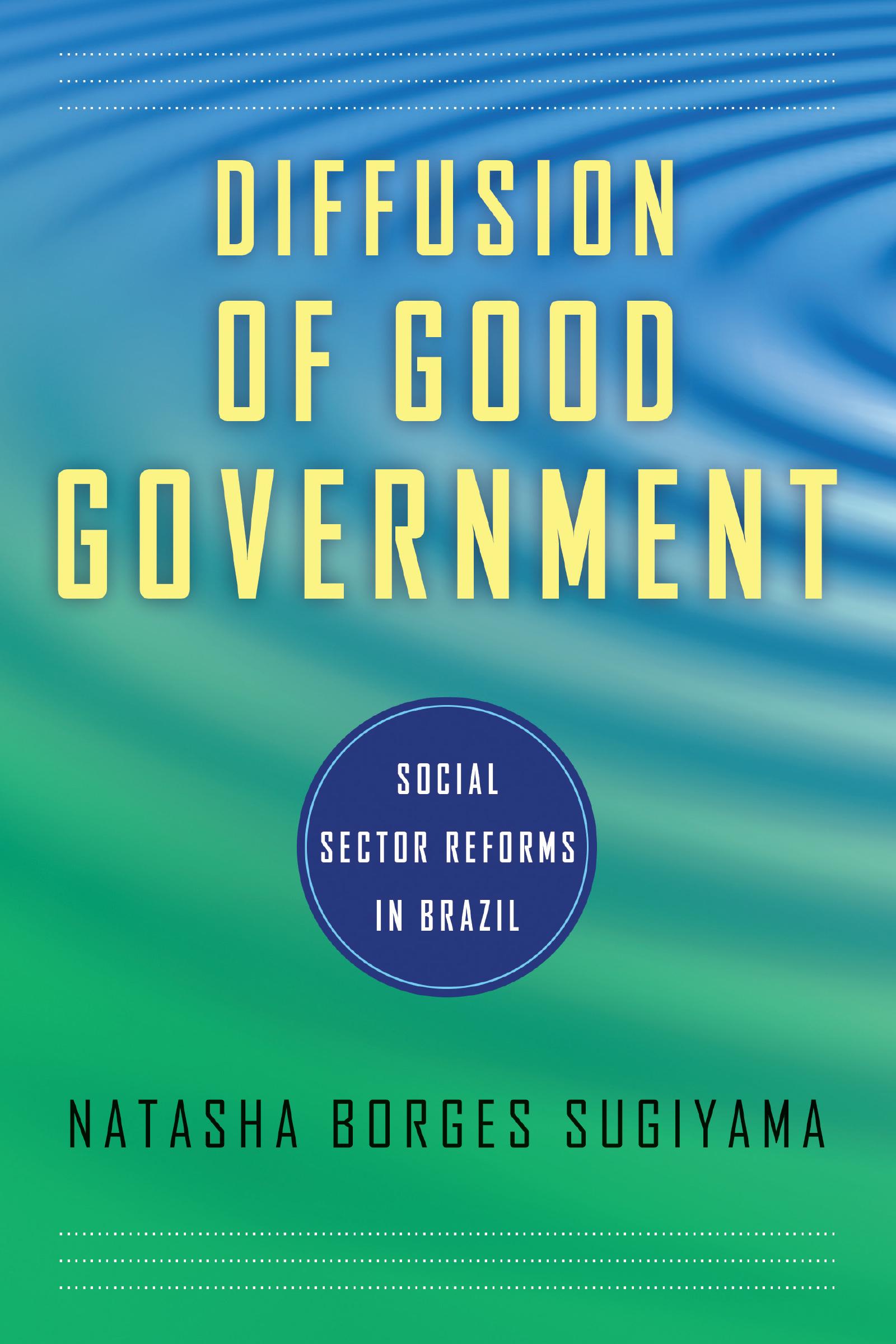
One of the most fundamental questions for social scientists involves diffusion events; simply put, how do ideas spread and why do people embrace them? In Diffusion of Good Government: Social Sector Reforms in Brazil, Natasha Borges Sugiyama examines why innovations spread across political territories and what motivates politicians to adopt them.
Sugiyama does so from the vantage point of Brazilian politics, a home to innovative social sector reforms intended to provide the poor with access to state resources. Since the late 1980s, the country has undergone major policy transformations as local governments have gained political, fiscal, and administrative autonomy. For the poor and other vulnerable groups, local politics holds special importance: municipal authorities provide essential basic services necessary for their survival, including social assistance, education, and health care. Brazil, with over 5,000 municipalities with a wide variety of political cultures and degrees of poverty, thus provides ample opportunities to examine the spread of innovative programs to assist such groups.
Sugiyama delves into the politics of social sector reforms by examining the motivations for emulating well-regarded programs. To uncover the mechanisms of diffusion, her analysis contrasts three paradigmatic models for how individuals choose to allocate resources: by advancing political self-interest to gain electoral victories; by pursuing their ideological commitments for social justice; or by seeking to demonstrate adherence to the professional norms of their fields. Drawing on a mixed-method approach that includes extensive field research and statistical analysis on the spread of model programs in education (especially Bolsa Escola, a school grant program) and health (Programa Saúde da Família, a family health program), she concludes that ideological convictions and professional norms were the main reasons why mayors adopted these programs, with electoral incentives playing a negligible role.
Before Memmo my notes were scattered across PDFs. Now a workspace pulls everything into one place — I see exactly what's still left to study.
Memmo's summaries are gold before exams. I don't have to re-read 800 pages two weeks before — just the important parts.
The AI chat has saved me the night before an exam more than once. I just keep asking until I get it — no waiting on a study group to reply.
The quizzes hit exactly what I need to know. Memmo tracks what I get stuck on — so I only practice what's worth it.
Flashcards with spaced repetition are magic. Memmo knows when I'm about to forget something and brings it back.
The AI podcasts are my favorite. I listen on my way to school and get a recap without sitting at a computer.

Handbok i kvalitativa metoder
281 kr

Hållbar utveckling: en introduktion för ingenjörer och andra problemlösare
334 kr

Brymans Samhällsvetenskapliga metoder
390 kr

Projektledning
491 kr

Den orättvisa hälsan: om socioekonomiska skillnader i hälsa och livslängd
326 kr

Vetenskapsteori för nybörjare
196 kr

Organizational Leadership
429 kr

På väg mot läraryrket
172 kr

Det sociala livet i skolan: Socialpsykologiska perspektiv
253 kr

Betygsättningens didaktik
151 kr

Personality
402 kr

Studying Leadership
404 kr

Managing Innovation
477 kr

Introduktion till samhällsvetenskaplig metod
347 kr

The Psychology of Sex and Gender
698 kr

Evidens och kunskap för socialt arbete
207 kr

Introduction to Leadership
605 kr