
Before Memmo my notes were scattered across PDFs. Now a workspace pulls everything into one place — I see exactly what's still left to study.
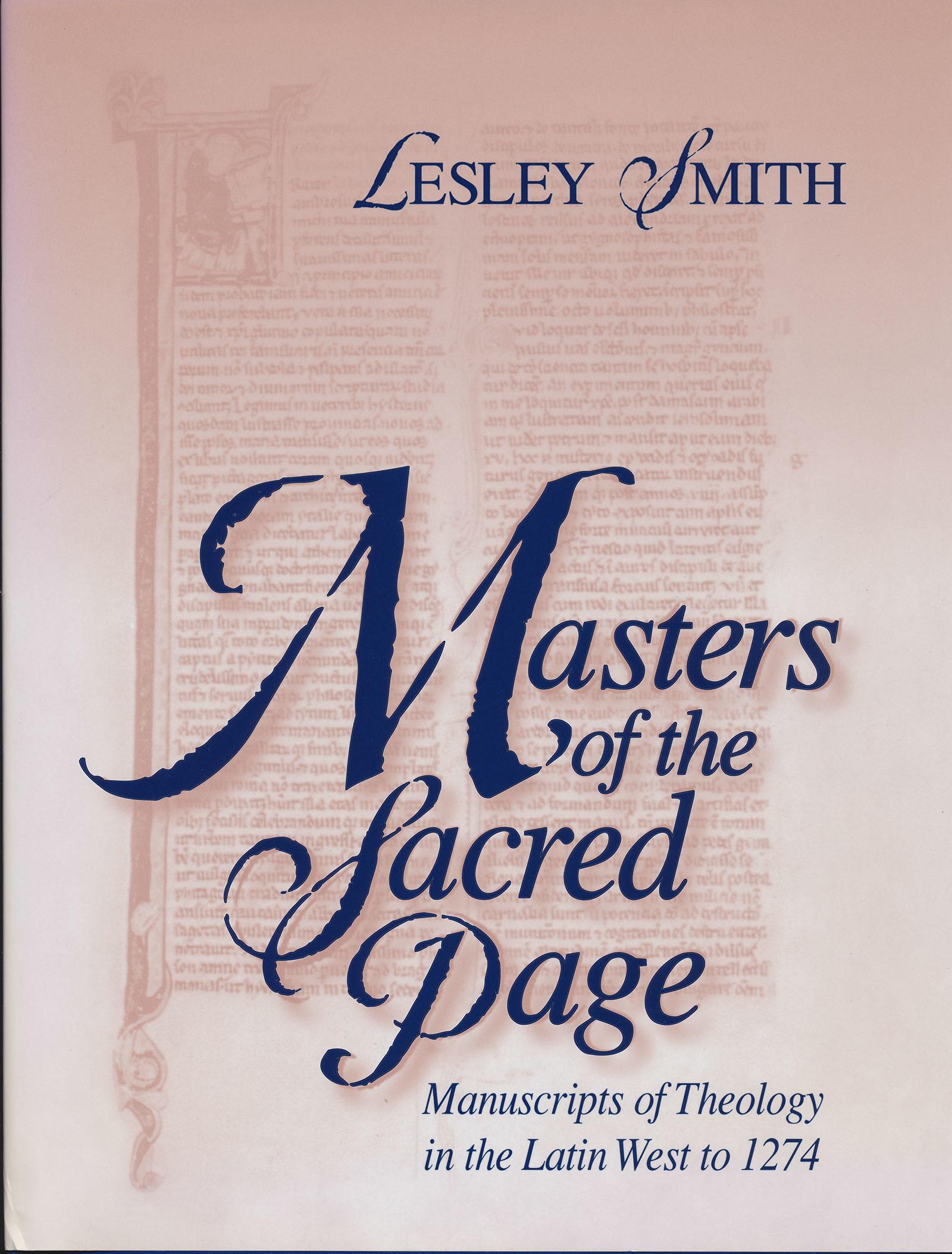
Starting with the premise that the history of a medieval subject cannot be properly written "without recourse to the materials it produced," Lesley Smith's Masters of the Sacred Page provides an illuminating study of theology in the Middle Ages. She focuses on the dramatic transformations of the discipline in the twelfth century and uses a collection of contemporary manuscripts as a guide to its changes and developments.
Smith points out that the medieval masters of theology had a much wider view of their subject than the modern academic tendency for neatness and division can easily admit, and she places their discipline squarely within the rapidly evolving intellectual and educational context of the twelfth-century university.
Her approach avoids two of the most common weaknesses of modern historical studies of medieval theology. In the first place, those histories have a tendency to be distorted by a reliance on easily available printed editions of medieval texts, the bulk of which are summae and other logical, systematic treatments. This preponderance, however, often reflects the concerns and interests of nineteenth- and twentieth-century editors more than it does the medieval masters. Biblical commentaries, sermons, and manuals for pastoral use have only recently begun to be edited and printed in numbers reflecting their importance and widespread use in the Middle Ages; Smith includes such material in her study.
In the second place, traditional histories have a tendency to remove the study of theology from the actual environment of the medieval university and therefore fail to account for the complex relations between theology, the arts, and the burgeoning disciplines of medicine and law. By refusing to follow this trend, Smith has greatly improved our awareness of the situation of medieval theology.
Using the manuscript books themselves as witnesses, Smith shows how theology competed with other disciplines for students (as well as teachers), how it attempted to define itself, and how it cooperated with other disciplines to foster new development in book technology—and new traditions in the social and intellectual culture of the medieval university.
Before Memmo my notes were scattered across PDFs. Now a workspace pulls everything into one place — I see exactly what's still left to study.
Memmo's summaries are gold before exams. I don't have to re-read 800 pages two weeks before — just the important parts.
The AI chat has saved me the night before an exam more than once. I just keep asking until I get it — no waiting on a study group to reply.
The quizzes hit exactly what I need to know. Memmo tracks what I get stuck on — so I only practice what's worth it.
Flashcards with spaced repetition are magic. Memmo knows when I'm about to forget something and brings it back.
The AI podcasts are my favorite. I listen on my way to school and get a recap without sitting at a computer.

Handbok i kvalitativa metoder
281 kr

Hållbar utveckling: en introduktion för ingenjörer och andra problemlösare
334 kr

Brymans Samhällsvetenskapliga metoder
390 kr

Projektledning
491 kr

Den orättvisa hälsan: om socioekonomiska skillnader i hälsa och livslängd
326 kr

Vetenskapsteori för nybörjare
196 kr

Organizational Leadership
429 kr

På väg mot läraryrket
172 kr

Det sociala livet i skolan: Socialpsykologiska perspektiv
253 kr

Betygsättningens didaktik
151 kr

Personality
402 kr

Studying Leadership
404 kr

Managing Innovation
477 kr

Introduktion till samhällsvetenskaplig metod
347 kr

The Psychology of Sex and Gender
698 kr

Evidens och kunskap för socialt arbete
207 kr

Introduction to Leadership
605 kr