
Before Memmo my notes were scattered across PDFs. Now a workspace pulls everything into one place — I see exactly what's still left to study.
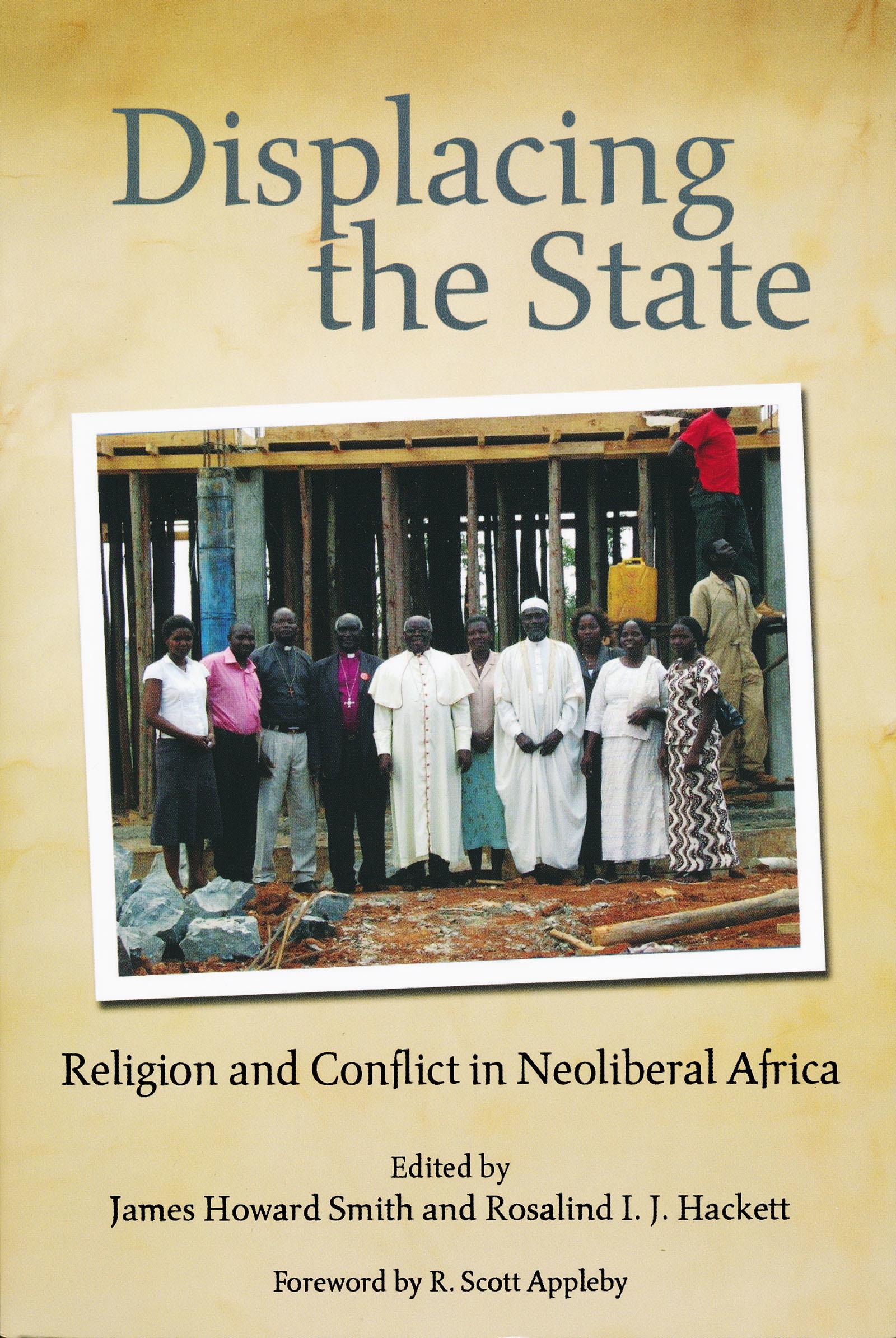
In colonial Africa, Christianity has often supported, sustained, and legitimated a violent process of governance. More recently, however, following decades of violence and oppression, churches and religious organizations have mobilized African publics against corrupt and abusive regimes and facilitated new forms of reconciliation and cooperation. It is the purpose of Displacing the State: Religion and Conflict in Neoliberal Africa to illustrate the nature of religion's ambivalent power in Africa while suggesting new directions in the study of religion, conflict, and peace studies, with a specific focus on sub-Saharan Africa.
As the editors make clear, most of the literature on conflict and peacebuilding in Africa has been concerned with dramatic conflicts such as genocide and war. In these studies, "conflict"usually means a violent clash between parties with opposing interests, while "peace" implies reconciliation and cooperation between these parties, usually with a view to achieving a social order predicated on the idea of the sovereign national state whose hegemony is viewed as normative. The contributors argue that this perspective is inadequate for understanding the nature, depth, and persistence of conflict in Africa. In contrast, the chapters in this volume adopt an ethnographic approach, often focusing on mundane manifestations of both conflict and peace, and in so doing draw attention to the ambiguities and ambivalences of conflict and peace in everyday life. The volume therefore focuses our attention on the extent to which everyday conflict contributes to subsequently larger and more highly visible clashes.
Displacing the State makes two important contributions to the study of religion, conflict, and peacebuilding. First, it shows how peace is conceptualized and negotiated in daily life, often in ways that are counterintuitive and anything but peaceful. Second, the volume uses African case studies to confront assumptions about the nature of the relationships among religion, conflict, and peace.
Before Memmo my notes were scattered across PDFs. Now a workspace pulls everything into one place — I see exactly what's still left to study.
Memmo's summaries are gold before exams. I don't have to re-read 800 pages two weeks before — just the important parts.
The AI chat has saved me the night before an exam more than once. I just keep asking until I get it — no waiting on a study group to reply.
The quizzes hit exactly what I need to know. Memmo tracks what I get stuck on — so I only practice what's worth it.
Flashcards with spaced repetition are magic. Memmo knows when I'm about to forget something and brings it back.
The AI podcasts are my favorite. I listen on my way to school and get a recap without sitting at a computer.

Handbok i kvalitativa metoder
281 kr

Hållbar utveckling: en introduktion för ingenjörer och andra problemlösare
334 kr

Brymans Samhällsvetenskapliga metoder
390 kr

Projektledning
491 kr

Den orättvisa hälsan: om socioekonomiska skillnader i hälsa och livslängd
326 kr

Organizational Leadership
429 kr

Vetenskapsteori för nybörjare
196 kr

På väg mot läraryrket
172 kr

Det sociala livet i skolan: Socialpsykologiska perspektiv
253 kr

Betygsättningens didaktik
151 kr

Personality
402 kr

Studying Leadership
404 kr

Managing Innovation
477 kr

Introduktion till samhällsvetenskaplig metod
347 kr

The Psychology of Sex and Gender
698 kr

Evidens och kunskap för socialt arbete
207 kr

Introduction to Leadership
605 kr