
Before Memmo my notes were scattered across PDFs. Now a workspace pulls everything into one place — I see exactly what's still left to study.
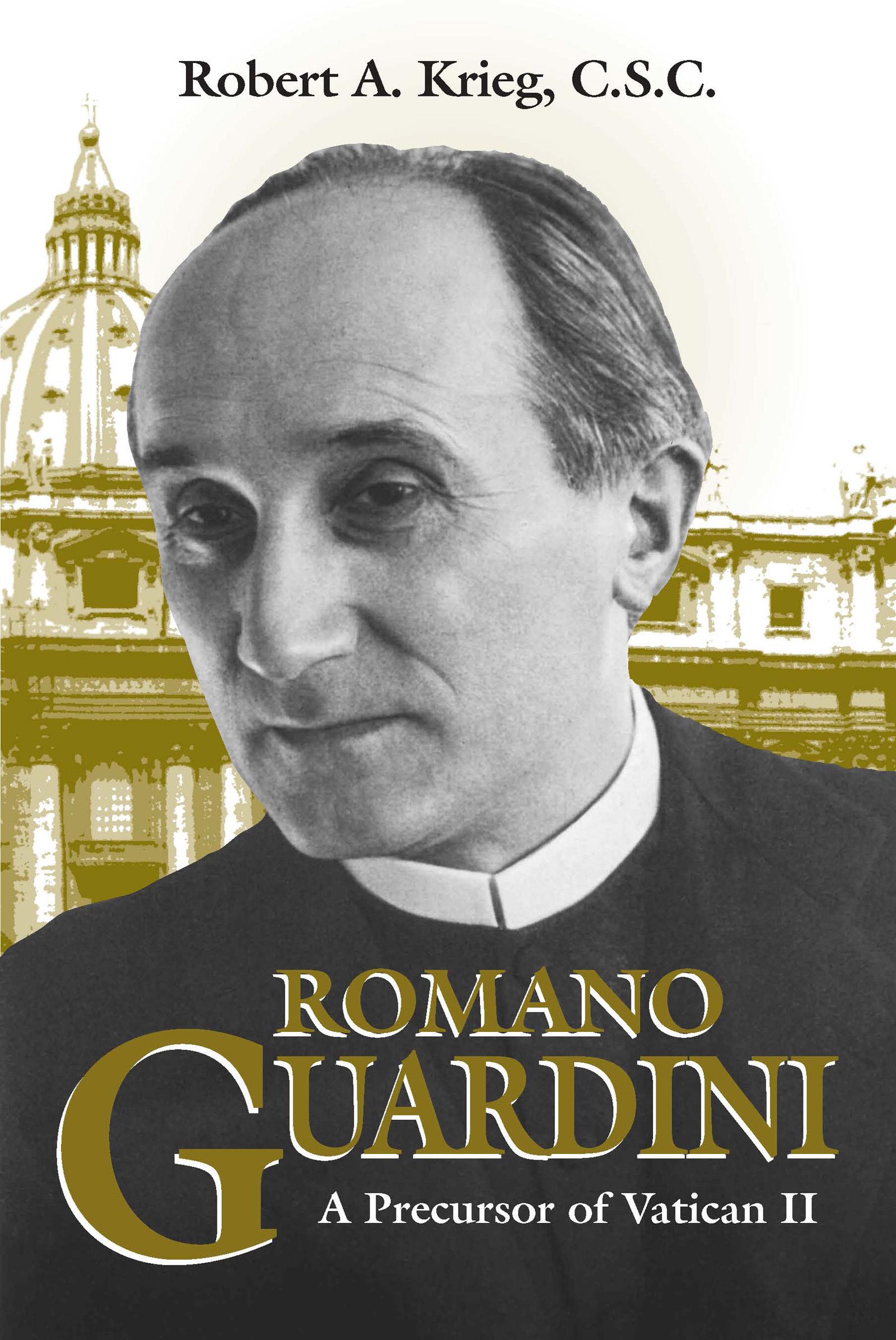
How did Catholicism move from the defensive stance of the First Vatican Council in the 1870s to the open, responsive position of the Second Vatican Council in the 1960s? The life and thought of Romano Guardini shows the way. In his unwavering pursuit of truth, Guardini discovered a clear path from the understanding of faith as theoretical conviction to one of faith as living experience.
In Romano Guardini: A Precursor of Vatican II, Robert Krieg tells the story of one of the most creative theologians in the twentieth century, who anticipated Vatican II's commitment to read "the signs of the times." No other volume in the English language offers such a complete portrait of Guardini and his world.
Exploring the context in which Guardini learned and taught, Krieg introduces us to his pastoral leadership, particularly in the liturgical and youth movements. Drawing on the more than 75 books and 100 articles written by Guardini, this book then examines the recurring major themes of his theology: divine revelation as God's self-disclosure, the church as Christian community, liturgy as play in God's presence, literature as expression of religious experience, Nazism as negation of personal existence, Jesus Christ as mediator, and Christian acceptance of modernity.
Although he never intended to promote an ecumenical council of reform, Guardini's career-long commitment to both Judeo-Christian wisdom and intellectual exchange with contemporary thought resulted in his becoming widely regarded as a major precursor of the Second Vatican Council. Respected theologians such as Karl Rahner, Hans Urs von Balthasar, and Cardinal Joseph Ratzinger have acknowledged their indebtedness to him.
All those who wish to better understand the Church today can learn much from Romano Guardini, a pioneer in exciting theological territory. And this book is an excellent guide for an inspiring intellectual journey.
Before Memmo my notes were scattered across PDFs. Now a workspace pulls everything into one place — I see exactly what's still left to study.
Memmo's summaries are gold before exams. I don't have to re-read 800 pages two weeks before — just the important parts.
The AI chat has saved me the night before an exam more than once. I just keep asking until I get it — no waiting on a study group to reply.
The quizzes hit exactly what I need to know. Memmo tracks what I get stuck on — so I only practice what's worth it.
Flashcards with spaced repetition are magic. Memmo knows when I'm about to forget something and brings it back.
The AI podcasts are my favorite. I listen on my way to school and get a recap without sitting at a computer.

Handbok i kvalitativa metoder
281 kr

Hållbar utveckling: en introduktion för ingenjörer och andra problemlösare
334 kr

Brymans Samhällsvetenskapliga metoder
390 kr

Projektledning
491 kr

Den orättvisa hälsan: om socioekonomiska skillnader i hälsa och livslängd
326 kr

Vetenskapsteori för nybörjare
196 kr

Organizational Leadership
429 kr

På väg mot läraryrket
172 kr

Det sociala livet i skolan: Socialpsykologiska perspektiv
253 kr

Betygsättningens didaktik
151 kr

Personality
402 kr

Studying Leadership
404 kr

Managing Innovation
477 kr

Introduktion till samhällsvetenskaplig metod
347 kr

The Psychology of Sex and Gender
698 kr

Evidens och kunskap för socialt arbete
207 kr

Introduction to Leadership
605 kr