
Before Memmo my notes were scattered across PDFs. Now a workspace pulls everything into one place — I see exactly what's still left to study.
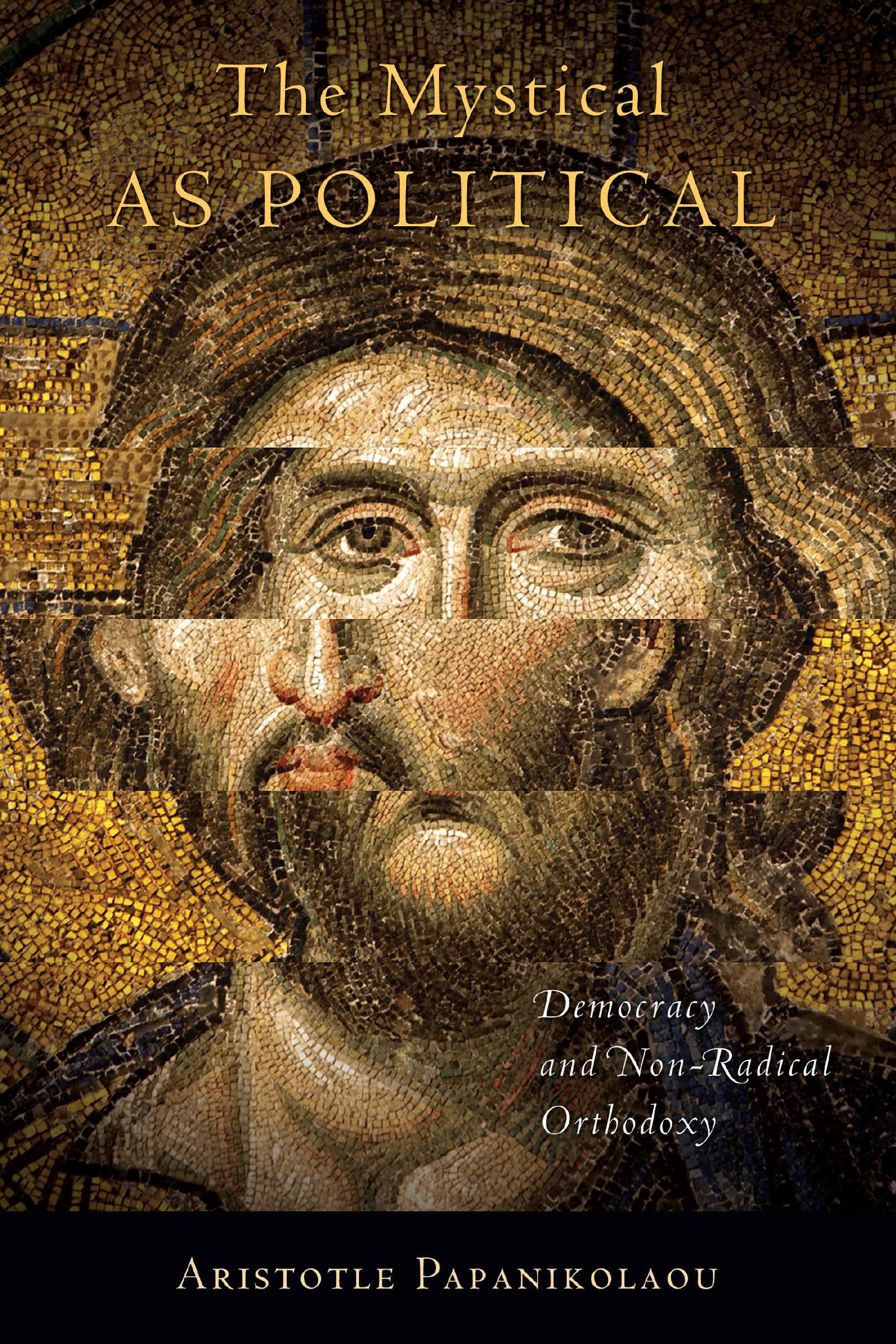
Theosis, or the principle of divine-human communion, sparks the theological imagination of Orthodox Christians and has been historically important to questions of political theology. In The Mystical as Political: Democracy and Non-Radical Orthodoxy, Aristotle Papanikolaou argues that a political theology grounded in the principle of divine-human communion must be one that unequivocally endorses a political community that is democratic in a way that structures itself around the modern liberal principles of freedom of religion, the protection of human rights, and church-state separation.
Papanikolaou hopes to forge a non-radical Orthodox political theology that extends beyond a reflexive opposition to the West and a nostalgic return to a Byzantine-like unified political-religious culture. His exploration is prompted by two trends: the fall of communism in traditionally Orthodox countries has revealed an unpreparedness on the part of Orthodox Christianity to address the question of political theology in a way that is consistent with its core axiom of theosis; and recent Christian political theology, some of it evoking the notion of “deification,” has been critical of liberal democracy, implying a mutual incompatibility between a Christian worldview and that of modern liberal democracy.
The first comprehensive treatment from an Orthodox theological perspective of the issue of the compatibility between Orthodoxy and liberal democracy, Papanikolaou’s is an affirmation that Orthodox support for liberal forms of democracy is justified within the framework of Orthodox understandings of God and the human person. His overtly theological approach shows that the basic principles of liberal democracy are not tied exclusively to the language and categories of Enlightenment philosophy and, so, are not inherently secular.
Before Memmo my notes were scattered across PDFs. Now a workspace pulls everything into one place — I see exactly what's still left to study.
Memmo's summaries are gold before exams. I don't have to re-read 800 pages two weeks before — just the important parts.
The AI chat has saved me the night before an exam more than once. I just keep asking until I get it — no waiting on a study group to reply.
The quizzes hit exactly what I need to know. Memmo tracks what I get stuck on — so I only practice what's worth it.
Flashcards with spaced repetition are magic. Memmo knows when I'm about to forget something and brings it back.
The AI podcasts are my favorite. I listen on my way to school and get a recap without sitting at a computer.

Handbok i kvalitativa metoder
281 kr

Hållbar utveckling: en introduktion för ingenjörer och andra problemlösare
334 kr

Brymans Samhällsvetenskapliga metoder
390 kr

Projektledning
491 kr

Den orättvisa hälsan: om socioekonomiska skillnader i hälsa och livslängd
326 kr

Vetenskapsteori för nybörjare
196 kr

Organizational Leadership
429 kr

På väg mot läraryrket
172 kr

Det sociala livet i skolan: Socialpsykologiska perspektiv
253 kr

Betygsättningens didaktik
151 kr

Personality
402 kr

Studying Leadership
404 kr

Managing Innovation
477 kr

Introduktion till samhällsvetenskaplig metod
347 kr

The Psychology of Sex and Gender
698 kr

Evidens och kunskap för socialt arbete
207 kr

Introduction to Leadership
605 kr