
Before Memmo my notes were scattered across PDFs. Now a workspace pulls everything into one place — I see exactly what's still left to study.
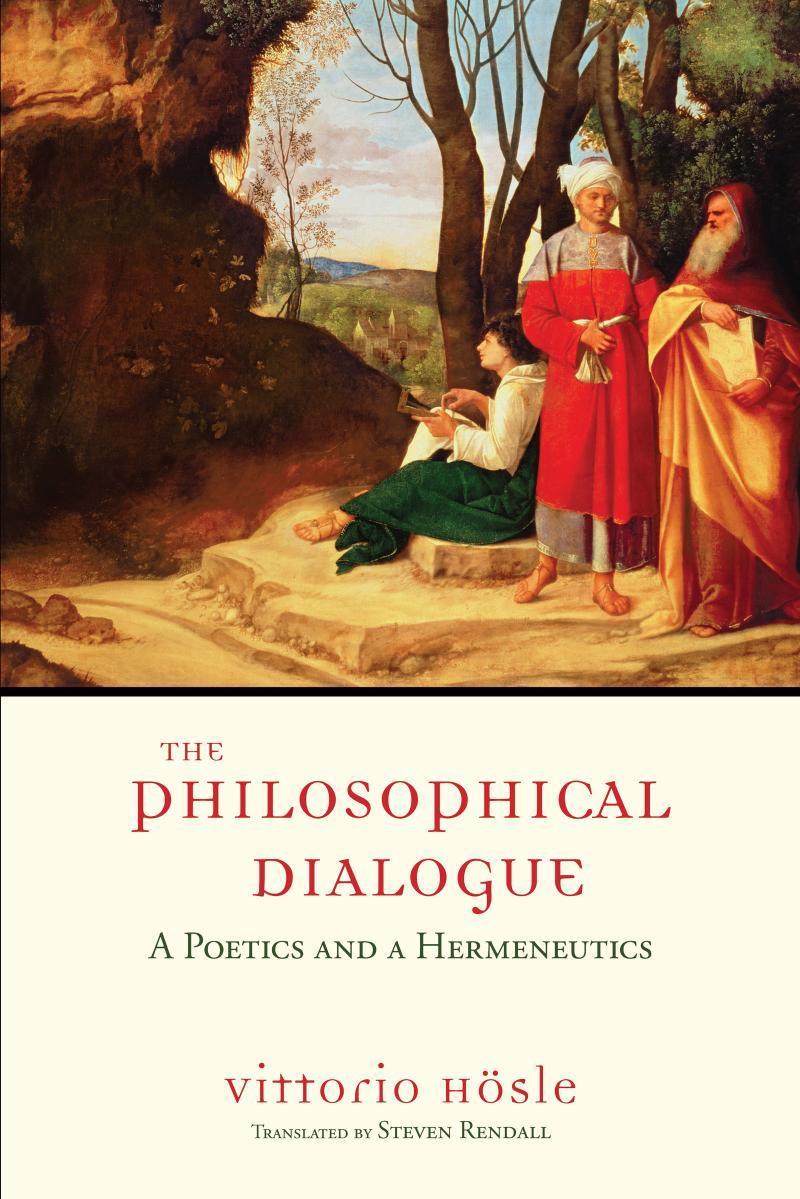
No overall history of the philosophical dialogue has appeared since Rudolf Hirzel's two-volume study was published in 1895. In The Philosophical Dialogue: A Poetics and a Hermeneutics, Vittorio Hösle covers the development of the genre from its beginning with Plato to the late twentieth-century work of Iris Murdoch and Paul Feyerabend. Hösle presents a taxonomy and a doctrine of categories for the complex literary genre of the philosophical dialogue, focusing on the poetical laws that structure the genre, and develops hermeneutical rules for its correct interpretation.
Following an introduction that employs the categories of subjectivity and intersubjectivity to classify philosophy's modes of expression, Hösle's book is structured by the classical triad of the production, inner structure, and reception of the literary dialogue. To explain what is meant by "philosophical dialogue," Hösle first deals with the specific traits of philosophical dialogue in contrast to other literary forms of philosophy and its special status among them. Second, he distinguishes the philosophical dialogue as a literary genre from actual philosophical conversation, and as a philosophical literary genre from nonphilosophical literary dialogues. Finally, he takes up the connection between literary form and philosophical content in the philosophical dialogue. Numerous authors of dialogues are discussed, with a special focus on Plato, Cicero, Augustine, Hume, and Diderot.
Originally published in Germany as Der philosophische Dialog: Eine Poetik und Hermeneutik (2006), this book not only contributes to the philosophical discussion of dialogue but to a great extent defines it. This fine translation will prove useful to both philosophers and literary critics in the English-speaking world.
Before Memmo my notes were scattered across PDFs. Now a workspace pulls everything into one place — I see exactly what's still left to study.
Memmo's summaries are gold before exams. I don't have to re-read 800 pages two weeks before — just the important parts.
The AI chat has saved me the night before an exam more than once. I just keep asking until I get it — no waiting on a study group to reply.
The quizzes hit exactly what I need to know. Memmo tracks what I get stuck on — so I only practice what's worth it.
Flashcards with spaced repetition are magic. Memmo knows when I'm about to forget something and brings it back.
The AI podcasts are my favorite. I listen on my way to school and get a recap without sitting at a computer.

Handbok i kvalitativa metoder
281 kr

Hållbar utveckling: en introduktion för ingenjörer och andra problemlösare
334 kr

Brymans Samhällsvetenskapliga metoder
390 kr

Projektledning
491 kr

Den orättvisa hälsan: om socioekonomiska skillnader i hälsa och livslängd
326 kr

Organizational Leadership
429 kr

Vetenskapsteori för nybörjare
196 kr

På väg mot läraryrket
172 kr

Det sociala livet i skolan: Socialpsykologiska perspektiv
253 kr

Betygsättningens didaktik
151 kr

Personality
402 kr

Studying Leadership
404 kr

Managing Innovation
477 kr

Introduktion till samhällsvetenskaplig metod
347 kr

The Psychology of Sex and Gender
698 kr

Evidens och kunskap för socialt arbete
207 kr

Introduction to Leadership
605 kr