
Before Memmo my notes were scattered across PDFs. Now a workspace pulls everything into one place — I see exactly what's still left to study.
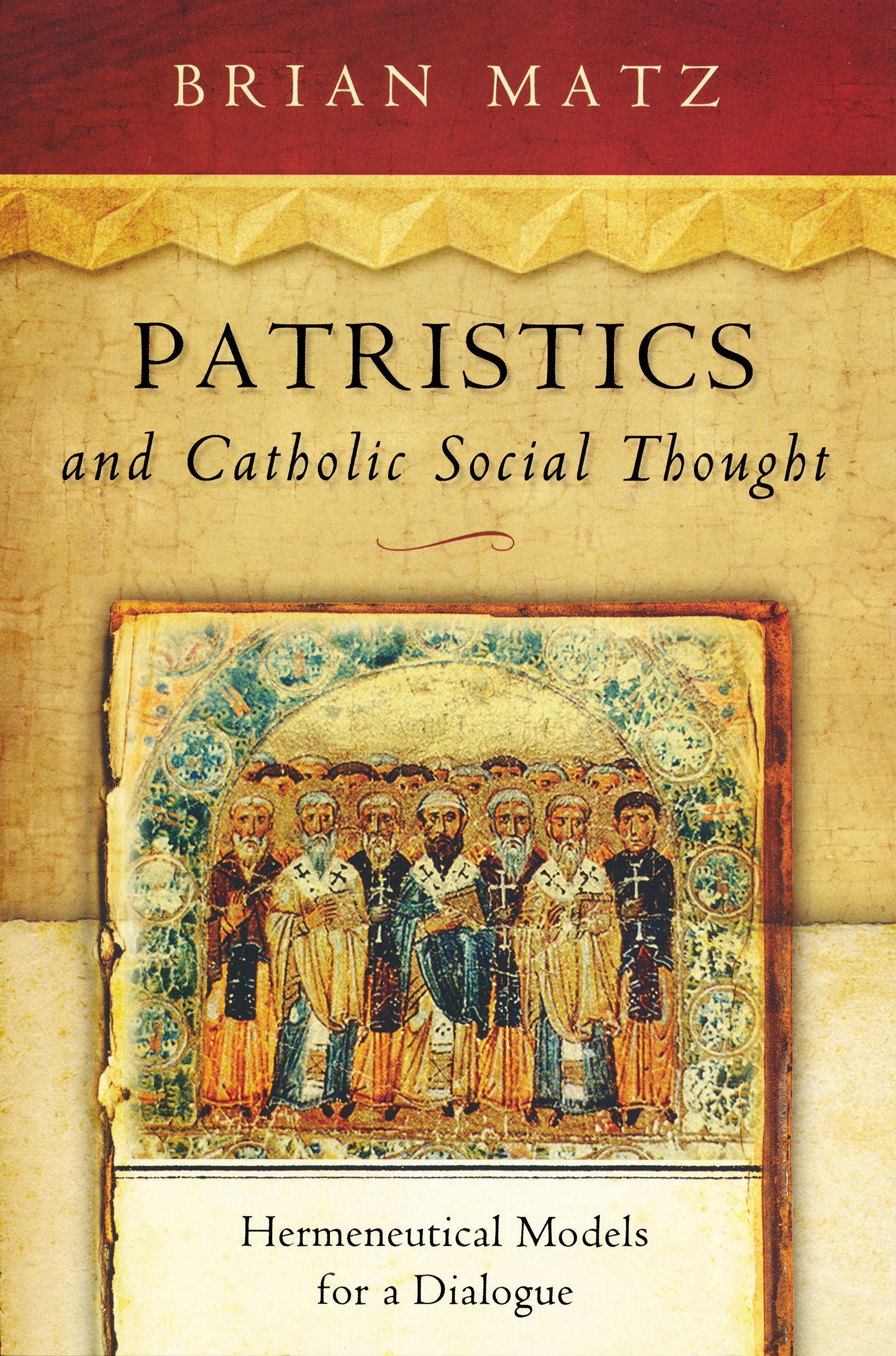
In Patristics and Catholic Social Thought: Hermeneutical Models for a Dialogue, Brian Matz argues that scholars and proponents of the modern Catholic social tradition can gain from the use of ancient texts for contemporary socioethical formation. Although it is impossible to expect a one-to-one correspondence between the social ideas of early church theologians, such as Augustine, and those of modern Catholic social thought, this book offers four hermeneutical models that will facilitate a fruitful dialogue between the two worlds. The result is a challenge to modern Christian ethicists to think more deeply about their work in light of the perspective of those who trod a similar path centuries ago.
Matz first examines an "authorial intent" hermeneutical model, as articulated in the philosophies of Friedrich Schleiermacher and Wilhelm Dilthey. The second is a "distanciation" model, relying on the thought of Hans-Georg Gadamer and Paul Ricoeur. The third is a "normativity of the future" model, so named by its proponents, Reimund Bieringer and Mary Elsbernd. The fourth is a "new intellectual history" model, which relies on contemporary literary-critical theories. In a series of case studies, Matz applies each model to two early Christian sermons on the parable of Lazarus and the Rich Man and, in so doing, illustrates that each one draws out different social ideas. Although each model ultimately bears fruit for Catholic social thought today, Matz concludes that the "normativity of the future" model is the one best suited to a productive use of early Christian texts in contemporary Catholic social thought.
Before Memmo my notes were scattered across PDFs. Now a workspace pulls everything into one place — I see exactly what's still left to study.
Memmo's summaries are gold before exams. I don't have to re-read 800 pages two weeks before — just the important parts.
The AI chat has saved me the night before an exam more than once. I just keep asking until I get it — no waiting on a study group to reply.
The quizzes hit exactly what I need to know. Memmo tracks what I get stuck on — so I only practice what's worth it.
Flashcards with spaced repetition are magic. Memmo knows when I'm about to forget something and brings it back.
The AI podcasts are my favorite. I listen on my way to school and get a recap without sitting at a computer.

Handbok i kvalitativa metoder
281 kr

Hållbar utveckling: en introduktion för ingenjörer och andra problemlösare
334 kr

Brymans Samhällsvetenskapliga metoder
390 kr

Projektledning
491 kr

Den orättvisa hälsan: om socioekonomiska skillnader i hälsa och livslängd
326 kr

Vetenskapsteori för nybörjare
196 kr

Organizational Leadership
429 kr

På väg mot läraryrket
172 kr

Det sociala livet i skolan: Socialpsykologiska perspektiv
253 kr

Betygsättningens didaktik
151 kr

Personality
402 kr

Studying Leadership
404 kr

Managing Innovation
477 kr

Introduktion till samhällsvetenskaplig metod
347 kr

The Psychology of Sex and Gender
698 kr

Evidens och kunskap för socialt arbete
207 kr

Introduction to Leadership
605 kr