
Before Memmo my notes were scattered across PDFs. Now a workspace pulls everything into one place — I see exactly what's still left to study.
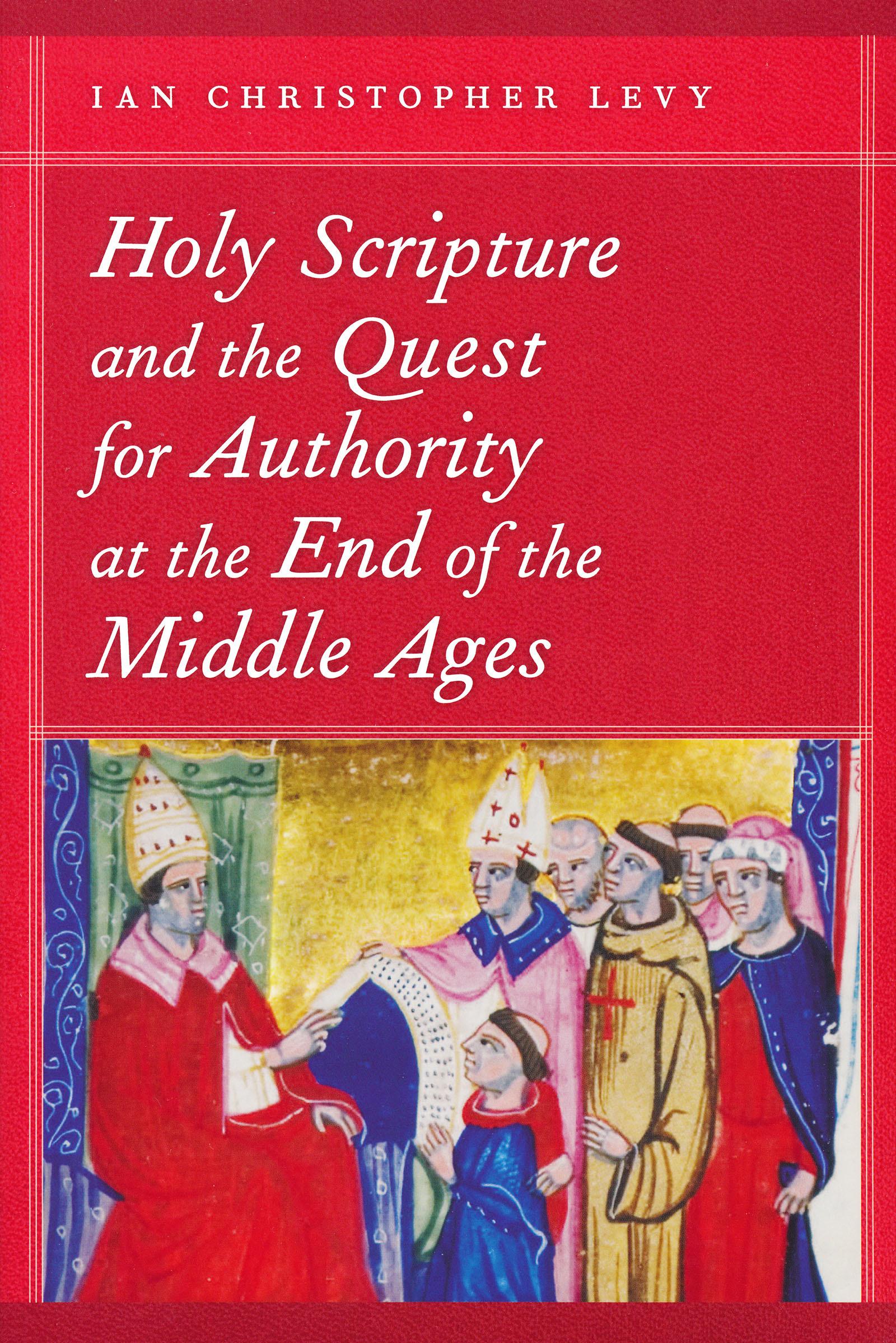
All participants in late medieval debates recognized Holy Scripture as the principal authority in matters of Catholic doctrine. Popes, theologians, lawyers—all were bound by the divine truth it conveyed. Yet the church possessed no absolute means of determining the final authoritative meaning of the biblical text—hence the range of appeals to antiquity, to the papacy, and to councils, none of which were ultimately conclusive. Authority in the late medieval church was a vexing issue precisely because it was not resolved. Ian Christopher Levy’s book focuses on the quest for such authority between 1370 and 1430, from John Wyclif to Thomas Netter, thereby encompassing the struggle over Holy Scripture waged between Wycliffites and Hussites on the one hand, and their British and Continental opponents on the other. Levy demonstrates that the Wycliffite/Hussite “heretics” and their opponents—the theologians William Woodford, Thomas Netter, and Jean Gerson—in fact shared a large and undisputed common ground. They held recognized licenses of expertise, venerated tradition, esteemed the church fathers, and embraced Holy Scripture as the ultimate authority in Christendom. What is more, they utilized similar hermeneutical strategies with regard to authorial intention, the literal sense, and the appeal to the fathers and holy doctors in order to open up the text. Yet it is precisely this commonality, according to Levy, that rendered the situation virtually intractable; he argues that the erroneous assumption persists today that Netter and Gerson spoke for “the church,” whereas Wyclif and Hus sought to destroy it. Levy’s sophisticated study in historical theology, which reconsiders the paradigm of heresy and orthodoxy, offers a necessary adjustment in our view of church authority at the turn of the fifteenth century.
Before Memmo my notes were scattered across PDFs. Now a workspace pulls everything into one place — I see exactly what's still left to study.
Memmo's summaries are gold before exams. I don't have to re-read 800 pages two weeks before — just the important parts.
The AI chat has saved me the night before an exam more than once. I just keep asking until I get it — no waiting on a study group to reply.
The quizzes hit exactly what I need to know. Memmo tracks what I get stuck on — so I only practice what's worth it.
Flashcards with spaced repetition are magic. Memmo knows when I'm about to forget something and brings it back.
The AI podcasts are my favorite. I listen on my way to school and get a recap without sitting at a computer.

Handbok i kvalitativa metoder
281 kr

Hållbar utveckling: en introduktion för ingenjörer och andra problemlösare
334 kr

Brymans Samhällsvetenskapliga metoder
390 kr

Projektledning
491 kr

Den orättvisa hälsan: om socioekonomiska skillnader i hälsa och livslängd
326 kr

Vetenskapsteori för nybörjare
196 kr

Organizational Leadership
429 kr

På väg mot läraryrket
172 kr

Det sociala livet i skolan: Socialpsykologiska perspektiv
253 kr

Betygsättningens didaktik
151 kr

Personality
402 kr

Studying Leadership
404 kr

Managing Innovation
477 kr

Introduktion till samhällsvetenskaplig metod
347 kr

The Psychology of Sex and Gender
698 kr

Evidens och kunskap för socialt arbete
207 kr

Introduction to Leadership
605 kr