
Before Memmo my notes were scattered across PDFs. Now a workspace pulls everything into one place — I see exactly what's still left to study.
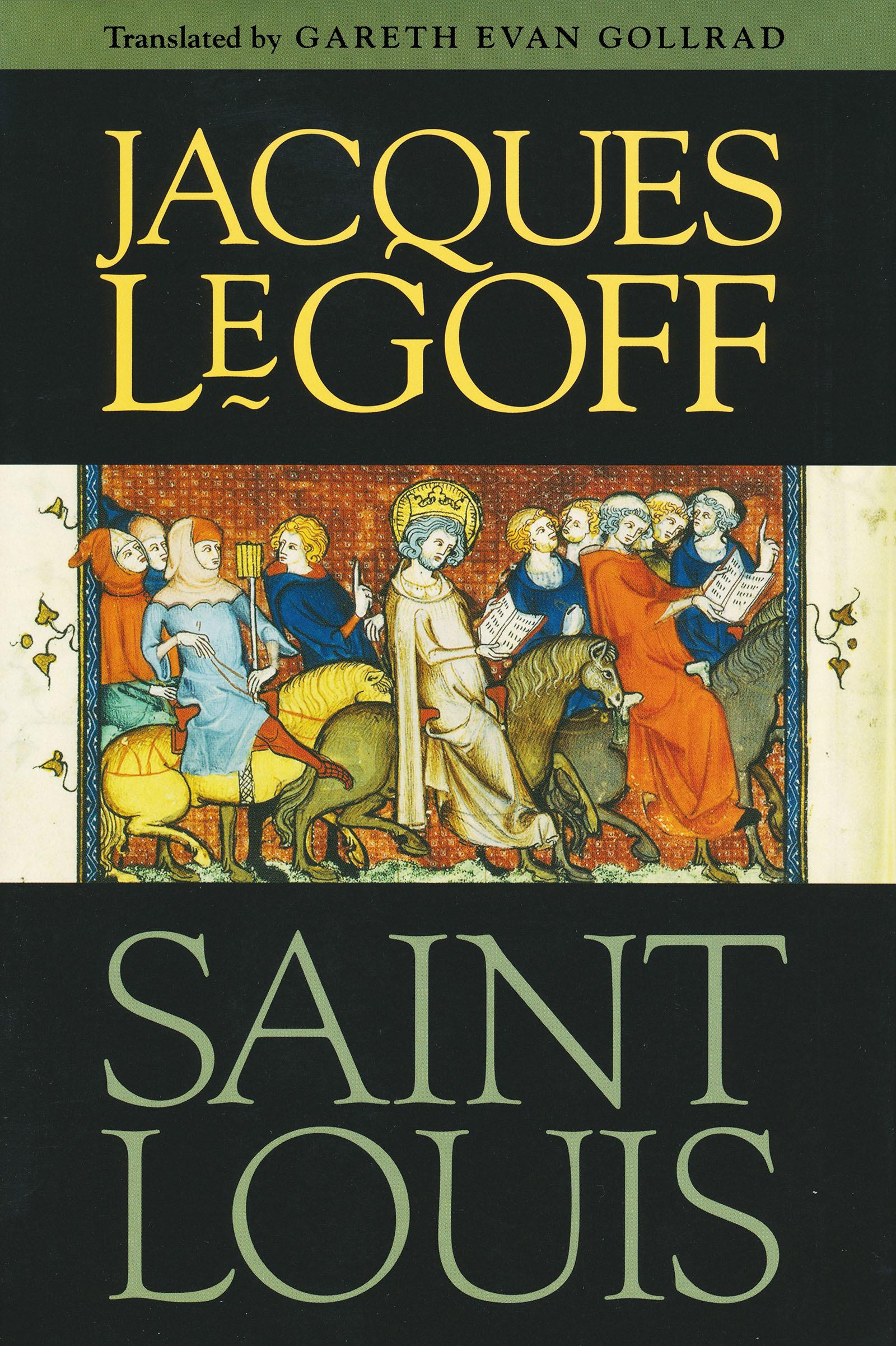
Canonized in 1297 as Saint Louis, King Louis IX of France (1214-1270) was the central figure of Christendom in the thirteenth century. He ruled when France was at the height of power; he commanded the largest army in Europe and controlled the wealthiest kingdom. Renowned for his patronage of the arts, Louis was equally famous for his choice to imitate the suffering Christ as a humbly attired, bearded penitent.
Armed with the considerable resources of the nouvel historien, Jacques Le Goff mines existing materials about Saint Louis to forge a new historical biography of the king. Part of his ambitious project is to reconstruct the mental universe of the thirteenth century: Le Goff describes the scholastic and intellectual background of Louis’s reign and, most importantly, he discusses methodology and the interpretation of written sources—their composition, provenance, and reliability.
Le Goff divides his unconventional biography into three parts. In the first, he gives us the contours of Louis’s life from birth to death in the usual context of family dynamics and genealogy, courtly and regional politics, and shifts in economic, social, and cultural life. In sifting through the historical accounts of the king’s life, Le Goff determines that it is Louis IX’s profound sense of moral and religious purpose—his desire to become the ideal Christian ruler—that colors his every action from boyhood on; it is also, for Le Goff, what renders contemporary accounts problematic and what necessitates further scrutiny.
That dissection of sources occupies the second part. Le Goff’s intention is to pare away the layers of homily and anecdote produced by the king’s early biographers to discover the true St. Louis. Questioning whether St. Louis was merely the invention of his eulogists, Le Goff penetrates beyond the literary and hagiographical evidence to the human behind the legend. He brilliantly analyzes Louis’s progression toward his unique self-creation and its subsequent mythologizing. In the third part, Le Goff highlights the contradictions within Louis and his historical image that previous chroniclers have elided and overlooked. In the end, he leaves us with the saint, rather than the king, with all the paradoxes embedded within that dual role.
A prolific medievalist of international renown, Jacques Le Goff (1924- ) is the former director of studies at the L'École des Hautes Études en Sciences Sociales, Paris. Among his honors is the Dr. A. H. Heineken Prize for History, bestowed in 2004 by the Royal Netherlands Academy of Arts and Sciences to Le Goff for “fundamentally changing our view of the Middle Ages.” He was also among the recipients of the 2007 Dan David Prize in recognition of contributions to his discipline. of Louis’ life from birth to death in the usual context of family dynamics and genealogy, courtly and regional politics, and shifts in economic, social, and cultural life. In sifting through the historical accounts of the king’s life, Le Goff determines that it is Louis IX’s profound sense of moral and religious purpose—his desire to become the ideal Christian ruler—that colors his every action from boyhood on; it is also, for Le Goff, what renders contemporary accounts problematic and what necessitates further scrutiny. That dissection of sources occupies the second part. Le Goff’s intention is to pare away the layers of homily and anecdote produced by the king’s early biographers to discover the true Saint Louis. Questioning whether Saint Louis was merely the invention of his eulogists, Le Goff penetrates beyond the literary and hagiographical evidence to the human behind the legend. He brilliantly analyzes Louis’ progress toward his unique self-creation and its subsequent mythologizing. In the third part, Le Goff highlights the contradictions within Louis and his historical image that previous chroniclers have elided or overlooked. In the end, he leaves us with the saint, rather than the king, with all the paradoxes embedded in that role.
Before Memmo my notes were scattered across PDFs. Now a workspace pulls everything into one place — I see exactly what's still left to study.
Memmo's summaries are gold before exams. I don't have to re-read 800 pages two weeks before — just the important parts.
The AI chat has saved me the night before an exam more than once. I just keep asking until I get it — no waiting on a study group to reply.
The quizzes hit exactly what I need to know. Memmo tracks what I get stuck on — so I only practice what's worth it.
Flashcards with spaced repetition are magic. Memmo knows when I'm about to forget something and brings it back.
The AI podcasts are my favorite. I listen on my way to school and get a recap without sitting at a computer.

Handbok i kvalitativa metoder
281 kr

Hållbar utveckling: en introduktion för ingenjörer och andra problemlösare
334 kr

Brymans Samhällsvetenskapliga metoder
390 kr

Projektledning
491 kr

Den orättvisa hälsan: om socioekonomiska skillnader i hälsa och livslängd
326 kr

Organizational Leadership
429 kr

Vetenskapsteori för nybörjare
196 kr

På väg mot läraryrket
172 kr

Det sociala livet i skolan: Socialpsykologiska perspektiv
253 kr

Betygsättningens didaktik
151 kr

Personality
402 kr

Studying Leadership
404 kr

Managing Innovation
477 kr

Introduktion till samhällsvetenskaplig metod
347 kr

The Psychology of Sex and Gender
698 kr

Evidens och kunskap för socialt arbete
207 kr

Introduction to Leadership
605 kr