
Before Memmo my notes were scattered across PDFs. Now a workspace pulls everything into one place — I see exactly what's still left to study.
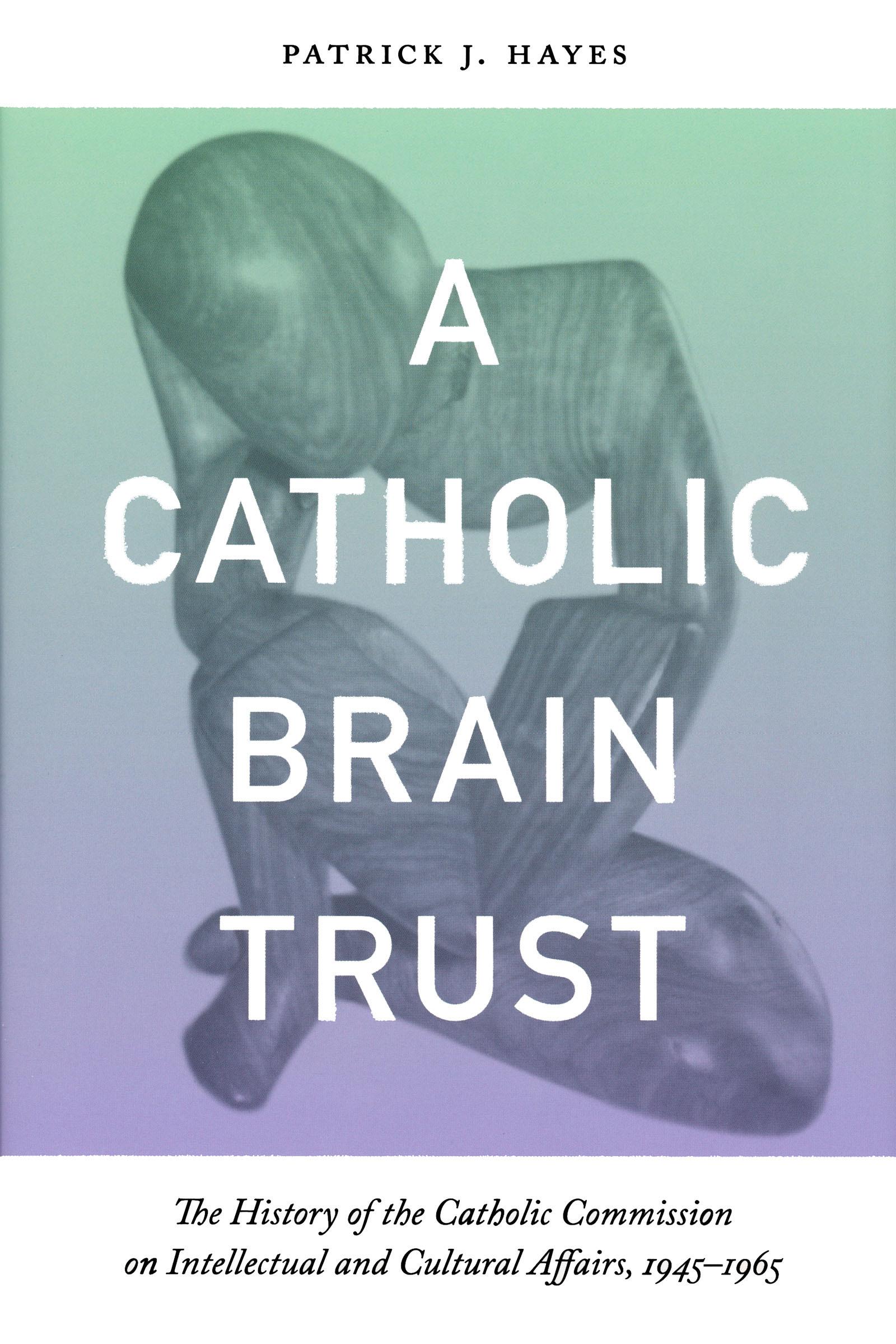
In A Catholic Brain Trust: The History of the Catholic Commission on Intellectual and Cultural Affairs, 1945–1965, Patrick J. Hayes chronicles the founding, development, and accomplishments of the CCICA from its beginnings immediately following the Second World War to 1965. This extensively documented study contributes to the history of American Catholicism by investigating a little-known effort on the part of Catholic intellectuals in the postwar period to shape Catholic identity in the United States, by bringing their individual and collective resources to bear on contemporary society and culture. Hayes demonstrates how a group of leading Catholic professors, college presidents, writers, government officials, scientists, and artists influenced Catholic culture through various media, through educational institutions, and through their participation in ecclesial- or government-sanctioned activities.
After outlining the preliminary background of the CCICA's founding in 1946, Hayes examines its impact through two of its early projects: war relief for displaced scholars and participation in United Nations affairs. From 1948 to 1959, questions of the relationship between church and state especially occupied the Commission. Hayes looks at the impact of the famous lecture in 1955 by Monsignor John Tracy Ellis, "American Catholics and the Intellectual Life," which, more than any single event, served to rally CCICA members, as well as the larger academic community and the American Catholic Church as a whole, around the question of Catholic intellectual identity. Hayes analyzes the CCICA's influence on campus culture in the United States, touching on topics such as academic freedom and projects such as the Kirby seminars for younger scholars, a Catholic registry of academics working in the United States, and the New Catholic Encyclopedia. An epilogue treats the Commission's last years of operation.
Before Memmo my notes were scattered across PDFs. Now a workspace pulls everything into one place — I see exactly what's still left to study.
Memmo's summaries are gold before exams. I don't have to re-read 800 pages two weeks before — just the important parts.
The AI chat has saved me the night before an exam more than once. I just keep asking until I get it — no waiting on a study group to reply.
The quizzes hit exactly what I need to know. Memmo tracks what I get stuck on — so I only practice what's worth it.
Flashcards with spaced repetition are magic. Memmo knows when I'm about to forget something and brings it back.
The AI podcasts are my favorite. I listen on my way to school and get a recap without sitting at a computer.

Handbok i kvalitativa metoder
281 kr

Hållbar utveckling: en introduktion för ingenjörer och andra problemlösare
334 kr

Brymans Samhällsvetenskapliga metoder
390 kr

Projektledning
491 kr

Den orättvisa hälsan: om socioekonomiska skillnader i hälsa och livslängd
326 kr

Vetenskapsteori för nybörjare
196 kr

Organizational Leadership
429 kr

På väg mot läraryrket
172 kr

Det sociala livet i skolan: Socialpsykologiska perspektiv
253 kr

Betygsättningens didaktik
151 kr

Personality
402 kr

Studying Leadership
404 kr

Managing Innovation
477 kr

Introduktion till samhällsvetenskaplig metod
347 kr

The Psychology of Sex and Gender
698 kr

Evidens och kunskap för socialt arbete
207 kr

Introduction to Leadership
605 kr