
Before Memmo my notes were scattered across PDFs. Now a workspace pulls everything into one place — I see exactly what's still left to study.
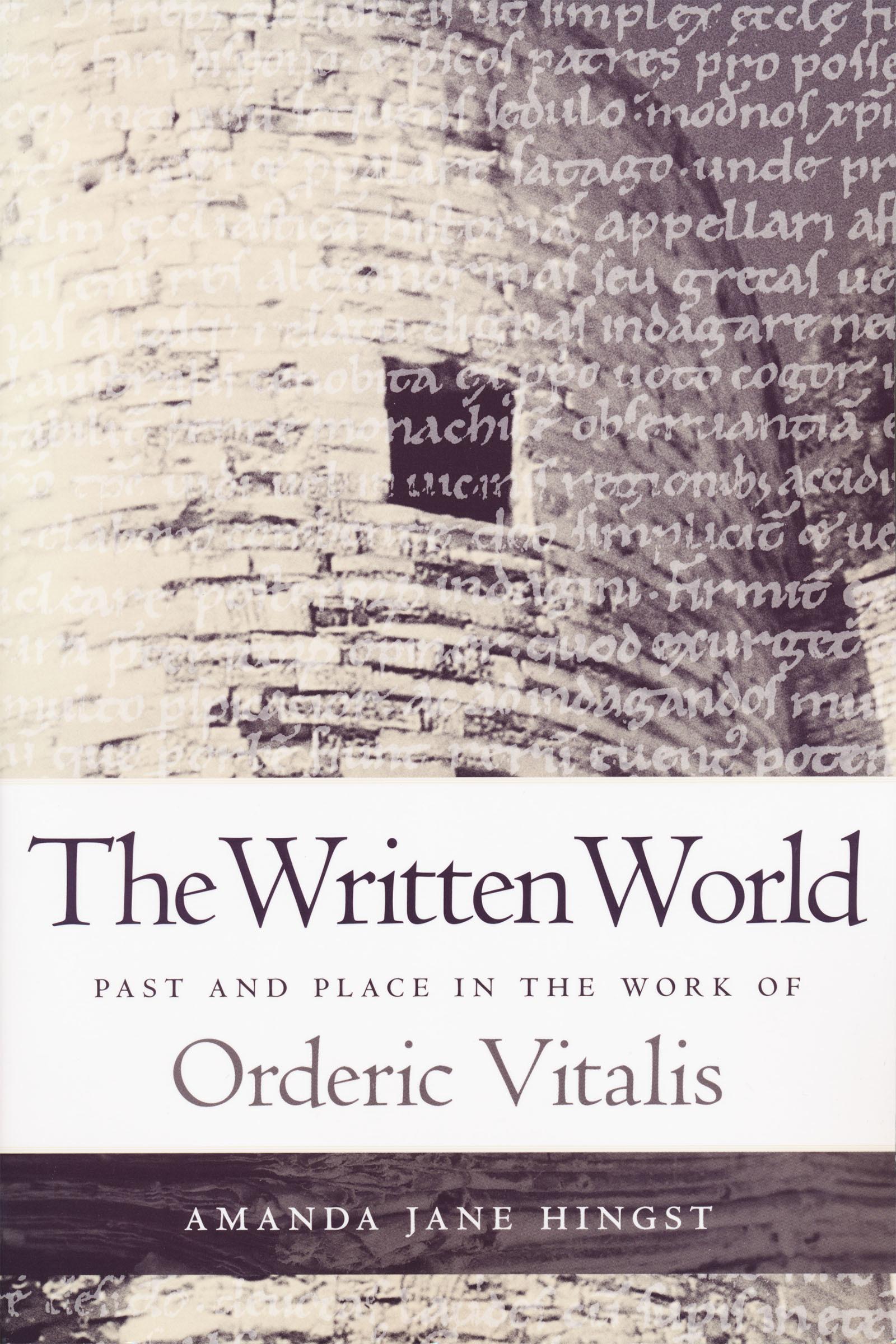
The Anglo-Norman monk Orderic Vitalis (1075-c.1142) wrote his monumental, highly individual Historia Ecclesiastica as an exercise in monastic discipline intended to preserve the events and character of Christendom for future generations. Though cloistered since childhood in a Benedictine monastery near Normandy's southern border, Orderic gained access to an intellectual world that extended from Scotland to Jerusalem through his engagement with texts and travelers that made their way into his monastic milieu. His Historia Ecclesiastica, with a breadth of vision unparalleled in its time, is a particularly fertile source for an investigation of concepts of space and historiography in the high Middle Ages.
In The Written World: Past and Place in the Work of Orderic Vitalis, Amanda Jane Hingst draws on the blend of intellectual intimacy and historiographical breadth in Orderic's writings to investigate the ways in which high medieval historians understood geographical space to be a temporally meaningful framework for human affairs. Hingst explores Orderic's manipulation of the classical geographical tradition, his balancing of spatial scale between the local and the universal, and his sophisticated and original utilization of the new intellectual currents of the twelfth century. She argues that Orderic, along with some of his contemporaries, interpreted Christendom's terrain not merely as a static stage for human action but as a meaningful element in human history. Using a theoretical framework marrying modern spatial theory with medieval philosophical traditions, Hingst suggests that, at its most nuanced, medieval historiography affirmed the symbolic topography of Christendom by linking history and geography in such a way that they mutually forged and reinforced each other. With a clarity of style and ideas, Hingst makes available to both students and trained scholars a fascinating account of a heretofore underappreciated medieval figure and his work.
Before Memmo my notes were scattered across PDFs. Now a workspace pulls everything into one place — I see exactly what's still left to study.
Memmo's summaries are gold before exams. I don't have to re-read 800 pages two weeks before — just the important parts.
The AI chat has saved me the night before an exam more than once. I just keep asking until I get it — no waiting on a study group to reply.
The quizzes hit exactly what I need to know. Memmo tracks what I get stuck on — so I only practice what's worth it.
Flashcards with spaced repetition are magic. Memmo knows when I'm about to forget something and brings it back.
The AI podcasts are my favorite. I listen on my way to school and get a recap without sitting at a computer.

Handbok i kvalitativa metoder
281 kr

Hållbar utveckling: en introduktion för ingenjörer och andra problemlösare
334 kr

Brymans Samhällsvetenskapliga metoder
390 kr

Projektledning
491 kr

Den orättvisa hälsan: om socioekonomiska skillnader i hälsa och livslängd
326 kr

Vetenskapsteori för nybörjare
196 kr

Organizational Leadership
429 kr

På väg mot läraryrket
172 kr

Det sociala livet i skolan: Socialpsykologiska perspektiv
253 kr

Betygsättningens didaktik
151 kr

Personality
402 kr

Studying Leadership
404 kr

Managing Innovation
477 kr

Introduktion till samhällsvetenskaplig metod
347 kr

The Psychology of Sex and Gender
698 kr

Evidens och kunskap för socialt arbete
207 kr

Introduction to Leadership
605 kr