
Before Memmo my notes were scattered across PDFs. Now a workspace pulls everything into one place — I see exactly what's still left to study.
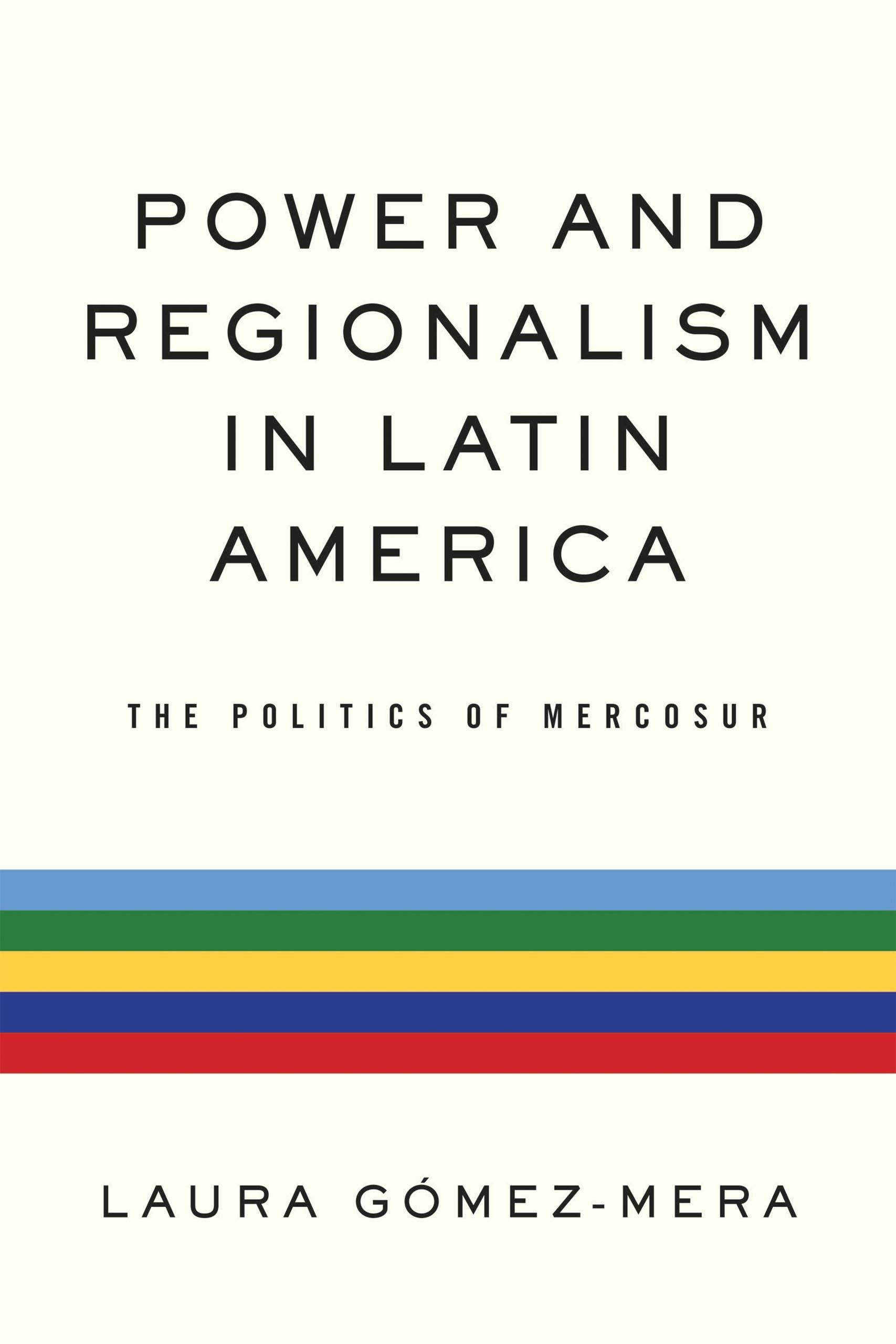
In Power and Regionalism in Latin America: The Politics of MERCOSUR, Laura Gómez-Mera examines the erratic patterns of regional economic cooperation in the Southern Common Market (MERCOSUR), a political-economic agreement among Argentina, Brazil, Paraguay, Uruguay, and, recently, Venezuela that comprises the world’s fourth-largest regional trade bloc. Despite a promising start in the early 1990s, MERCOSUR has had a tumultuous and conflict-ridden history. Yet it has survived, expanding in membership and institutional scope. What explains its survival, given a seemingly contradictory mix of conflict and cooperation?
Through detailed empirical analyses of several key trade disputes between the bloc’s two main partners, Argentina and Brazil, Gómez-Mera proposes an explanation that emphasizes the tension between and interplay of two sets of factors: power asymmetries within and beyond the region, and domestic-level politics. Member states share a common interest in preserving MERCOSUR as a vehicle for increasing the region’s leverage in external negotiations. Gómez-Mera argues that while external vulnerability and overlapping power asymmetries have provided strong and consistent incentives for regional cooperation in the Southern Cone, the impact of these systemic forces on regional outcomes also has been crucially mediated by domestic political dynamics in the bloc’s two main partners, Argentina and Brazil. Contrary to conventional wisdom, however, the unequal distribution of power within the bloc has had a positive effect on the sustainability of cooperation. Despite Brazil’s reluctance to adopt a more active leadership role in the process of integration, its offensive strategic interests in the region have contributed to the durability of institutionalized collaboration. However, as Gómez-Mera demonstrates, the tension between Brazil’s global and regional power aspirations has also added significantly to the bloc’s ineffectiveness.
Before Memmo my notes were scattered across PDFs. Now a workspace pulls everything into one place — I see exactly what's still left to study.
Memmo's summaries are gold before exams. I don't have to re-read 800 pages two weeks before — just the important parts.
The AI chat has saved me the night before an exam more than once. I just keep asking until I get it — no waiting on a study group to reply.
The quizzes hit exactly what I need to know. Memmo tracks what I get stuck on — so I only practice what's worth it.
Flashcards with spaced repetition are magic. Memmo knows when I'm about to forget something and brings it back.
The AI podcasts are my favorite. I listen on my way to school and get a recap without sitting at a computer.

Handbok i kvalitativa metoder
281 kr

Hållbar utveckling: en introduktion för ingenjörer och andra problemlösare
334 kr

Brymans Samhällsvetenskapliga metoder
390 kr

Projektledning
491 kr

Den orättvisa hälsan: om socioekonomiska skillnader i hälsa och livslängd
326 kr

Vetenskapsteori för nybörjare
196 kr

Organizational Leadership
429 kr

På väg mot läraryrket
172 kr

Det sociala livet i skolan: Socialpsykologiska perspektiv
253 kr

Betygsättningens didaktik
151 kr

Personality
402 kr

Studying Leadership
404 kr

Managing Innovation
477 kr

Introduktion till samhällsvetenskaplig metod
347 kr

The Psychology of Sex and Gender
698 kr

Evidens och kunskap för socialt arbete
207 kr

Introduction to Leadership
605 kr