
Before Memmo my notes were scattered across PDFs. Now a workspace pulls everything into one place — I see exactly what's still left to study.
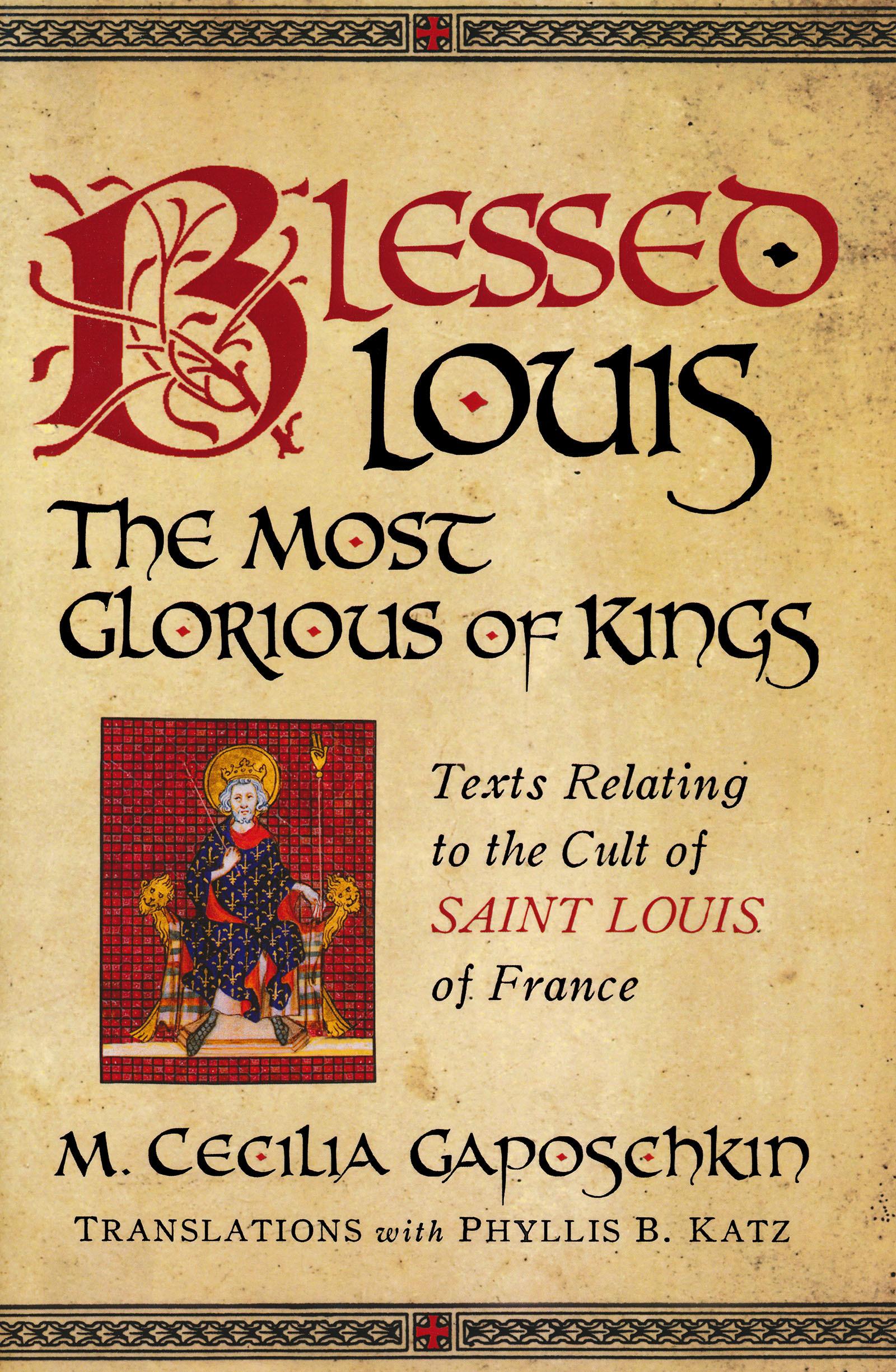
Louis IX, king of France from 1226 to 1270 and twice crusader, was canonized in 1297. He was the last king canonized during the medieval period, and was both one of the most important saints and one of the most important kings of the later Middle Ages. In Blessed Louis, the Most Glorious of Kings: Texts Relating to the Cult of Saint Louis of France, M. Cecilia Gaposchkin presents six previously untranslated texts that informed medieval views of St. Louis IX: two little-known but early and important vitae of Saint Louis; two unedited sermons by the Parisian preacher Jacob of Lausanne (d. 1322); and a liturgical office and proper mass in his honor—the most commonly used liturgical texts composed for Louis’ feast day—which were widely copied, read, and disseminated in the Middle Ages.
Gaposchkin’s aim is to present to a diverse readership the Louis as he was known and experienced in the Middle Ages: a saint celebrated by the faithful for his virtue and his deeds. She offers for the first time to English readers a typical hagiographical view of Saint Louis, one in counterbalance to that set forth in Jean of Joinville’s Life of Saint Louis. Although Joinville’s Life has dominated our views of Louis, Joinville’s famous account was virtually unknown beyond the French royal court in the Middle Ages and was not printed until the sixteenth century. His portrayal of Louis as an individual and deeply charismatic personality is remarkable, but it is fundamentally unrepresentative of the medieval understanding of Louis. The texts that Gaposchkin translates give immediate access to the reasons why medieval Christians took Louis to be a saint; the texts, and the image of Saint Louis presented in them, she argues, must be understood within the context of the developing history of sanctity and sainthood at the end of the Middle Ages.
Before Memmo my notes were scattered across PDFs. Now a workspace pulls everything into one place — I see exactly what's still left to study.
Memmo's summaries are gold before exams. I don't have to re-read 800 pages two weeks before — just the important parts.
The AI chat has saved me the night before an exam more than once. I just keep asking until I get it — no waiting on a study group to reply.
The quizzes hit exactly what I need to know. Memmo tracks what I get stuck on — so I only practice what's worth it.
Flashcards with spaced repetition are magic. Memmo knows when I'm about to forget something and brings it back.
The AI podcasts are my favorite. I listen on my way to school and get a recap without sitting at a computer.

Handbok i kvalitativa metoder
281 kr

Hållbar utveckling: en introduktion för ingenjörer och andra problemlösare
334 kr

Brymans Samhällsvetenskapliga metoder
390 kr

Projektledning
491 kr

Den orättvisa hälsan: om socioekonomiska skillnader i hälsa och livslängd
326 kr

Vetenskapsteori för nybörjare
196 kr

Organizational Leadership
429 kr

På väg mot läraryrket
172 kr

Det sociala livet i skolan: Socialpsykologiska perspektiv
253 kr

Betygsättningens didaktik
151 kr

Personality
402 kr

Studying Leadership
404 kr

Managing Innovation
477 kr

Introduktion till samhällsvetenskaplig metod
347 kr

The Psychology of Sex and Gender
698 kr

Evidens och kunskap för socialt arbete
207 kr

Introduction to Leadership
605 kr