
Before Memmo my notes were scattered across PDFs. Now a workspace pulls everything into one place — I see exactly what's still left to study.
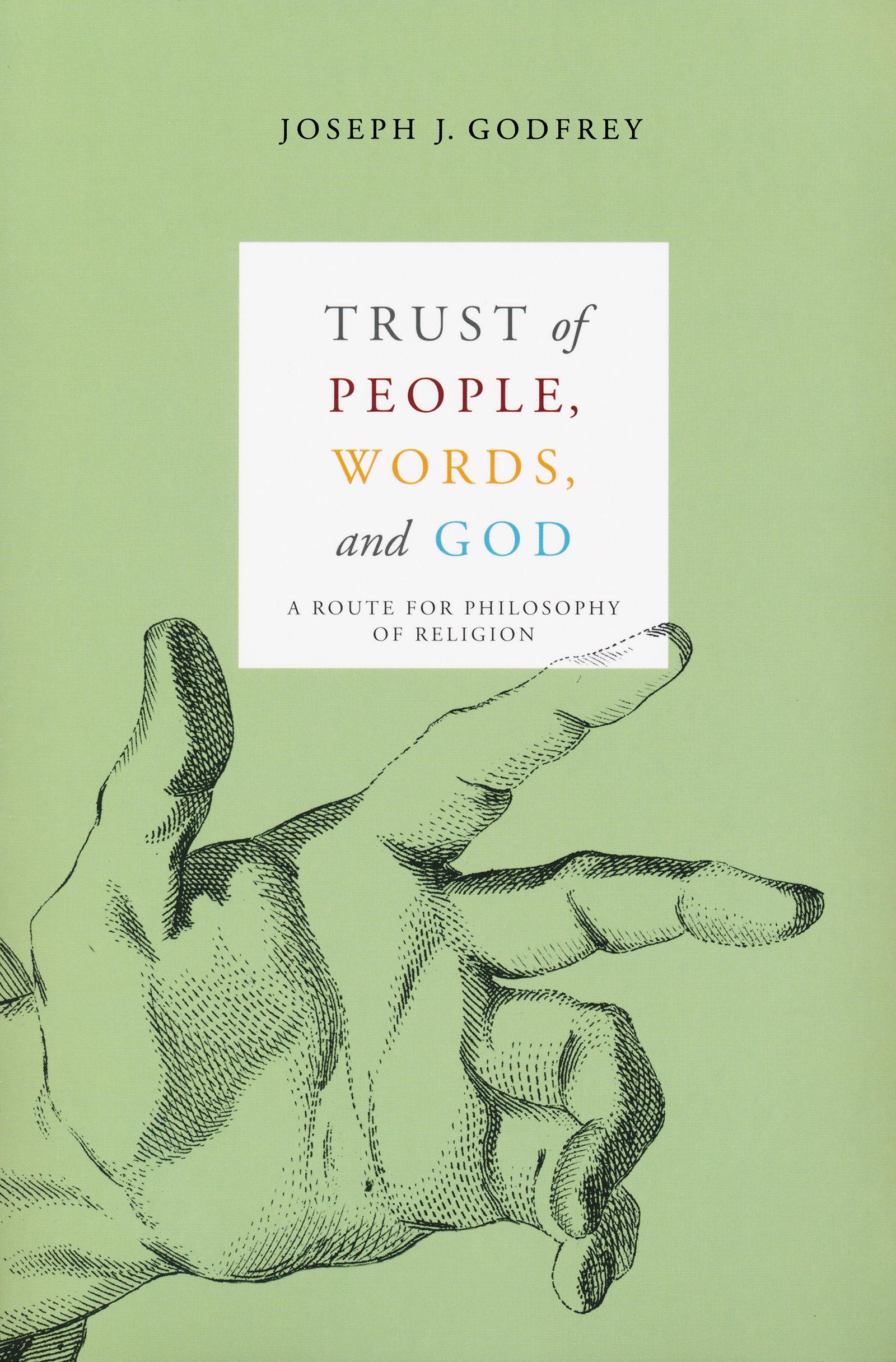
In this philosophical tour de force, Joseph J. Godfrey argues that trusting is a matter of what a person does—well or badly—and not at heart a matter of beliefs about someone. And believing someone’s words is a manner of trusting. Trusting is central to the practice of theistic religion. And when trusting is analyzed and recognized as receptivity to enhancement, we uncover important links between ethics, social theory, epistemology, ontological modeling, fiducial argumentation regarding God, and modes of religious faith, and thus realize an expanded philosophy of religion.
Godfrey develops four dimensions of trusting (reliance trust, I-thou trust, security trust, and openness trust) in the context of other philosophical approaches. The book engages, among others, Marcel Sarot, Paul Helm, and Richard Swinburne on ways of conceiving trust, James Ross and Mark Johnson on analogical meaning, Annette Baier on ethics, Russell Hardin on social and political theory, A. J. Coady and Richard Foley on epistemology, Dorothy Emmet and Gabriel Marcel on ontological modeling, and Richard Taylor, Donald Evans, Hans Küng, and Alvin Plantinga on arguments regarding God. The book then considers trust in religion, particularly in Christian theism. It delivers questions from a philosopher of religion to theologians, especially Christian theologians. Its conclusion offers a brief look at trust and evil.
Employing tools of analytic, Continental, and Thomistic philosophy, Godfrey offers a wide-ranging reflection on the nature of trust. By proposing that trust directed towards people and reliance on language and the word of others connect with the fiducial core of religion, the book is a sustained exercise in trust seeking understanding.
Before Memmo my notes were scattered across PDFs. Now a workspace pulls everything into one place — I see exactly what's still left to study.
Memmo's summaries are gold before exams. I don't have to re-read 800 pages two weeks before — just the important parts.
The AI chat has saved me the night before an exam more than once. I just keep asking until I get it — no waiting on a study group to reply.
The quizzes hit exactly what I need to know. Memmo tracks what I get stuck on — so I only practice what's worth it.
Flashcards with spaced repetition are magic. Memmo knows when I'm about to forget something and brings it back.
The AI podcasts are my favorite. I listen on my way to school and get a recap without sitting at a computer.

Handbok i kvalitativa metoder
281 kr

Hållbar utveckling: en introduktion för ingenjörer och andra problemlösare
334 kr

Brymans Samhällsvetenskapliga metoder
390 kr

Projektledning
491 kr

Den orättvisa hälsan: om socioekonomiska skillnader i hälsa och livslängd
326 kr

Vetenskapsteori för nybörjare
196 kr

Organizational Leadership
429 kr

På väg mot läraryrket
172 kr

Det sociala livet i skolan: Socialpsykologiska perspektiv
253 kr

Betygsättningens didaktik
151 kr

Personality
402 kr

Studying Leadership
404 kr

Managing Innovation
477 kr

Introduktion till samhällsvetenskaplig metod
347 kr

The Psychology of Sex and Gender
698 kr

Evidens och kunskap för socialt arbete
207 kr

Introduction to Leadership
605 kr