
Before Memmo my notes were scattered across PDFs. Now a workspace pulls everything into one place — I see exactly what's still left to study.
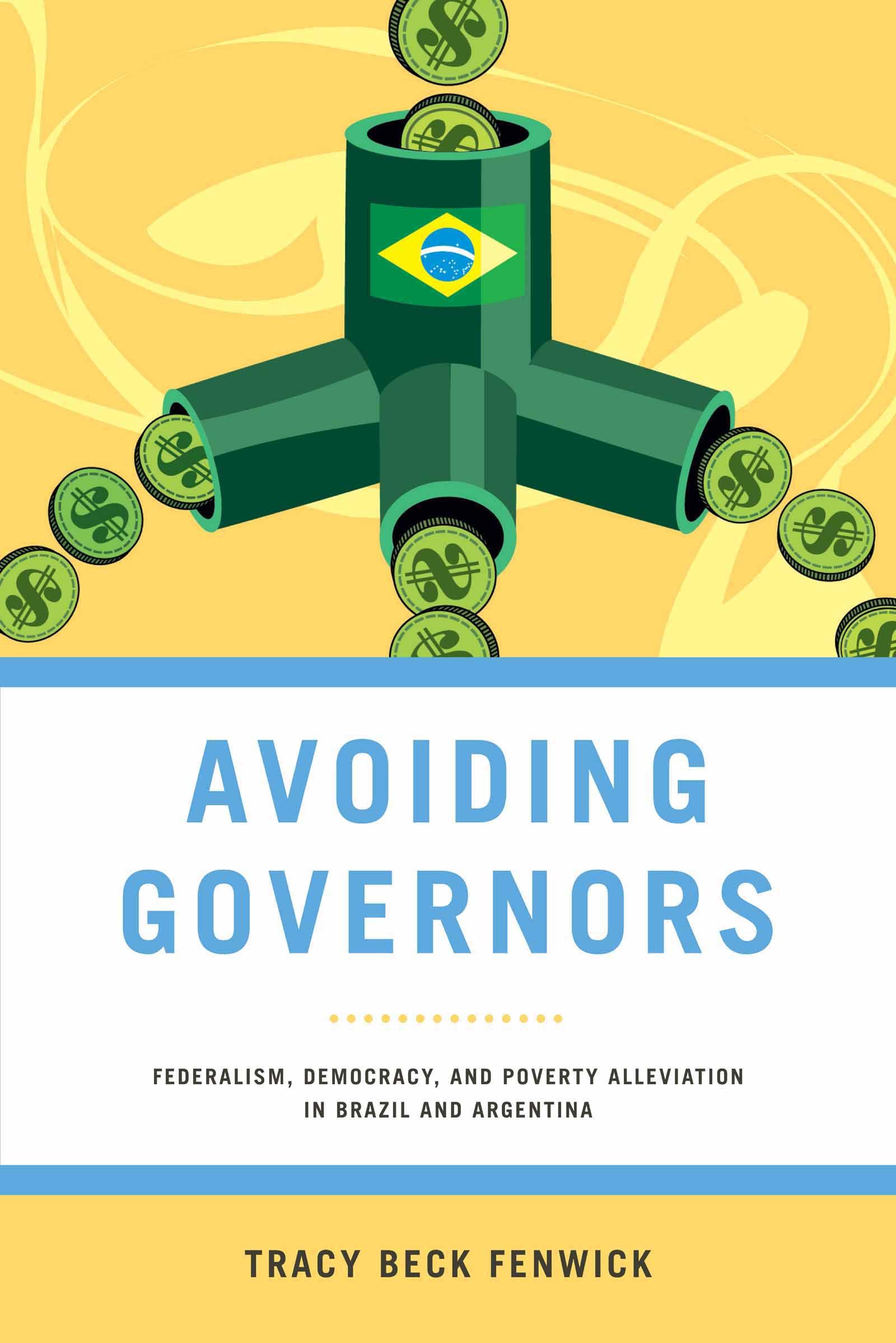
Fenwick analyzes poverty alleviation strategies in Brazil and Argentina to show how federalism affects the ability of a national government to sustain a conditional cash transfer program.
With the goal of showing the effect of domestic factors on the performance of poverty alleviation strategies in Latin America, Tracy Beck Fenwick explores the origins and rise of conditional cash transfer programs (CCTs) in the region, and then traces the politics and evolution of specific programs in Brazil and Argentina. Utilizing extensive field research and empirical analysis, Fenwick analyzes how federalism affects the ability of a national government to deliver CCTs.
One of Fenwick’s key findings is that broad institutional, structural, and political variables are more important in the success or failure of CCTs than the technical design of programs. Contrary to the mainstream interpretations of Brazilian federalism, her analysis shows that municipalities have contributed to the relative success of Bolsa Familia and its ability to be implemented territory-wide. Avoiding Governors probes the contrast with Argentina, where the structural, political, and fiscal incentives for national-local policy cooperation have not been adequate, at least this far, to sustain a CCT program that is conditional on human capital investments. She thus challenges the virtue of what is considered to be a mainly majoritarian democratic system.
By laying out the key factors that condition whether mayors either promote or undermine national policy objectives, Fenwick concludes that municipalities can either facilitate or block a national government’s ability to deliver targeted social policy goods and to pursue a poverty alleviation strategy. By distinguishing municipalities as separate actors, she presents a dynamic intergovernmental relationship; indeed, she identifies a power struggle between multiple levels of government and their electorates, not just a dichotomously framed two-level game of national versus subnational.
Before Memmo my notes were scattered across PDFs. Now a workspace pulls everything into one place — I see exactly what's still left to study.
Memmo's summaries are gold before exams. I don't have to re-read 800 pages two weeks before — just the important parts.
The AI chat has saved me the night before an exam more than once. I just keep asking until I get it — no waiting on a study group to reply.
The quizzes hit exactly what I need to know. Memmo tracks what I get stuck on — so I only practice what's worth it.
Flashcards with spaced repetition are magic. Memmo knows when I'm about to forget something and brings it back.
The AI podcasts are my favorite. I listen on my way to school and get a recap without sitting at a computer.

Handbok i kvalitativa metoder
281 kr

Hållbar utveckling: en introduktion för ingenjörer och andra problemlösare
334 kr

Brymans Samhällsvetenskapliga metoder
390 kr

Projektledning
491 kr

Den orättvisa hälsan: om socioekonomiska skillnader i hälsa och livslängd
326 kr

Organizational Leadership
429 kr

Vetenskapsteori för nybörjare
196 kr

På väg mot läraryrket
172 kr

Det sociala livet i skolan: Socialpsykologiska perspektiv
253 kr

Betygsättningens didaktik
151 kr

Personality
402 kr

Studying Leadership
404 kr

Managing Innovation
477 kr

Introduktion till samhällsvetenskaplig metod
347 kr

The Psychology of Sex and Gender
698 kr

Evidens och kunskap för socialt arbete
207 kr

Introduction to Leadership
605 kr