
Before Memmo my notes were scattered across PDFs. Now a workspace pulls everything into one place — I see exactly what's still left to study.
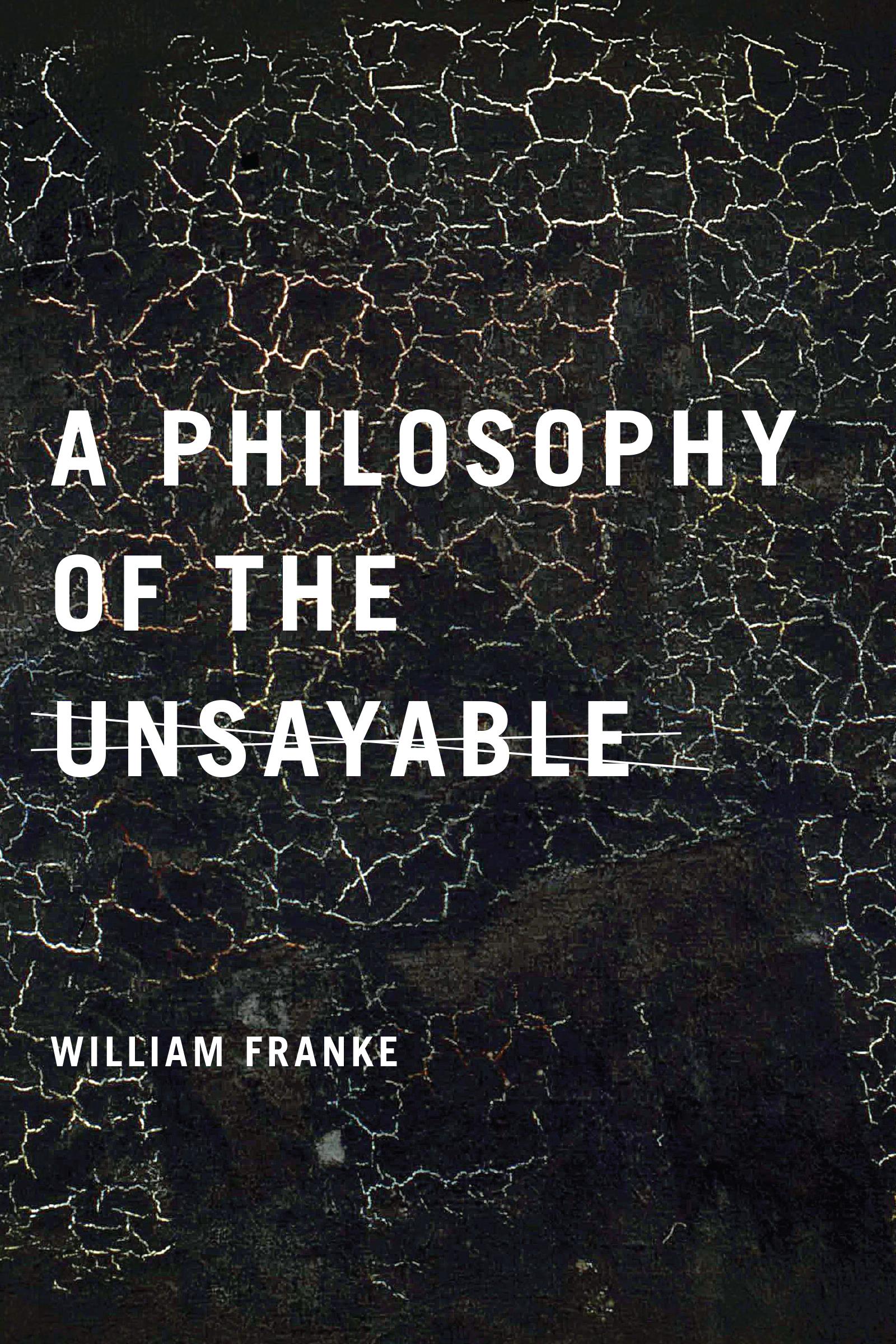
In A Philosophy of the Unsayable, William Franke argues that the encounter with what exceeds speech has become the crucial philosophical issue of our time. He proposes an original philosophy pivoting on analysis of the limits of language. The book also offers readings of literary texts as poetically performing the philosophical principles it expounds. Franke engages with philosophical theologies and philosophies of religion in the debate over negative theology and shows how apophaticism infiltrates the thinking even of those who attempt to deny or delimit it.
In six cohesive essays, Franke explores fundamental aspects of unsayability. In the first and third essays, his philosophical argument is carried through with acute attention to modes of unsayability that are revealed best by literary works, particularly by negativities of poetic language in the oeuvres of Paul Celan and Edmond Jabès. Franke engages in critical discussion of apophatic currents of philosophy both ancient and modern, focusing on Hegel and French post-Hegelianism in his second essay and on Neoplatonism in his fourth essay. He treats Neoplatonic apophatics especially as found in Damascius and as illuminated by postmodern thought, particularly Jean-Luc Nancy’s deconstruction of Christianity. In the last two essays, Franke treats the tension between two contemporary approaches to philosophy of religion—Radical Orthodoxy and radically secular or Death-of-God theologies. A Philosophy of the Unsayable will interest scholars and students of philosophy, literature, religion, and the humanities. This book develops Franke's explicit theory of unsayability, which is informed by his long-standing engagement with major representatives of apophatic thought in the Western tradition.
Before Memmo my notes were scattered across PDFs. Now a workspace pulls everything into one place — I see exactly what's still left to study.
Memmo's summaries are gold before exams. I don't have to re-read 800 pages two weeks before — just the important parts.
The AI chat has saved me the night before an exam more than once. I just keep asking until I get it — no waiting on a study group to reply.
The quizzes hit exactly what I need to know. Memmo tracks what I get stuck on — so I only practice what's worth it.
Flashcards with spaced repetition are magic. Memmo knows when I'm about to forget something and brings it back.
The AI podcasts are my favorite. I listen on my way to school and get a recap without sitting at a computer.

Handbok i kvalitativa metoder
281 kr

Hållbar utveckling: en introduktion för ingenjörer och andra problemlösare
334 kr

Brymans Samhällsvetenskapliga metoder
390 kr

Projektledning
491 kr

Den orättvisa hälsan: om socioekonomiska skillnader i hälsa och livslängd
326 kr

Vetenskapsteori för nybörjare
196 kr

Organizational Leadership
429 kr

På väg mot läraryrket
172 kr

Det sociala livet i skolan: Socialpsykologiska perspektiv
253 kr

Betygsättningens didaktik
151 kr

Personality
402 kr

Studying Leadership
404 kr

Managing Innovation
477 kr

Introduktion till samhällsvetenskaplig metod
347 kr

The Psychology of Sex and Gender
698 kr

Evidens och kunskap för socialt arbete
207 kr

Introduction to Leadership
605 kr