
Before Memmo my notes were scattered across PDFs. Now a workspace pulls everything into one place — I see exactly what's still left to study.
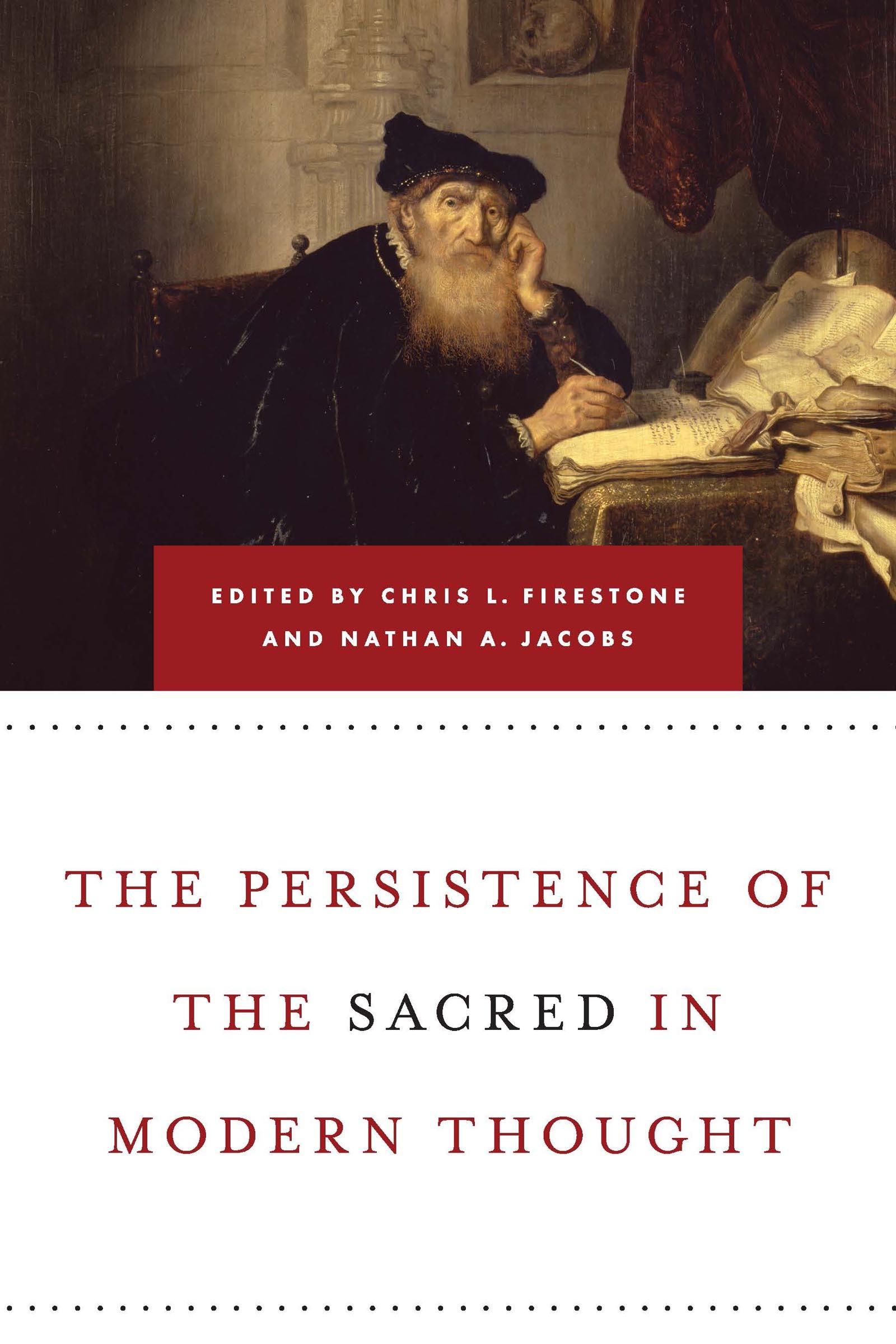
In The Persistence of the Sacred in Modern Thought, Chris L. Firestone, Nathan A. Jacobs, and thirteen other contributors examine the role of God in the thought of major European philosophers from the seventeenth to the nineteenth century. The philosophers considered are, by and large, not orthodox theists; they are highly influential freethinkers, emancipated by an age no longer tethered to the authority of church and state. While acknowledging this fact, the contributors are united in arguing that this is only one side of a complex story. To redress the imbalance of attention to secularism among crucial modern thinkers and to consolidate a more theologically informed view of modernity, they focus on the centrality of the sacred (theology and God) in the thought of these philosophers. The essays, each in its own way, argue that the major figures in modernity are theologically astute, bent not on removing God from philosophy but on putting faith and reason on a more sure footing in light of advancements in science and a perceived need to rethink the relationship between God and world.
By highlighting and defending the theologically affirmative dimensions of thinkers such as Thomas Hobbes, Gottfried Leibniz, John Locke, Immanuel Kant, F. W. J. Schelling, G. W. F. Hegel, and others, the essayists present a forceful and timely correction of widely accepted interpretations of these philosophers. To ignore or downplay the theological dimensions of the philosophical works they address, they argue, distorts our understanding of modern thought.
Contributors: Nicholas Adams, Hubert Bost, Philip Clayton, John Cottingham, Yolanda Estes, Chris L. Firestone, Lee Hardy, Peter C. Hodgson, Nathan A. Jacobs, Jacqueline Mariña, A. P. Martinich, Richard A. Muller, Myron B. Penner, Stephen D. Snobelen, Nicholas Wolterstorff.
Before Memmo my notes were scattered across PDFs. Now a workspace pulls everything into one place — I see exactly what's still left to study.
Memmo's summaries are gold before exams. I don't have to re-read 800 pages two weeks before — just the important parts.
The AI chat has saved me the night before an exam more than once. I just keep asking until I get it — no waiting on a study group to reply.
The quizzes hit exactly what I need to know. Memmo tracks what I get stuck on — so I only practice what's worth it.
Flashcards with spaced repetition are magic. Memmo knows when I'm about to forget something and brings it back.
The AI podcasts are my favorite. I listen on my way to school and get a recap without sitting at a computer.

Handbok i kvalitativa metoder
281 kr

Hållbar utveckling: en introduktion för ingenjörer och andra problemlösare
334 kr

Brymans Samhällsvetenskapliga metoder
390 kr

Projektledning
491 kr

Den orättvisa hälsan: om socioekonomiska skillnader i hälsa och livslängd
326 kr

Vetenskapsteori för nybörjare
196 kr

Organizational Leadership
429 kr

På väg mot läraryrket
172 kr

Det sociala livet i skolan: Socialpsykologiska perspektiv
253 kr

Betygsättningens didaktik
151 kr

Personality
402 kr

Studying Leadership
404 kr

Managing Innovation
477 kr

Introduktion till samhällsvetenskaplig metod
347 kr

The Psychology of Sex and Gender
698 kr

Evidens och kunskap för socialt arbete
207 kr

Introduction to Leadership
605 kr