
Before Memmo my notes were scattered across PDFs. Now a workspace pulls everything into one place — I see exactly what's still left to study.
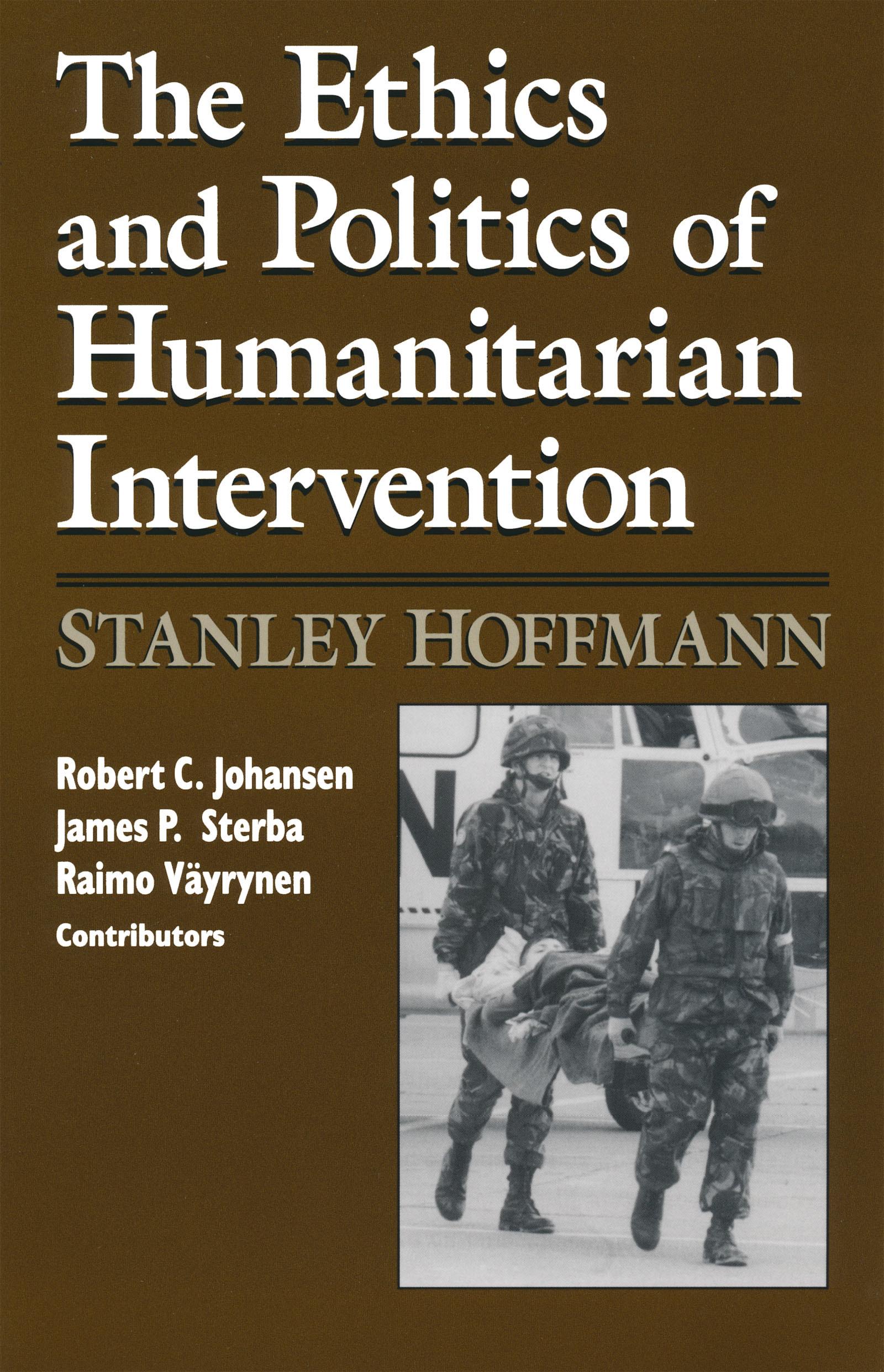
In 1995, the Kroc Institute, University of Notre Dame, hosted the first of the Theodore M. Hesburgh Lectures on Ethics and Public Policy. At this inaugural gathering renowned author and scholar Stanely Hoffmann delivered two lectures on the problems of humanitarian intervention in international relations. This timely volume presents Hoffmann’s lectures to a wider audience, together with responses made at the conference by Robert C. Johansen an James Sterba, and an introductory essay contributed by Raimo Varynen, director of the Kroc Institute.
In his first and premiere lecture, Hoffman attacks from a theoretical perspective the political, legal, and moral problems of outside intervention in the affairs of a state. He analyzes the traditional principle, i.e., economic and environmental interdependence, human rights concerns, nuclear proliferation, and the growing international consciousness of the widespread dangers of domestic chaos. As a matter of practical ethics in the “real world,” Hoffman proposes norms and guidelines for controlled, impartial, collective intervention and the enforcement which must accompany it.
In his second illustrative lecture, Hoffman delivers a stinging indictment of international community in the case of the tragic disintegration of Yugoslavia, which he uses as a case study to illustrate the failure of collective intervention. In the responding essays, Johansen presents guidelines for humanitarian intervention short of sending in troops, and Sterba argues that Hoffmann’s basic norms can be derived from Kant’s moral philosophy.
Because Hoffmann’s principles--and indictments--can be readily applied to other tragic events and cases of international turmoil, The Ethics and Politics of Humanitarian Intervention will be a valuable tool in the hands of students and scholars of international relations.
Before Memmo my notes were scattered across PDFs. Now a workspace pulls everything into one place — I see exactly what's still left to study.
Memmo's summaries are gold before exams. I don't have to re-read 800 pages two weeks before — just the important parts.
The AI chat has saved me the night before an exam more than once. I just keep asking until I get it — no waiting on a study group to reply.
The quizzes hit exactly what I need to know. Memmo tracks what I get stuck on — so I only practice what's worth it.
Flashcards with spaced repetition are magic. Memmo knows when I'm about to forget something and brings it back.
The AI podcasts are my favorite. I listen on my way to school and get a recap without sitting at a computer.

Handbok i kvalitativa metoder
281 kr

Hållbar utveckling: en introduktion för ingenjörer och andra problemlösare
334 kr

Brymans Samhällsvetenskapliga metoder
390 kr

Projektledning
491 kr

Den orättvisa hälsan: om socioekonomiska skillnader i hälsa och livslängd
326 kr

Vetenskapsteori för nybörjare
196 kr

Organizational Leadership
429 kr

På väg mot läraryrket
172 kr

Det sociala livet i skolan: Socialpsykologiska perspektiv
253 kr

Betygsättningens didaktik
151 kr

Personality
402 kr

Studying Leadership
404 kr

Managing Innovation
477 kr

Introduktion till samhällsvetenskaplig metod
347 kr

The Psychology of Sex and Gender
698 kr

Evidens och kunskap för socialt arbete
207 kr

Introduction to Leadership
605 kr