
Before Memmo my notes were scattered across PDFs. Now a workspace pulls everything into one place — I see exactly what's still left to study.
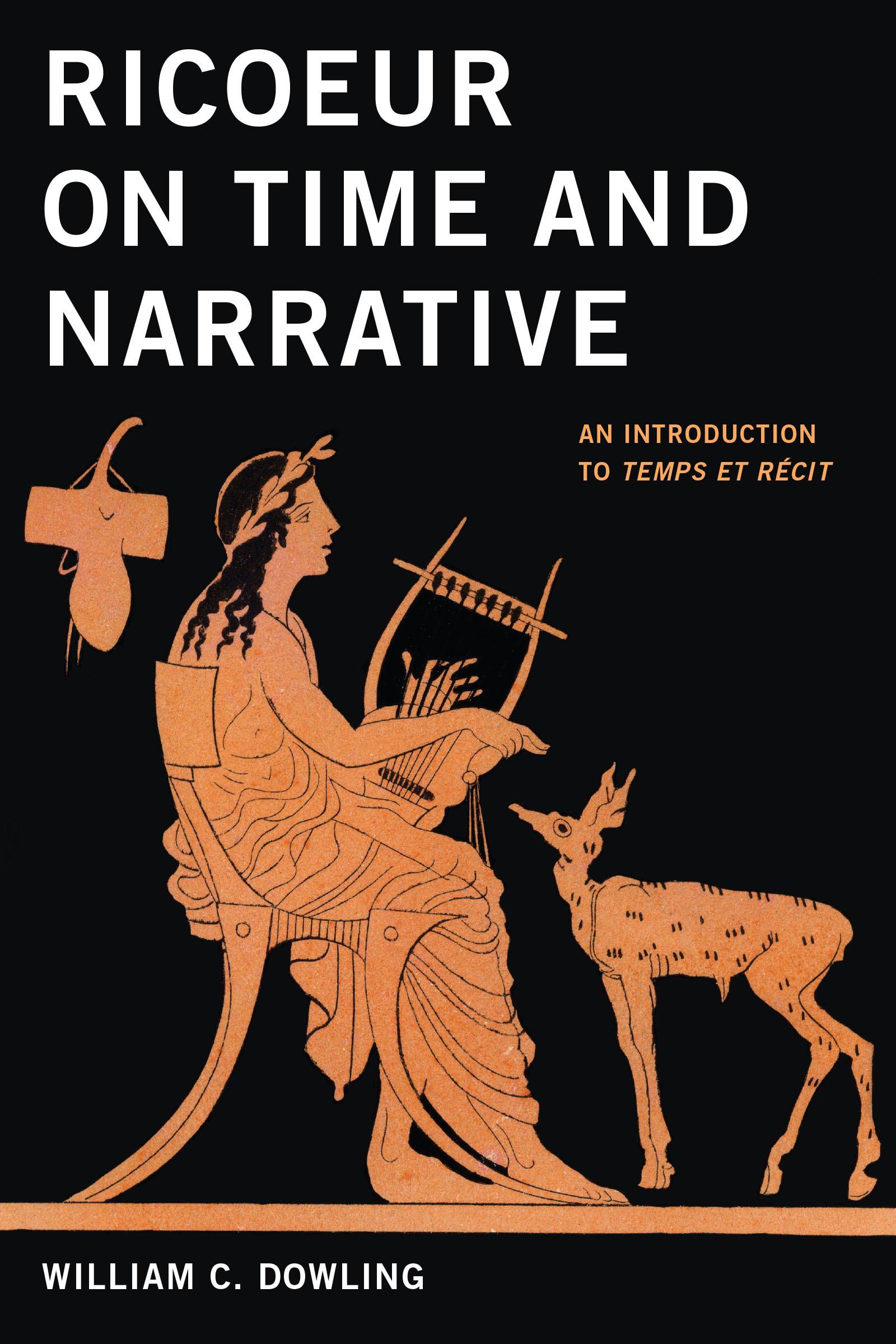
“The object of this book,” writes William C. Dowling in his preface, “is to make the key concepts of Paul Ricoeur’s Time and Narrative available to readers who might have felt bewildered by the twists and turns of its argument.” The sources of puzzlement are, he notes, many. For some, it is Ricoeur’s famously indirect style of presentation, in which the polarities of argument and exegesis seem so often and so suddenly to have reversed themselves. For others, it is the extraordinary intellectual range of Ricoeur’s argument, drawing on traditions as distant from each other as Heideggerian existentialism, French structuralism, and Anglo-American analytic philosophy. Yet beneath the labyrinthian surface of Ricoeur’s Temps et récit, Dowling reveals a single extended argument that, though developed unsystematically, is meant to be understood in systematic terms. Ricoeur on Time and Narrative presents that argument in clear and concise terms, in a way that will be enlightening both to readers new to Ricoeur and those who may have felt themselves adrift in the complexities of Temps et récit, Ricoeur’s last major philosophical work. Dowling divides his discussion into six chapters, all closely involved with specific arguments in Temps et récit: on mimesis, time, narrativity, semantics of action, poetics of history, and poetics of fiction. Additionally, Dowling provides a preface that lays out the French intellectual context of Ricoeur's philosophical method. An appendix presents his English translation of a personal interview in which Ricoeur, having completed Time and Narrative, looks back over his long career as an internationally renowned philosopher. Ricoeur on Time and Narrative communicates to readers the intellectual excitement of following Ricoeur’s dismantling of established theories and arguments—Aristotle and Augustine and Husserl on time, Frye and Greimas on narrative structure, Arthur Danto and Louis O. Mink on the nature of historical explanation—while coming to see how, under the pressure of Ricoeur’s analysis, these ideas are reconstituted and revealed in a new set of relations to one another.
Before Memmo my notes were scattered across PDFs. Now a workspace pulls everything into one place — I see exactly what's still left to study.
Memmo's summaries are gold before exams. I don't have to re-read 800 pages two weeks before — just the important parts.
The AI chat has saved me the night before an exam more than once. I just keep asking until I get it — no waiting on a study group to reply.
The quizzes hit exactly what I need to know. Memmo tracks what I get stuck on — so I only practice what's worth it.
Flashcards with spaced repetition are magic. Memmo knows when I'm about to forget something and brings it back.
The AI podcasts are my favorite. I listen on my way to school and get a recap without sitting at a computer.

Handbok i kvalitativa metoder
281 kr

Hållbar utveckling: en introduktion för ingenjörer och andra problemlösare
334 kr

Brymans Samhällsvetenskapliga metoder
390 kr

Projektledning
491 kr

Den orättvisa hälsan: om socioekonomiska skillnader i hälsa och livslängd
326 kr

Organizational Leadership
429 kr

Vetenskapsteori för nybörjare
196 kr

På väg mot läraryrket
172 kr

Det sociala livet i skolan: Socialpsykologiska perspektiv
253 kr

Betygsättningens didaktik
151 kr

Personality
402 kr

Studying Leadership
404 kr

Managing Innovation
477 kr

Introduktion till samhällsvetenskaplig metod
347 kr

The Psychology of Sex and Gender
698 kr

Evidens och kunskap för socialt arbete
207 kr

Introduction to Leadership
605 kr