
Before Memmo my notes were scattered across PDFs. Now a workspace pulls everything into one place — I see exactly what's still left to study.
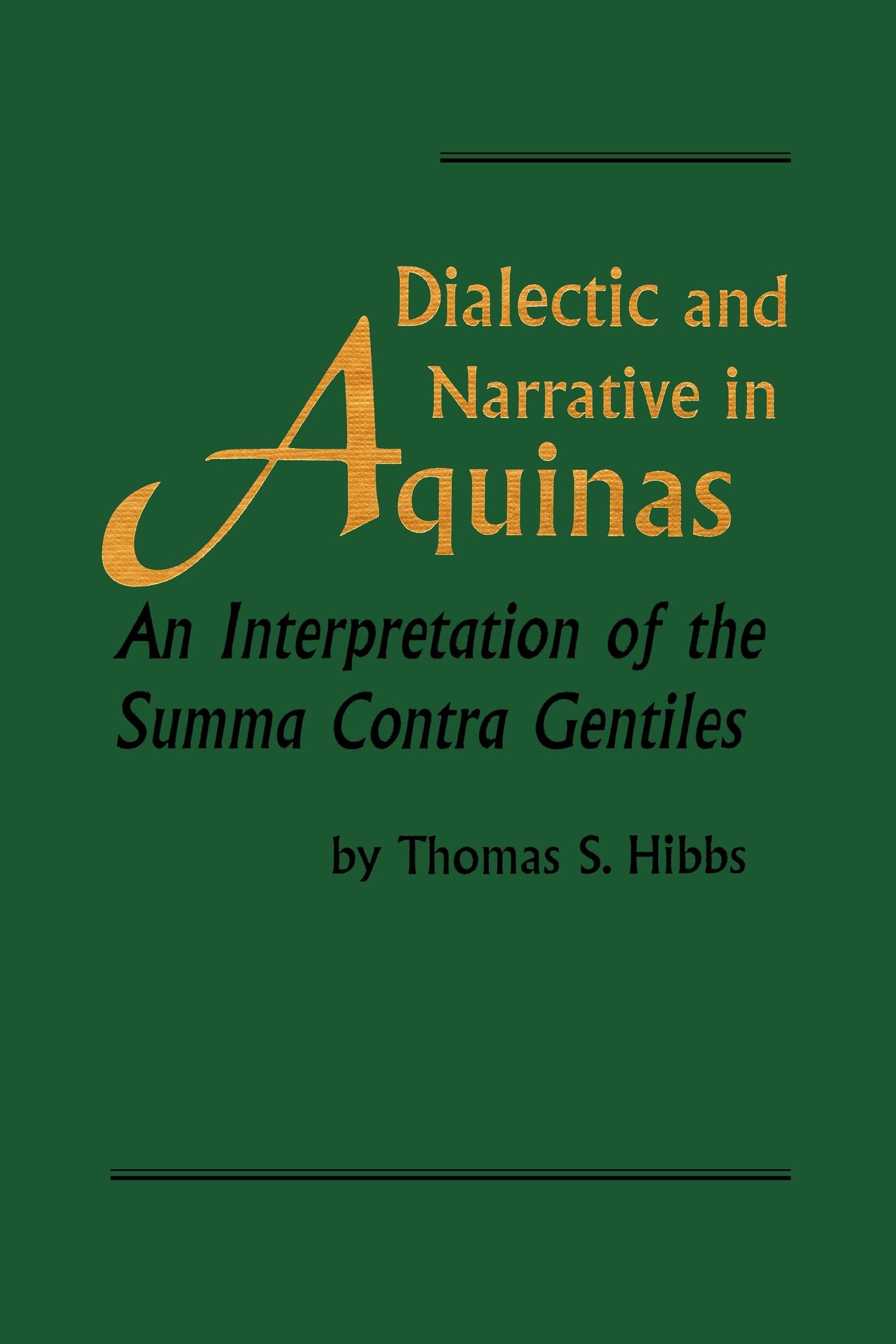
Dialectic and Narrative in Aquinas investigates the intent, method, and structural unity of Thomas Aquinas's Summa Contra Gentiles. In this innovative study Thomas S. Hibbs goes against the grain of most traditional interpretations of the work, which claim it serves a missionary or apologetic end, and argues that the intended audience is Christian and that its subject is Christian wisdom. In the process of making his argument, Hibbs also demonstrates that the Summa Contra Gentiles is the most important of Aquinas's texts on the relationship between faith and reason, theology, and philosophy.
Since the prologue to the Summa Contra Gentiles has been the focus of nearly all the debates over the work, Hibbs begins with an examination of it and the controversies it has provoked, and tests various interpretations of the prologue in light of the actual text. He then goes on to suggest that the method of the Contra Gentiles is dialectical and that its unifying principle is provided by the narrative structure of scripture. The next chapters are devoted to each of the Contra Gentiles' four ports and Hibbs argues that any interpretation of the first three books must consider how the order of Aquinas's discussion is driven by a series of dialectical encounters with received opinions, especially those of Aristotle and his commentators. Hibbs further demonstrates how attention to the dialectical method of the work has two advantages: first, it enables readers to avoid misinterpretations of Aquinas's positions on various issues, and second, it allows the reader to recapture something of Aquinas's original pedagogical intent. Dialectic and Narrative in Aquinas also reveals how the dialectical method of the Contra Gentiles is crucial to Aquinas's project of subordinating philosophy to theology, and in the concluding chapter Hibbs considers in detail the narrative unity of the Contra Gentiles and brings themes from Aquinas into conversation with contemporary work in genre theory.
Before Memmo my notes were scattered across PDFs. Now a workspace pulls everything into one place — I see exactly what's still left to study.
Memmo's summaries are gold before exams. I don't have to re-read 800 pages two weeks before — just the important parts.
The AI chat has saved me the night before an exam more than once. I just keep asking until I get it — no waiting on a study group to reply.
The quizzes hit exactly what I need to know. Memmo tracks what I get stuck on — so I only practice what's worth it.
Flashcards with spaced repetition are magic. Memmo knows when I'm about to forget something and brings it back.
The AI podcasts are my favorite. I listen on my way to school and get a recap without sitting at a computer.

Handbok i kvalitativa metoder
281 kr

Hållbar utveckling: en introduktion för ingenjörer och andra problemlösare
334 kr

Brymans Samhällsvetenskapliga metoder
390 kr

Projektledning
491 kr

Den orättvisa hälsan: om socioekonomiska skillnader i hälsa och livslängd
326 kr

Organizational Leadership
429 kr

Vetenskapsteori för nybörjare
196 kr

På väg mot läraryrket
172 kr

Det sociala livet i skolan: Socialpsykologiska perspektiv
253 kr

Betygsättningens didaktik
151 kr

Personality
402 kr

Studying Leadership
404 kr

Managing Innovation
477 kr

Introduktion till samhällsvetenskaplig metod
347 kr

The Psychology of Sex and Gender
698 kr

Evidens och kunskap för socialt arbete
207 kr

Introduction to Leadership
605 kr