
Before Memmo my notes were scattered across PDFs. Now a workspace pulls everything into one place — I see exactly what's still left to study.
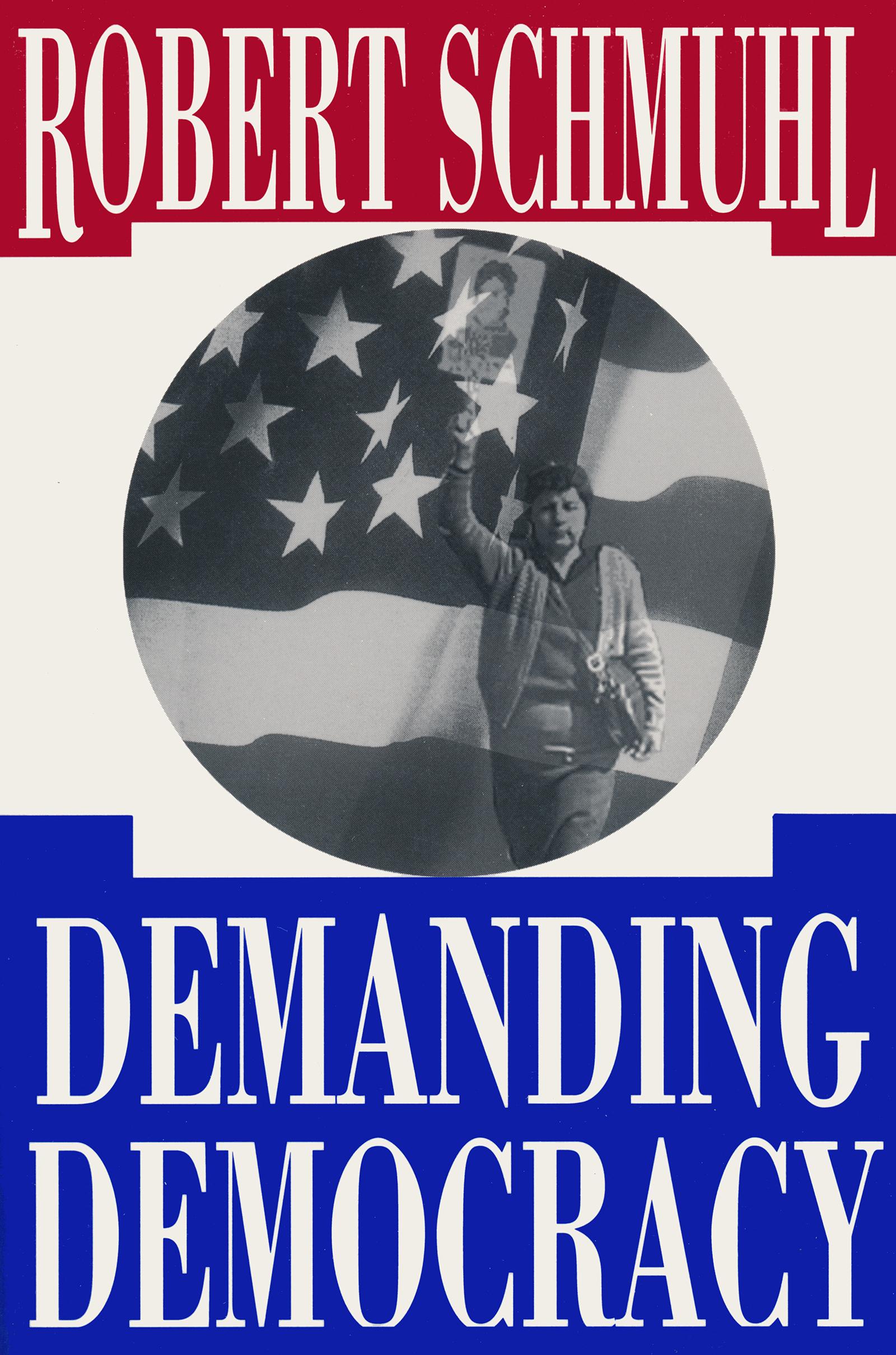
Public interest in the 1992 presidential campaign resulted in the highest electoral turnout since the heated, war-focused 1968 race involving Richard Nixon, Hubert Humphrey, and George Wallace. In Demanding Democracy Robert Schmuhl examines the unparalleled interplay among citizens, political figures, and the media during the 1992 election year, arguing that a number of events—the hunger of an angry electorate for answers to their problems, the backlash against the sound-bites and negative spots of 1988, the impact of the "New News" with its proliferation of sources for political information, and Ross Perot's emergence as a presidential candidate—resulted in the people reshaping political institutions and the media as they demanded a more proximate and participatory democracy.
After an introductory section, Schmuhl looks backward to 1992, examining in detail how George Bush, Ross Perot, and Bill Clinton were portrayed by different forms of popular communication. Some of the questions Schmuhl addresses in this section are: Why did George Bush Jose the popularity he enjoyed in 1991 after the Persian Gulf War? What did the emergence of Ross Perot and his extensive use of television signify for American politics? And how was the relatively unknown Bill Clinton able to overcome doubts about his character to win the White House?
In the final section Schmuhl looks forward, exploring the impact of new communication technology on the way in which we as citizens form our opinions, elect candidates, and participate in public life. He discusses the "Information Highway," speculating if it will lead to more politically attuned voters, or to people more inclined to turn away from civic concerns toward personal pursuits. And finally, Schmuhl analyzes what the predicted demographic shifts over the next half-century will mean to political life in the United States.
Before Memmo my notes were scattered across PDFs. Now a workspace pulls everything into one place — I see exactly what's still left to study.
Memmo's summaries are gold before exams. I don't have to re-read 800 pages two weeks before — just the important parts.
The AI chat has saved me the night before an exam more than once. I just keep asking until I get it — no waiting on a study group to reply.
The quizzes hit exactly what I need to know. Memmo tracks what I get stuck on — so I only practice what's worth it.
Flashcards with spaced repetition are magic. Memmo knows when I'm about to forget something and brings it back.
The AI podcasts are my favorite. I listen on my way to school and get a recap without sitting at a computer.

Handbok i kvalitativa metoder
281 kr

Hållbar utveckling: en introduktion för ingenjörer och andra problemlösare
334 kr

Brymans Samhällsvetenskapliga metoder
390 kr

Projektledning
491 kr

Den orättvisa hälsan: om socioekonomiska skillnader i hälsa och livslängd
326 kr

Vetenskapsteori för nybörjare
196 kr

Organizational Leadership
429 kr

På väg mot läraryrket
172 kr

Det sociala livet i skolan: Socialpsykologiska perspektiv
253 kr

Betygsättningens didaktik
151 kr

Personality
402 kr

Studying Leadership
404 kr

Managing Innovation
477 kr

Introduktion till samhällsvetenskaplig metod
347 kr

The Psychology of Sex and Gender
698 kr

Evidens och kunskap för socialt arbete
207 kr

Introduction to Leadership
605 kr