
Before Memmo my notes were scattered across PDFs. Now a workspace pulls everything into one place — I see exactly what's still left to study.
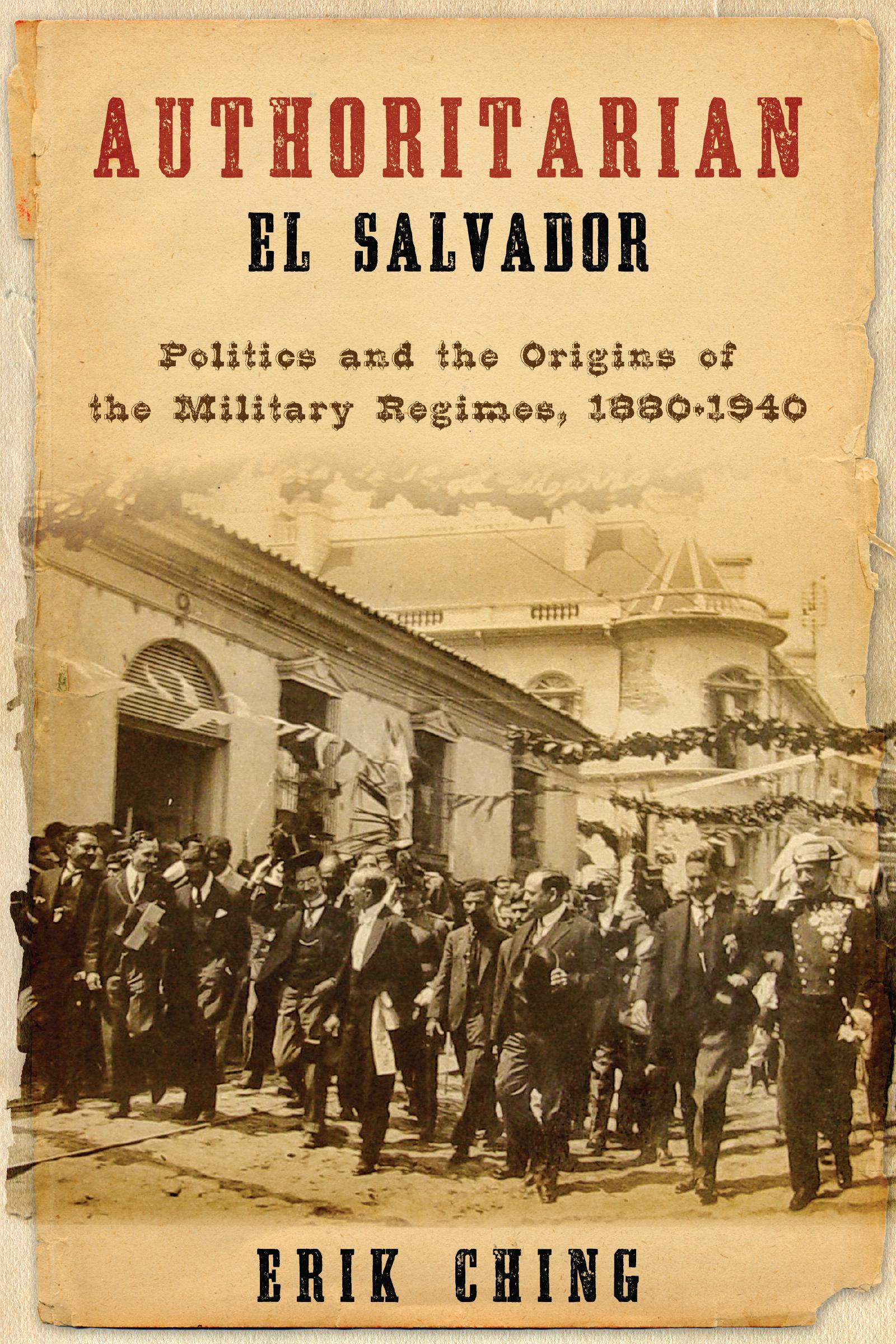
In December 1931, El Salvador’s civilian president, Arturo Araujo, was overthrown in a military coup. Such an event was hardly unique in Salvadoran history, but the 1931 coup proved to be a watershed. Araujo had been the nation’s first democratically elected president, and although no one could have foreseen the result, the coup led to five decades of uninterrupted military rule, the longest run in modern Latin American history. Furthermore, six weeks after coming to power, the new military regime oversaw the crackdown on a peasant rebellion in western El Salvador that is one of the worst episodes of state-sponsored repression in modern Latin American history. Democracy would not return to El Salvador until the 1990s, and only then after a brutal twelve-year civil war.
In Authoritarian El Salvador: Politics and the Origins of the Military Regimes, 1880-1940, Erik Ching seeks to explain the origins of the military regime that came to power in 1931. Based on his comprehensive survey of the extant documentary record in El Salvador’s national archive, Ching argues that El Salvador was typified by a longstanding tradition of authoritarianism dating back to the early- to mid-nineteenth century. The basic structures of that system were based on patron-client relationships that wove local, regional, and national political actors into complex webs of rival patronage networks. Decidedly nondemocratic in practice, the system nevertheless exhibited highly paradoxical traits: it remained steadfastly loyal to elections as the mechanism by which political aspirants acquired office, and it employed a political discourse laden with appeals to liberty and free suffrage. That blending of nondemocratic authoritarianism with populist reformism and rhetoric set the precedent for military rule for the next fifty years.
Before Memmo my notes were scattered across PDFs. Now a workspace pulls everything into one place — I see exactly what's still left to study.
Memmo's summaries are gold before exams. I don't have to re-read 800 pages two weeks before — just the important parts.
The AI chat has saved me the night before an exam more than once. I just keep asking until I get it — no waiting on a study group to reply.
The quizzes hit exactly what I need to know. Memmo tracks what I get stuck on — so I only practice what's worth it.
Flashcards with spaced repetition are magic. Memmo knows when I'm about to forget something and brings it back.
The AI podcasts are my favorite. I listen on my way to school and get a recap without sitting at a computer.

Handbok i kvalitativa metoder
281 kr

Hållbar utveckling: en introduktion för ingenjörer och andra problemlösare
334 kr

Brymans Samhällsvetenskapliga metoder
390 kr

Projektledning
491 kr

Den orättvisa hälsan: om socioekonomiska skillnader i hälsa och livslängd
326 kr

Vetenskapsteori för nybörjare
196 kr

Organizational Leadership
429 kr

På väg mot läraryrket
172 kr

Det sociala livet i skolan: Socialpsykologiska perspektiv
253 kr

Betygsättningens didaktik
151 kr

Personality
402 kr

Studying Leadership
404 kr

Managing Innovation
477 kr

Introduktion till samhällsvetenskaplig metod
347 kr

The Psychology of Sex and Gender
698 kr

Evidens och kunskap för socialt arbete
207 kr

Introduction to Leadership
605 kr