
Before Memmo my notes were scattered across PDFs. Now a workspace pulls everything into one place — I see exactly what's still left to study.
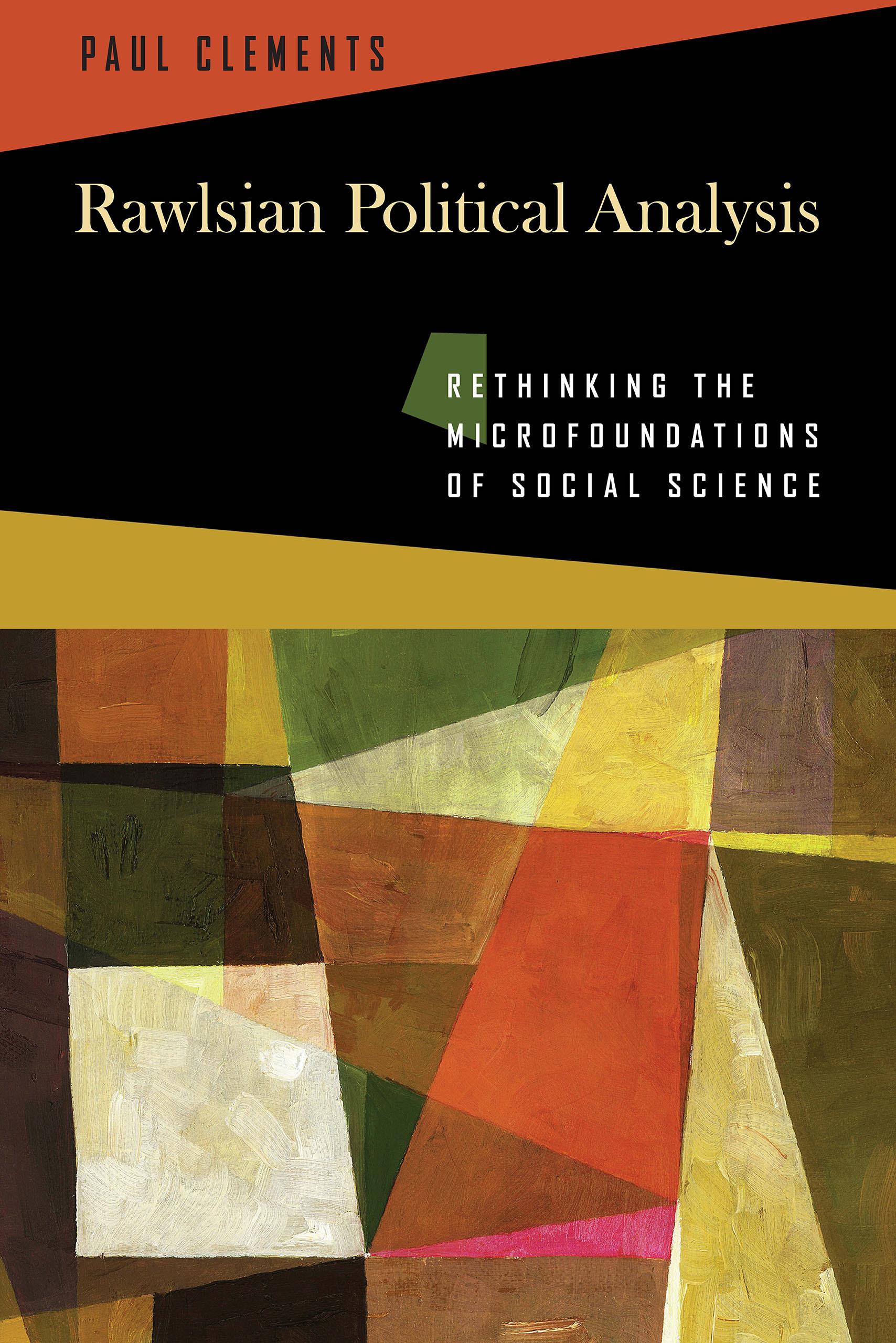
In Rawlsian Political Analysis: Rethinking the Microfoundations of Social Science, Paul Clements develops a new, morally grounded model of political and social analysis as a critique of and improvement on both neoclassical economics and rational choice theory. What if practical reason is based not only on interests and ideas of the good, as these theories have it, but also on principles and sentiments of right? The answer, Clements argues, requires a radical reorientation of social science from the idea of interests to the idea of social justice.
According to Clements, systematic weaknesses in neoclassical economics and rational choice theory are due to their limited model of choice. According to such theories in the utilitarian tradition, all our practical decisions aim to maximize the satisfaction of our interests. These neo-utilitarian approaches focus on how we promote our interests, but Clements argues, our ideas of right, cognitively represented in principles, contribute independently and no less fundamentally to our practical decisions.
The most significant challenge to utilitarianism in the last half century is found in John Rawls’s Theory of Justice and Political Liberalism, in which Rawls builds on Kant's concept of practical reason. Clements extends Rawls's moral theory and his critique of utilitarianism by arguing for social analysis based on the Kantian and Rawlsian model of choice. To illustrate the explanatory power of his model, he presents three detailed case studies: a program analysis of the Grameen Bank of Bangladesh, a political economy analysis of the causes of poverty in the Indian state of Bihar, and a problem-based analysis of the ethics and politics of climate change. He concludes by exploring the broad implications of social analysis grounded in a concept of social justice.
Before Memmo my notes were scattered across PDFs. Now a workspace pulls everything into one place — I see exactly what's still left to study.
Memmo's summaries are gold before exams. I don't have to re-read 800 pages two weeks before — just the important parts.
The AI chat has saved me the night before an exam more than once. I just keep asking until I get it — no waiting on a study group to reply.
The quizzes hit exactly what I need to know. Memmo tracks what I get stuck on — so I only practice what's worth it.
Flashcards with spaced repetition are magic. Memmo knows when I'm about to forget something and brings it back.
The AI podcasts are my favorite. I listen on my way to school and get a recap without sitting at a computer.

Handbok i kvalitativa metoder
281 kr

Hållbar utveckling: en introduktion för ingenjörer och andra problemlösare
334 kr

Brymans Samhällsvetenskapliga metoder
390 kr

Projektledning
491 kr

Den orättvisa hälsan: om socioekonomiska skillnader i hälsa och livslängd
326 kr

Vetenskapsteori för nybörjare
196 kr

Organizational Leadership
429 kr

På väg mot läraryrket
172 kr

Det sociala livet i skolan: Socialpsykologiska perspektiv
253 kr

Betygsättningens didaktik
151 kr

Personality
402 kr

Studying Leadership
404 kr

Managing Innovation
477 kr

Introduktion till samhällsvetenskaplig metod
347 kr

The Psychology of Sex and Gender
698 kr

Evidens och kunskap för socialt arbete
207 kr

Introduction to Leadership
605 kr