
Before Memmo my notes were scattered across PDFs. Now a workspace pulls everything into one place — I see exactly what's still left to study.
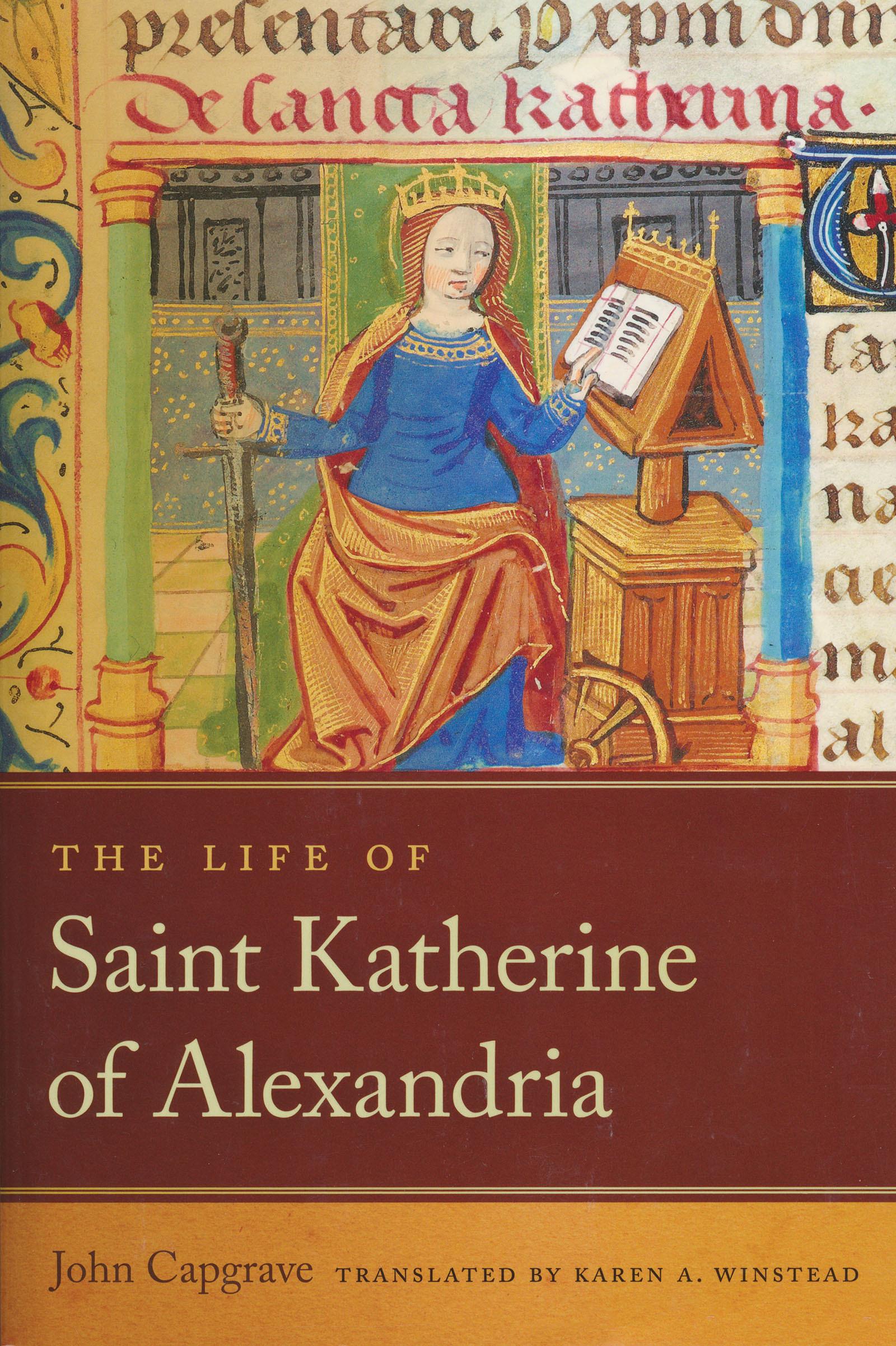
The fifteenth-century scholar and Augustinian friar John Capgrave took as his subject the virgin martyr Katherine of Alexandria, who was an anomalous cultural icon, a scholar, and a sovereign whose story unsettled traditional gender stereotypes yet was widely popular throughout Western Europe. Capgrave’s Life of Saint Katherine of Alexandria (ca. 1445) stands out among the hundreds of surviving vernacular and Latin narrations about the saint by its intricate plotting, its moral complexity, its obtrusive Chaucerian narrator, and its attention to psychology, history, and theology. The Life of Saint Katherine is a bold literary experiment that transforms the genre of the saint’s life by infusing it with conventions and techniques more often associated with chronicles, mystery plays, fabliaux, and romances.
In Capgrave’s hands, Katherine emerges as a sensitive and studious young woman torn between social responsibilities and personal desires. Her story unfolds in a vividly realized world of political turmoil and religious repression that, as Capgrave’s readers were bound to suspect, had everything to do with the England they inhabited and its recent past. Katherine’s debate with her lords anticipates arguments for and against female rule that would be made in Tudor England, when the ascensions of Mary I and then Elizabeth I made gynecocracy a political reality, while her debate with the philosophers is a daring exercise in vernacular theology that flouts the censorship then current.
Winstead’s translation—the first into idiomatic modern English—brings to life Capgrave’s sharply drawn characters, compelling plot, and complex, unsettling moral. Its promotion of an informed, intellectualized Christianity during a period known for censorship and repression illuminates the struggle over the definition of orthodoxy that was excited by the perceived threat of Lollard heresy during the fifteenth century. This volume also includes an appendix with passages of Capgrave's original Middle English and literal translations into modern English, providing a valuable tool for teachers and students.
Before Memmo my notes were scattered across PDFs. Now a workspace pulls everything into one place — I see exactly what's still left to study.
Memmo's summaries are gold before exams. I don't have to re-read 800 pages two weeks before — just the important parts.
The AI chat has saved me the night before an exam more than once. I just keep asking until I get it — no waiting on a study group to reply.
The quizzes hit exactly what I need to know. Memmo tracks what I get stuck on — so I only practice what's worth it.
Flashcards with spaced repetition are magic. Memmo knows when I'm about to forget something and brings it back.
The AI podcasts are my favorite. I listen on my way to school and get a recap without sitting at a computer.

Handbok i kvalitativa metoder
281 kr

Hållbar utveckling: en introduktion för ingenjörer och andra problemlösare
334 kr

Brymans Samhällsvetenskapliga metoder
390 kr

Projektledning
491 kr

Den orättvisa hälsan: om socioekonomiska skillnader i hälsa och livslängd
326 kr

Vetenskapsteori för nybörjare
196 kr

Organizational Leadership
429 kr

På väg mot läraryrket
172 kr

Det sociala livet i skolan: Socialpsykologiska perspektiv
253 kr

Betygsättningens didaktik
151 kr

Personality
402 kr

Studying Leadership
404 kr

Managing Innovation
477 kr

Introduktion till samhällsvetenskaplig metod
347 kr

The Psychology of Sex and Gender
698 kr

Evidens och kunskap för socialt arbete
207 kr

Introduction to Leadership
605 kr