
Before Memmo my notes were scattered across PDFs. Now a workspace pulls everything into one place — I see exactly what's still left to study.
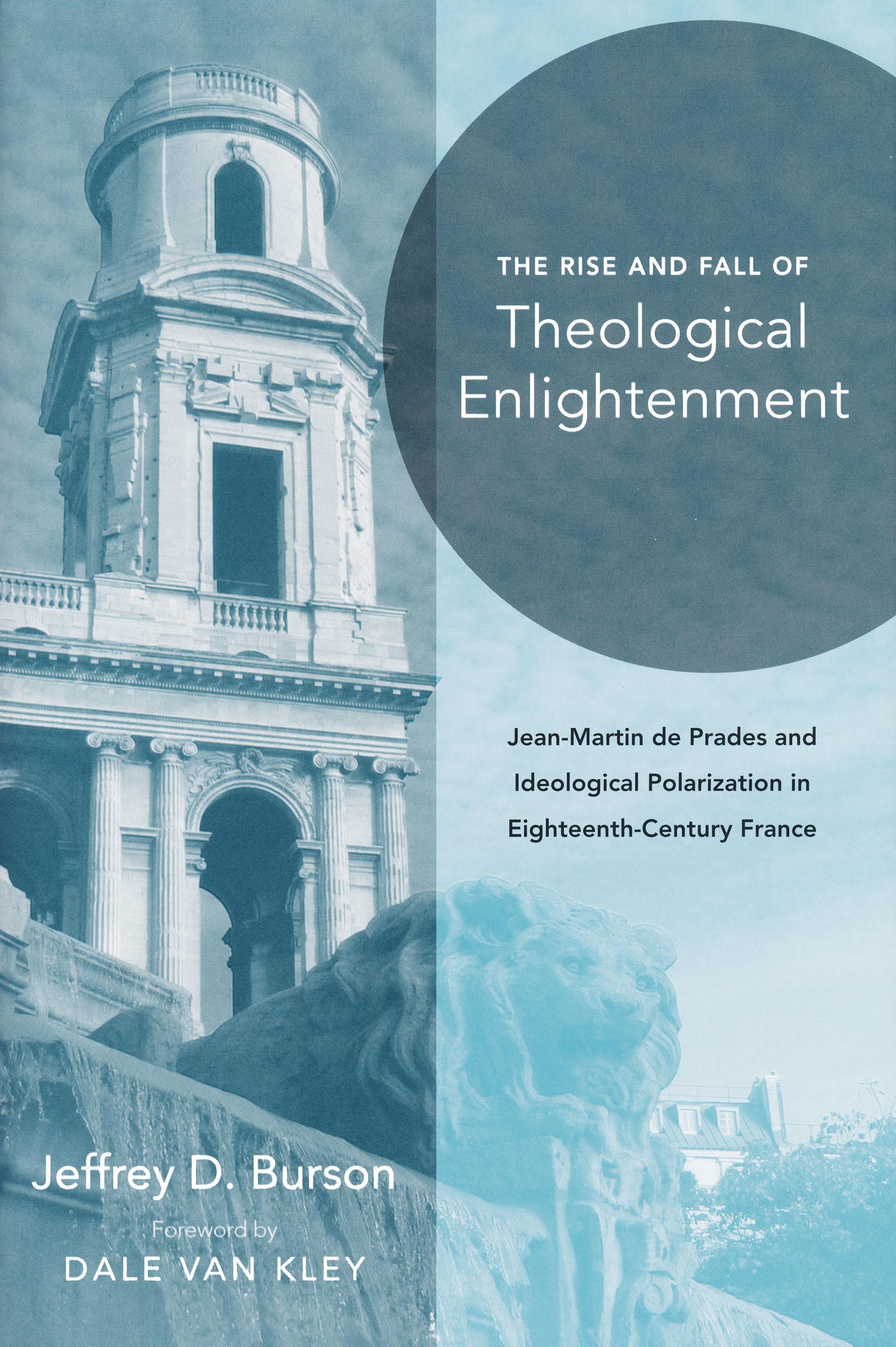
In The Rise and Fall of Theological Enlightenment, Jeffrey D. Burson analyzes the history of the French Enlightenment and its relationship to the French Revolution by casting it as a diverse constellation of Theological Enlightenment discourses, compromised between about 1730 and 1762 by high-stakes cultural and political controversies involving the royal court, the government, and the Catholic Church.
Burson places the Abbé Jean-Martin de Prades at the center of the storm. In 1749, Prades was working on his doctorate in theology at the University of Paris. An ambitious young theologian, Prades, like his teachers at the Sorbonne and like many lay and clerical apologists in mid-eighteenth-century France, had been deeply inspired by the spirit of the Enlightenment. Burson reinterprets the Jesuit Enlightenment and its influence on French society, arguing that Jesuits had pioneered ways of synthesizing Locke, Malebranche, and Newton in light of the expansion of the public sphere. Hoping to defend Catholic theology against the Radical Enlightenment by adapting these Jesuit Enlightenment discourses with natural history and Enlightenment theological debates, Prades inadvertently sparked a public scandal that galvanized members of the royal court and the Parlement of Paris, Jansenists, Jesuits, and philosophes, alike—all of whom refashioned the person and work of Prades to suit their own ends. Ultimately, the controversy polarized the cultural politics of pre-Revolutionary France into two camps, that of a self-consciously secular Enlightenment and that of a staunchly opposed Counter-Enlightenment.
Prades's history provides Burson with a lens through which to reevaluate the intersections of theology and Enlightenment philosophy, of French politics and the French Catholic church, and of conservatives, moderates, and radicals on all sides in order to provide us with a newly-capacious Enlightenment historiography.
Before Memmo my notes were scattered across PDFs. Now a workspace pulls everything into one place — I see exactly what's still left to study.
Memmo's summaries are gold before exams. I don't have to re-read 800 pages two weeks before — just the important parts.
The AI chat has saved me the night before an exam more than once. I just keep asking until I get it — no waiting on a study group to reply.
The quizzes hit exactly what I need to know. Memmo tracks what I get stuck on — so I only practice what's worth it.
Flashcards with spaced repetition are magic. Memmo knows when I'm about to forget something and brings it back.
The AI podcasts are my favorite. I listen on my way to school and get a recap without sitting at a computer.

Handbok i kvalitativa metoder
281 kr

Hållbar utveckling: en introduktion för ingenjörer och andra problemlösare
334 kr

Brymans Samhällsvetenskapliga metoder
390 kr

Projektledning
491 kr

Den orättvisa hälsan: om socioekonomiska skillnader i hälsa och livslängd
326 kr

Vetenskapsteori för nybörjare
196 kr

Organizational Leadership
429 kr

På väg mot läraryrket
172 kr

Det sociala livet i skolan: Socialpsykologiska perspektiv
253 kr

Betygsättningens didaktik
151 kr

Personality
402 kr

Studying Leadership
404 kr

Managing Innovation
477 kr

Introduktion till samhällsvetenskaplig metod
347 kr

The Psychology of Sex and Gender
698 kr

Evidens och kunskap för socialt arbete
207 kr

Introduction to Leadership
605 kr