
Before Memmo my notes were scattered across PDFs. Now a workspace pulls everything into one place — I see exactly what's still left to study.
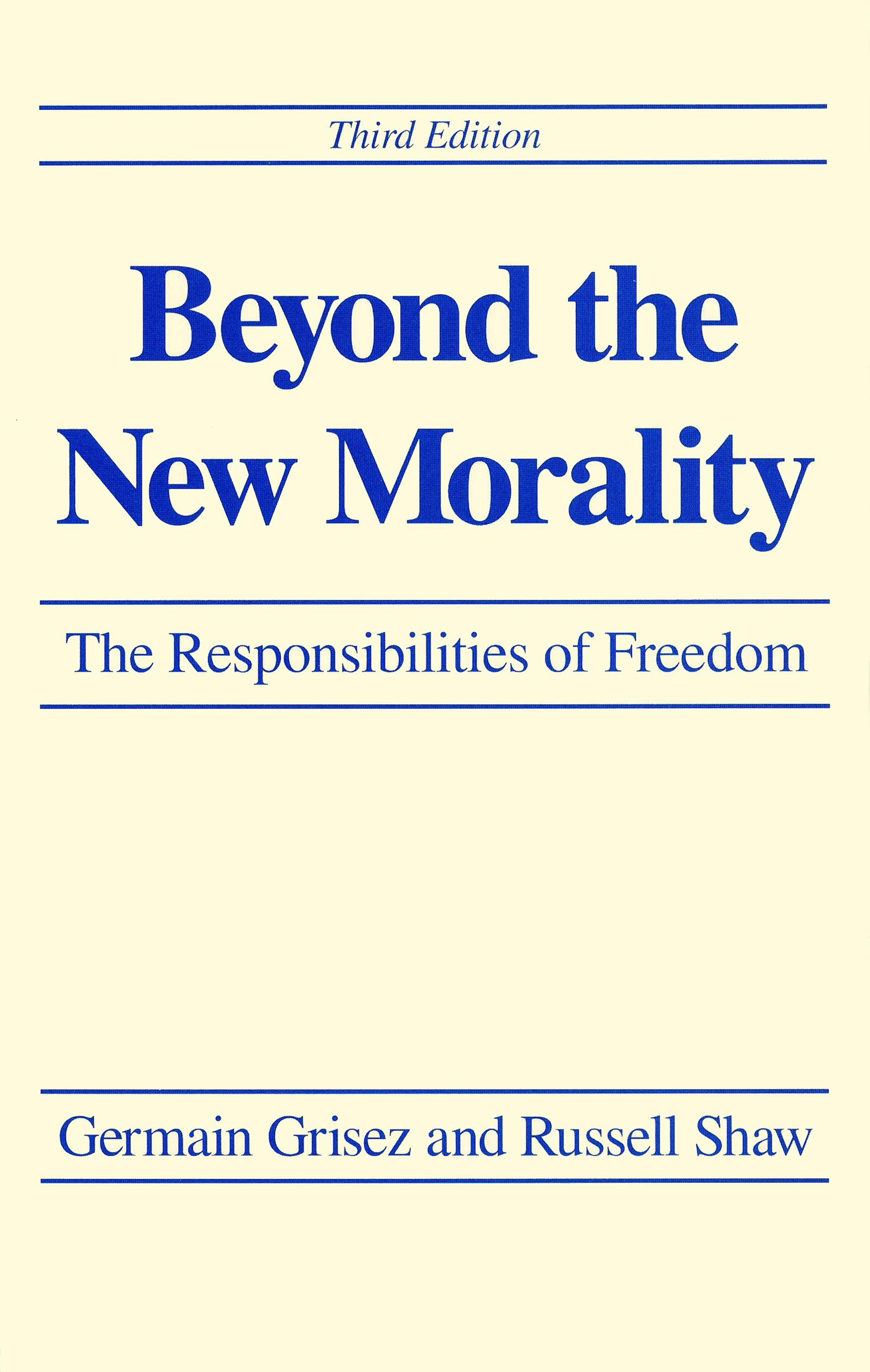
First published in 1974, with a second, revised edition in 1980, Beyond the New Morality, third edition, retains the best elements of the earlier versions, including the authors' clear, straightforward presentation and use of nontechnical language. Although the basic approach, content, and organization remain substantially the same, the new edition does develop and amend some aspects of the theory. For example, the community dimension of morality is brought out more clearly and the first principle of morality is now formulated more accurately in terms of willing in line with integral human fulfillment.
We are proposing an ethics. But what is ethics? As we use the word, it means a philosophical study of morality, of the foundations on which morality is based, and of the practical implications of a systematic moral outlook. We believe ethics must start by clarifying the fundamental notions of freedom, action, and community. Then it can go on to examine the question "What is the ultimate distinction between moral good and moral evil, between action which is right and action which is wrong?" An answer becomes useful in practice, however, only after one has worked out a satisfactory way of thinking through concrete moral issues—"Should I do this or that?" Thus we next turn to the problem of establishing basic moral principles. Finally, once one is in a position to take a reasoned view of moral issues, it is possible to ask and try to answer the question "To what extent can I close the gap, in my life and in society, between the way I think things ought to be and the way they are?"
History studies human actions, but it looks at particular actions which have actually taken place; ethics is concerned with human action in general or with possible kinds of actions. Psychology and the social sciences also have somewhat the same subject matter as ethics, but they arc mainly concerned with how human beings actually do act and societies actually do work; ethics concentrates on how persons ought to act and societies ought to be formed and reformed.
Before Memmo my notes were scattered across PDFs. Now a workspace pulls everything into one place — I see exactly what's still left to study.
Memmo's summaries are gold before exams. I don't have to re-read 800 pages two weeks before — just the important parts.
The AI chat has saved me the night before an exam more than once. I just keep asking until I get it — no waiting on a study group to reply.
The quizzes hit exactly what I need to know. Memmo tracks what I get stuck on — so I only practice what's worth it.
Flashcards with spaced repetition are magic. Memmo knows when I'm about to forget something and brings it back.
The AI podcasts are my favorite. I listen on my way to school and get a recap without sitting at a computer.

Handbok i kvalitativa metoder
281 kr

Hållbar utveckling: en introduktion för ingenjörer och andra problemlösare
334 kr

Brymans Samhällsvetenskapliga metoder
390 kr

Projektledning
491 kr

Den orättvisa hälsan: om socioekonomiska skillnader i hälsa och livslängd
326 kr

Organizational Leadership
429 kr

Vetenskapsteori för nybörjare
196 kr

På väg mot läraryrket
172 kr

Det sociala livet i skolan: Socialpsykologiska perspektiv
253 kr

Betygsättningens didaktik
151 kr

Personality
402 kr

Studying Leadership
404 kr

Managing Innovation
477 kr

Introduktion till samhällsvetenskaplig metod
347 kr

The Psychology of Sex and Gender
698 kr

Evidens och kunskap för socialt arbete
207 kr

Introduction to Leadership
605 kr