
Before Memmo my notes were scattered across PDFs. Now a workspace pulls everything into one place — I see exactly what's still left to study.
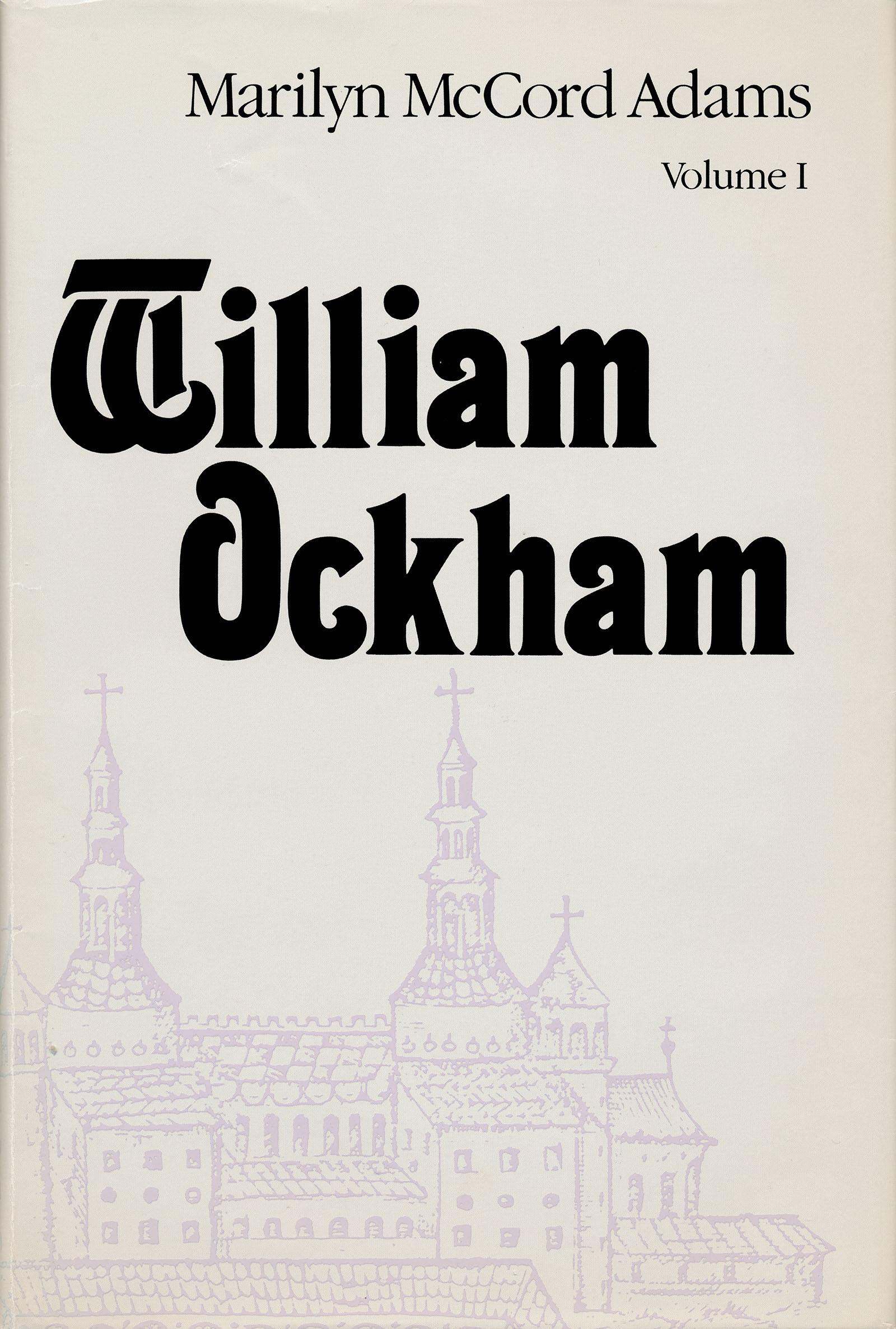
William Ockham is probably the most notorious and most widely misunderstood philosopher of the later Middle Ages. Accused by John Lutterell, the former chancellor of Oxford University, of teaching heretical doctrines, Ockham was summoned to Avignon by Pope John XXII and eventually lived under the protection of Louis of Bavaria. Yet, with Aquinas and Scotus, he remains among the three greatest philosophers of the period.
This landmark book, split into two volumes, offers a clear and concise account of Ockham's philosophical positions (his ontology, logic, epistemology, and natural philosophy), along with the arguments for them. It then shows how Ockham's theological disagreements with his most eminent predecessors are a logical consequence of underlying philosophical differences. According to Marilyn McCord Adams, Ockham emerges as a Franciscan Aristotelian, much more philosophically and religiously conservative than commonly supposed. Adams challenges the notions that Ockham's nominalism and ontological reductions lead to subjectivism in metaphysics, his epistemology to skepticism, his theory of causality to Humean constant conjunction or to occasionalism. Likewise, Adams rejects the notion that Ockham's philosophical doctrines lead to heretical views in theology, or that his insistence on divine freedom leads to arbitrariness and caprice in ethics. Although her primary focus is on Ockham, McAdams compares and contrasts his positions with those of Aquinas, Scotus, Henry of Ghent, among others. William Ockham constitutes an excellent initiation for philosophers into the problems and theoretical framework of the late thirteenth and early fourteenth centuries.
Before Memmo my notes were scattered across PDFs. Now a workspace pulls everything into one place — I see exactly what's still left to study.
Memmo's summaries are gold before exams. I don't have to re-read 800 pages two weeks before — just the important parts.
The AI chat has saved me the night before an exam more than once. I just keep asking until I get it — no waiting on a study group to reply.
The quizzes hit exactly what I need to know. Memmo tracks what I get stuck on — so I only practice what's worth it.
Flashcards with spaced repetition are magic. Memmo knows when I'm about to forget something and brings it back.
The AI podcasts are my favorite. I listen on my way to school and get a recap without sitting at a computer.

Handbok i kvalitativa metoder
281 kr

Hållbar utveckling: en introduktion för ingenjörer och andra problemlösare
334 kr

Brymans Samhällsvetenskapliga metoder
390 kr

Projektledning
491 kr

Den orättvisa hälsan: om socioekonomiska skillnader i hälsa och livslängd
326 kr

Organizational Leadership
429 kr

Vetenskapsteori för nybörjare
196 kr

På väg mot läraryrket
172 kr

Det sociala livet i skolan: Socialpsykologiska perspektiv
253 kr

Betygsättningens didaktik
151 kr

Personality
402 kr

Studying Leadership
404 kr

Managing Innovation
477 kr

Introduktion till samhällsvetenskaplig metod
347 kr

The Psychology of Sex and Gender
698 kr

Evidens och kunskap för socialt arbete
207 kr

Introduction to Leadership
605 kr