
Before Memmo my notes were scattered across PDFs. Now a workspace pulls everything into one place — I see exactly what's still left to study.
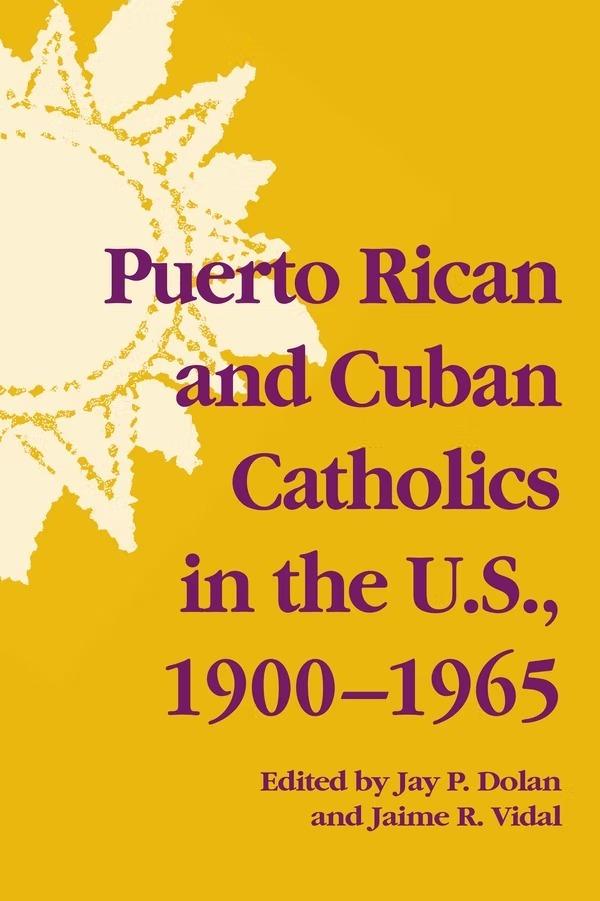
When Puerto Ricans and Cubans arrived in the United States both groups presented to American Catholics the paradox of cultures pervaded by Catholic symbols, attitudes, and traditions, but out of touch with the values and priorities of the institutional Church. Furthermore, both Cubans and Puerto Ricans tend to perceive themselves as being in the U.S. provisionally and therefore insist on holding on to their language and culture, while striving to build communities of their own where these values will be preserved. In this seminal volume Jaime R. Vidal and Lisandro Pérez present for the first time an in-depth historical analysis of the Puerto Rican and Cuban-American Catholic experience, beginning with their roots in the history of their homelands up to the closing of Vatican II.
In the first section of Puerto Ricans, Vidal discusses the American Church’s attempt to assimilate them into its structure and style, which was at cross purposes with the Puerto Rican “revolving door” migration trends that have constantly reinforced their identity. Focusing on the Puerto Rican community in New York City, Vidal demonstrates that the policies of the institutional Church have made it difficult for them to find their place within the U.S. Catholic structure. This has led to a certain amount of marginalization of the Church within the Puerto Rican Community.
Lisandro Pérez then discusses the Cuban-American Catholic experience, especially the first waves of Cuban migration during the 1960s. Since the first political exiles were from the upper and middle classes of Cuban society, this led to expectations that the Cubans would quickly blend into the white, middle-class American community at both the religious and the social levels. Pérez analyzes the response of the Miami diocese to support the exiles and concludes that the Cubans have not been fully assimilated into the American Catholic Church because they view themselves as an exiled society that hopes eventually to return to Cuba.
Before Memmo my notes were scattered across PDFs. Now a workspace pulls everything into one place — I see exactly what's still left to study.
Memmo's summaries are gold before exams. I don't have to re-read 800 pages two weeks before — just the important parts.
The AI chat has saved me the night before an exam more than once. I just keep asking until I get it — no waiting on a study group to reply.
The quizzes hit exactly what I need to know. Memmo tracks what I get stuck on — so I only practice what's worth it.
Flashcards with spaced repetition are magic. Memmo knows when I'm about to forget something and brings it back.
The AI podcasts are my favorite. I listen on my way to school and get a recap without sitting at a computer.

Handbok i kvalitativa metoder
281 kr

Hållbar utveckling: en introduktion för ingenjörer och andra problemlösare
334 kr

Brymans Samhällsvetenskapliga metoder
390 kr

Projektledning
491 kr

Den orättvisa hälsan: om socioekonomiska skillnader i hälsa och livslängd
326 kr

Vetenskapsteori för nybörjare
196 kr

Organizational Leadership
429 kr

På väg mot läraryrket
172 kr

Det sociala livet i skolan: Socialpsykologiska perspektiv
253 kr

Betygsättningens didaktik
151 kr

Personality
402 kr

Studying Leadership
404 kr

Managing Innovation
477 kr

Introduktion till samhällsvetenskaplig metod
347 kr

The Psychology of Sex and Gender
698 kr

Evidens och kunskap för socialt arbete
207 kr

Introduction to Leadership
605 kr