
Before Memmo my notes were scattered across PDFs. Now a workspace pulls everything into one place — I see exactly what's still left to study.
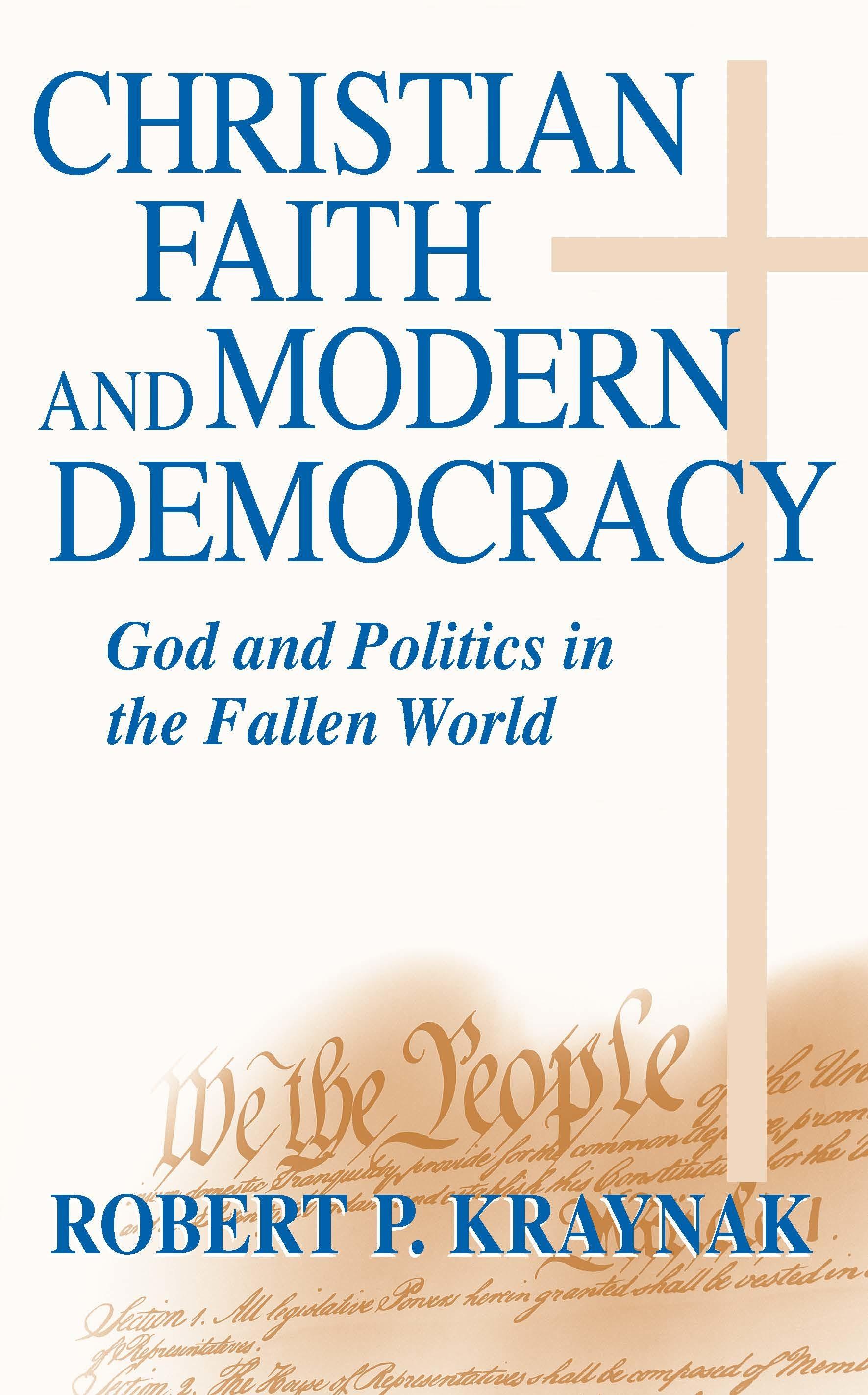
Do Christianity and modern liberal democracy share a common moral vision, or are they opposed and even hostile to each other? In Christian Faith and Modern Democracy, Robert Kraynak challenges the commonly accepted view that Christianity is inherently compatible with modern democratic society. Contrary to conventional wisdom, Kraynak argues that there is no necessary connection between Christianity and any form of government and that, in many important respects, Christianity is weakened by its close alliance with contemporary versions of democracy and human rights.
Christian Faith and Modern Democracy was written, in part, to convince secular intellectuals that modern democracy needs God. But it was also written in response to the new consensus about politics that has emerged among Christian believers. Almost all churches and theologians now think that the form of government most compatible with Christianity is democracy and that the historic opposition of the Christian tradition to democracy and to various forms of liberalism was a mistake. What caused Christians to change their view of political authority and to embrace liberal democracy? Were they wise to change their view?
This provocative book attempts to answer these questions by reexamining the relationship between democracy and Christianity through the lens of St. Augustine’s distinction between the city of God and the earthly city, applied to the conditions of the modern age. Kraynak argues that St. Augustine’s teaching provides the basis for a Christian theory of constitutional government and permits a variety of legitimate forms of government, including constitutional democracy. Yet, unlike contemporary Christian doctrines, it does so without embracing the subversive premises of liberalism that have threatened to turn the Christian faith into little more than a mirror image of the modern world.
Sure to spark controversy among secular intellectuals and Christian believers alike, this insightful volume is an outstanding work of political philosophy with a firm foundation in theology.
Before Memmo my notes were scattered across PDFs. Now a workspace pulls everything into one place — I see exactly what's still left to study.
Memmo's summaries are gold before exams. I don't have to re-read 800 pages two weeks before — just the important parts.
The AI chat has saved me the night before an exam more than once. I just keep asking until I get it — no waiting on a study group to reply.
The quizzes hit exactly what I need to know. Memmo tracks what I get stuck on — so I only practice what's worth it.
Flashcards with spaced repetition are magic. Memmo knows when I'm about to forget something and brings it back.
The AI podcasts are my favorite. I listen on my way to school and get a recap without sitting at a computer.

Handbok i kvalitativa metoder
281 kr

Hållbar utveckling: en introduktion för ingenjörer och andra problemlösare
334 kr

Brymans Samhällsvetenskapliga metoder
390 kr

Projektledning
491 kr

Den orättvisa hälsan: om socioekonomiska skillnader i hälsa och livslängd
326 kr

Organizational Leadership
429 kr

Vetenskapsteori för nybörjare
196 kr

På väg mot läraryrket
172 kr

Det sociala livet i skolan: Socialpsykologiska perspektiv
253 kr

Betygsättningens didaktik
151 kr

Personality
402 kr

Studying Leadership
404 kr

Managing Innovation
477 kr

Introduktion till samhällsvetenskaplig metod
347 kr

The Psychology of Sex and Gender
698 kr

Evidens och kunskap för socialt arbete
207 kr

Introduction to Leadership
605 kr