
Before Memmo my notes were scattered across PDFs. Now a workspace pulls everything into one place — I see exactly what's still left to study.
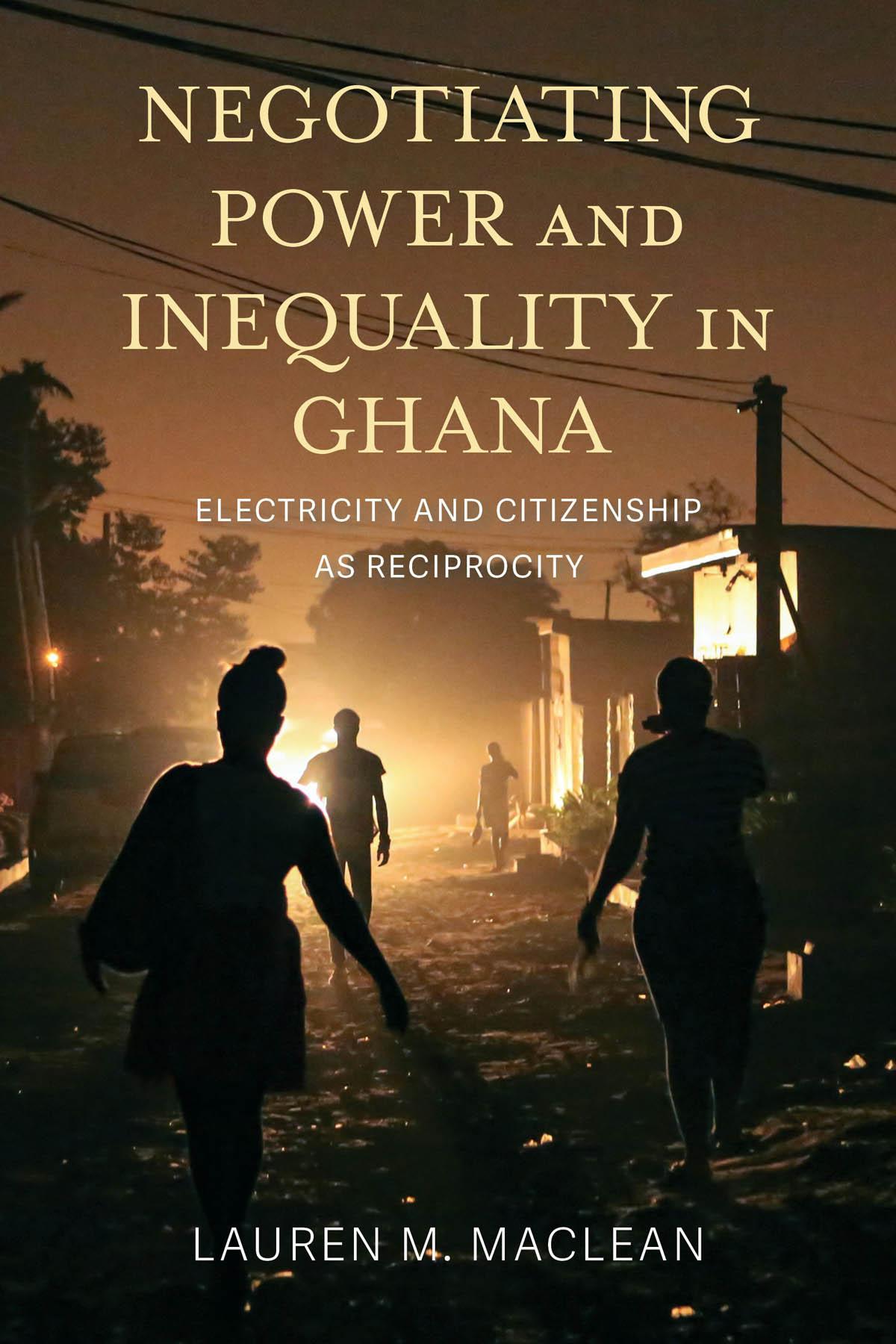
In Ghana, much as in other parts of the Global South, postcolonial leaders aimed for industrial growth through the establishment of affordable hydroelectric power. However, in the current rapidly changing climate, many nations face recurring droughts, which hinder electricity production just when demand is on the rise. This situation has led to challenges like load shedding and unplanned power outages, which have strained the bond between citizens and the government.
Negotiating Power and Inequality in Ghana aims to unravel the puzzling reality that, despite enduring increasing difficulties from these electricity shortages, the Ghanaian citizens who suffer most harshly are also the least likely to demand political accountability from the state. Drawing on archival evidence, focus groups, qualitative interviews, survey data, and contemporary art and music, author Lauren M. MacLean explains how this disparity in experience—fueled by differences in income and geographical location—has led lower- and higher-income Ghanaians to form contrasting perspectives on their social rights regarding public services and to adopt varying approaches to political involvement. Rather than relying on a predetermined social contract, citizens in Ghana develop a more fluid relationship with the state, shaped by their histories, identities, and personal experiences. This reciprocity highlights their awareness of how climate change and the global shift toward green energy can significantly impact their lives while also underscoring the necessity for the government to take the lead and engage with Ghanaians to promote climate justice.
Targeted at a diverse audience that includes academics, policymakers, activists, and the general public, Negotiating Power and Inequality in Ghana encourages readers to gain insight into the dynamics that lead to political crises and to explore potential solutions to energy poverty in a time marked by increasing inequality and global climate challenges.
Before Memmo my notes were scattered across PDFs. Now a workspace pulls everything into one place — I see exactly what's still left to study.
Memmo's summaries are gold before exams. I don't have to re-read 800 pages two weeks before — just the important parts.
The AI chat has saved me the night before an exam more than once. I just keep asking until I get it — no waiting on a study group to reply.
The quizzes hit exactly what I need to know. Memmo tracks what I get stuck on — so I only practice what's worth it.
Flashcards with spaced repetition are magic. Memmo knows when I'm about to forget something and brings it back.
The AI podcasts are my favorite. I listen on my way to school and get a recap without sitting at a computer.

Handbok i kvalitativa metoder
281 kr

Hållbar utveckling: en introduktion för ingenjörer och andra problemlösare
334 kr

Brymans Samhällsvetenskapliga metoder
390 kr

Projektledning
491 kr

Den orättvisa hälsan: om socioekonomiska skillnader i hälsa och livslängd
326 kr

Vetenskapsteori för nybörjare
196 kr

Organizational Leadership
429 kr

På väg mot läraryrket
172 kr

Det sociala livet i skolan: Socialpsykologiska perspektiv
253 kr

Betygsättningens didaktik
151 kr

Personality
402 kr

Studying Leadership
404 kr

Managing Innovation
477 kr

Introduktion till samhällsvetenskaplig metod
347 kr

The Psychology of Sex and Gender
698 kr

Evidens och kunskap för socialt arbete
207 kr

Introduction to Leadership
605 kr