
Before Memmo my notes were scattered across PDFs. Now a workspace pulls everything into one place — I see exactly what's still left to study.
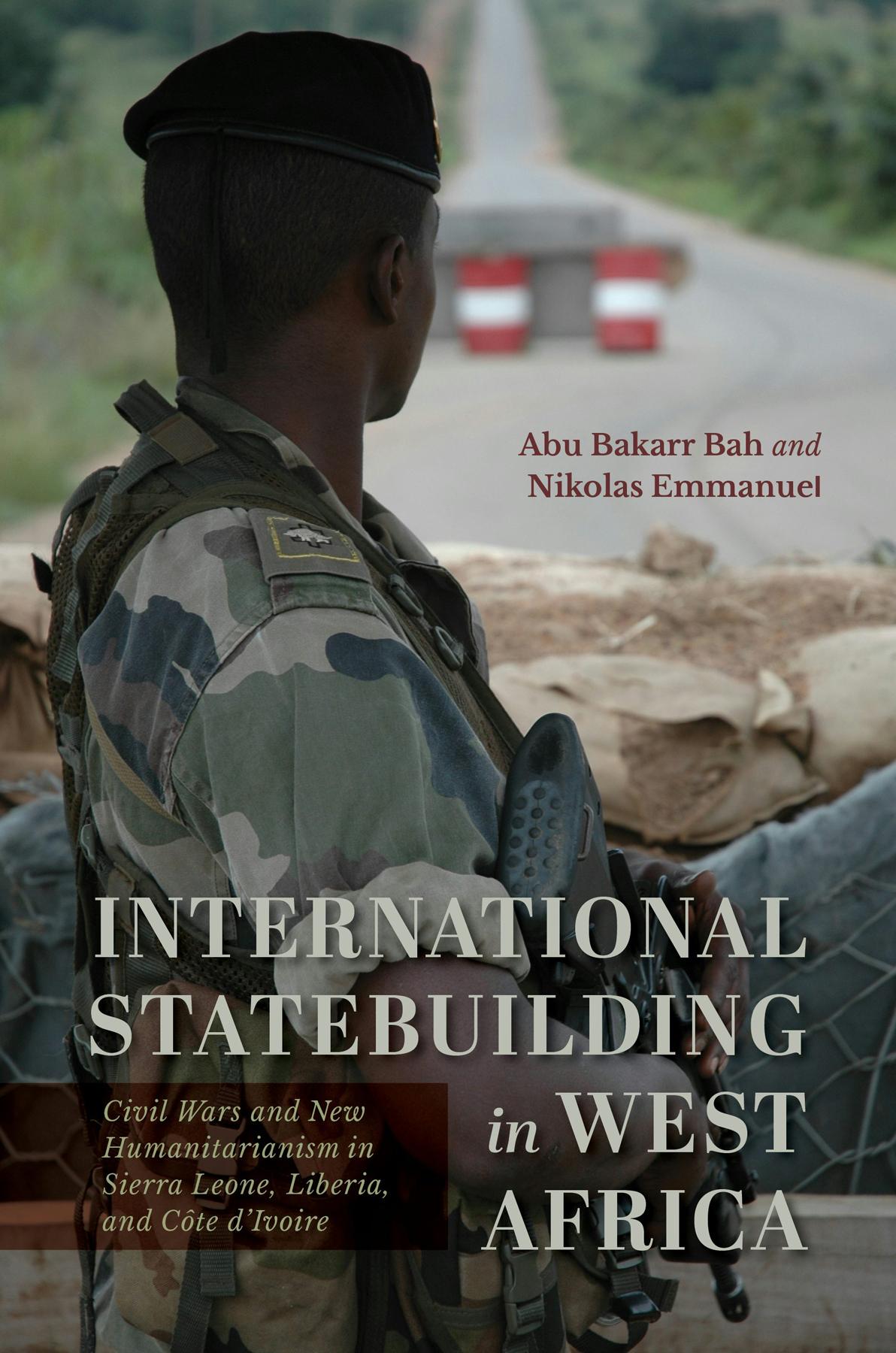
At the turn of the twenty-first century, manipulation of the democratic process coupled with preexisting political and economic grievances led to years-long civil wars in Sierra Leone, Liberia, and Côte d'Ivoire. During and after these conflicts, international peacekeeping efforts and humanitarian intervention became the dominant paths for restoring stability by rebuilding the state. Using these three countries as case studies, this manuscript sheds light on internationally driven state building in war-torn West African nations, the problematic nature of the postcolonial state, and the difficulties of securing its people's wellbeing.
Connecting peace and conflict, democracy, and international development studies, Bah and Emmanuel argue that there is a clear nexus between the concepts and practices of peace building and statebuilding; that peace building and statebuilding are not domestic matters alone but also matters of global intervention; and that civil wars can be viewed as opportunities for state building through creative postwar partnerships and organization. This study goes beyond the familiar concepts of failed states, R2P, peacekeeping, and peace mediation and introduces and enhances the concepts of state decay, new humanitarianism, people-centered liberalism, and institutional design. In doing so, it provides critical lessons that local and international actors can draw on as they try to figure out practical solutions to the political, economic, and social problems that impede the development of peaceful and democratic multiethnic postcolonial states in Africa and beyond.
Applying comparative-historical methods and theory to archival materials and expert interviews, International Statebuilding in West Africa seeks to shift the discourse on civil wars from their causes and implications to the opportunities they provide to rework failed states—and to shift the discourse on African states from their colonial and neocolonial legacies to their shared moral and security interests with the rest of the world.
Before Memmo my notes were scattered across PDFs. Now a workspace pulls everything into one place — I see exactly what's still left to study.
Memmo's summaries are gold before exams. I don't have to re-read 800 pages two weeks before — just the important parts.
The AI chat has saved me the night before an exam more than once. I just keep asking until I get it — no waiting on a study group to reply.
The quizzes hit exactly what I need to know. Memmo tracks what I get stuck on — so I only practice what's worth it.
Flashcards with spaced repetition are magic. Memmo knows when I'm about to forget something and brings it back.
The AI podcasts are my favorite. I listen on my way to school and get a recap without sitting at a computer.

Handbok i kvalitativa metoder
281 kr

Hållbar utveckling: en introduktion för ingenjörer och andra problemlösare
334 kr

Brymans Samhällsvetenskapliga metoder
390 kr

Projektledning
491 kr

Den orättvisa hälsan: om socioekonomiska skillnader i hälsa och livslängd
326 kr

Vetenskapsteori för nybörjare
196 kr

Organizational Leadership
429 kr

På väg mot läraryrket
172 kr

Det sociala livet i skolan: Socialpsykologiska perspektiv
253 kr

Betygsättningens didaktik
151 kr

Personality
402 kr

Studying Leadership
404 kr

Managing Innovation
477 kr

Introduktion till samhällsvetenskaplig metod
347 kr

The Psychology of Sex and Gender
698 kr

Evidens och kunskap för socialt arbete
207 kr

Introduction to Leadership
605 kr