
Before Memmo my notes were scattered across PDFs. Now a workspace pulls everything into one place — I see exactly what's still left to study.
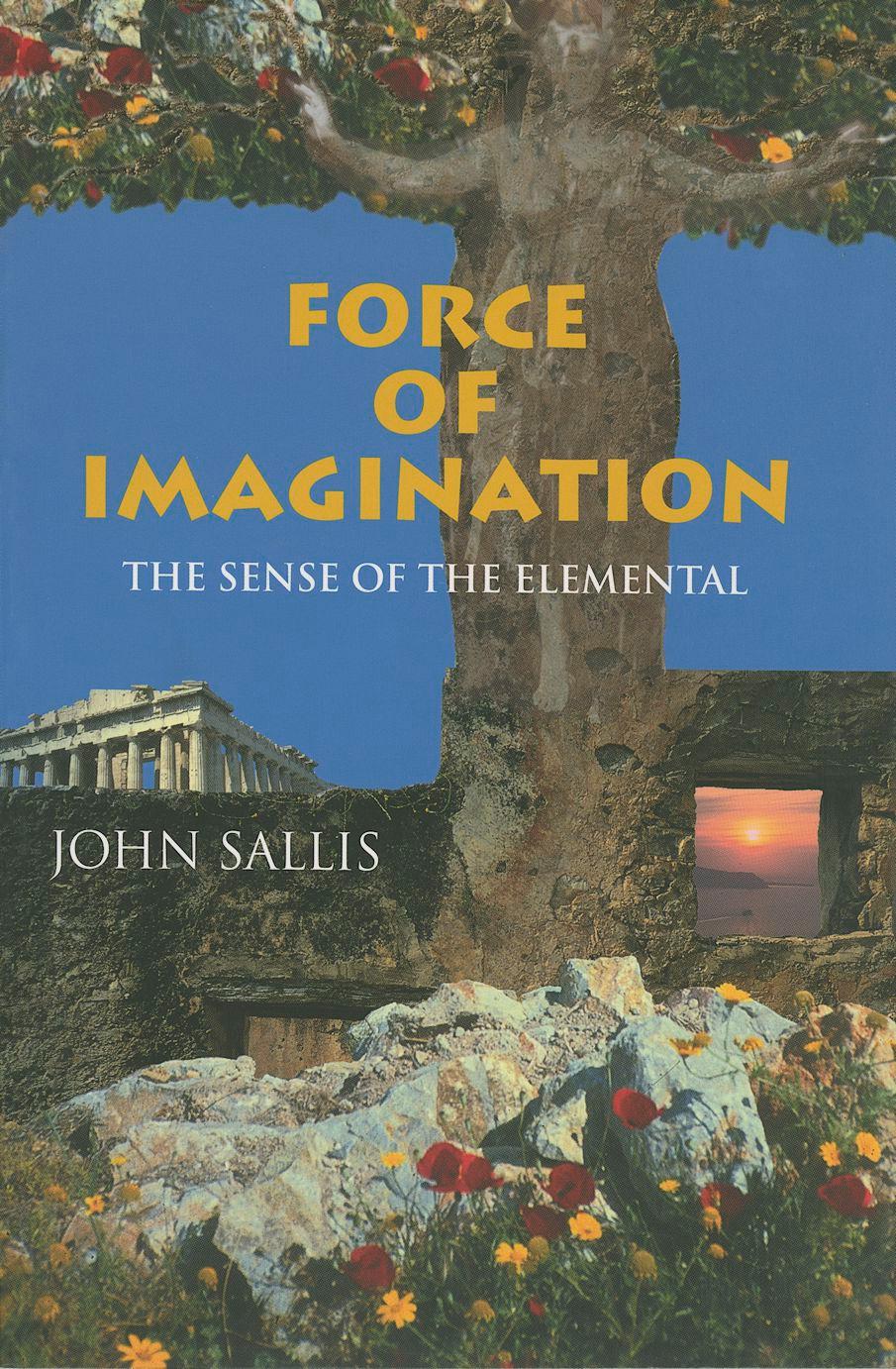
Force of Imagination
The Sense of the Elemental
John Sallis
A bold and original investigation into how imagination shapes thought and feeling.
"This is a bold new direction for the author, one that he takes in an arresting and convincing manner. . . . a powerful, original approach to what others call 'ecology' but what Sallis shows to be a question of the status of the earth in philosophical thinking at this historical moment." —Edward S. Casey
In this major original work, John Sallis probes the very nature of imagination and reveals how the force of imagination extends into all spheres of human life. While drawing critically on the entire history of philosophy, Sallis's work takes up a vantage point determined by the contemporary deconstruction of the classical opposition between sensible and intelligible. Thus, in reinterrogating the nature of imagination, Force of Imagination carries out a radical turn to the sensible and to the elemental in nature. Liberated from subjectivity, imagination is shown to play a decisive role both in drawing together the moments of our experience of sensible things and in opening experience to the encompassing light, atmosphere, earth, and sky. Set within this elemental expanse, the human sense of time, of self, and of the other proves to be inextricably linked to imagination and to nature. By showing how imagination is formative for the very opening upon things and elements, this work points to the revealing power of poetic imagination and casts a new light on the nature of art.
John Sallis is Liberal Arts Professor of Philosophy at Pennsylvania State University. His previous books include Being and Logos: Reading the Platonic Dialogues; Shades—Of Painting at the Limit; Stone; Chorology: On Beginning in Plato's Timaeus (all published by Indiana University Press), Crossings: Nietzsche and the Space of Tragedy and Double Truth.
Studies in Continental Thought—John Sallis, editor
Contents
Prolusions
On (Not Simply) Beginning
Remembrance
Duplicity of the Image
Spacing the Image
Tractive Imagination
The Elemental
Temporalities
Proprieties
Poetic Imagination
Before Memmo my notes were scattered across PDFs. Now a workspace pulls everything into one place — I see exactly what's still left to study.
Memmo's summaries are gold before exams. I don't have to re-read 800 pages two weeks before — just the important parts.
The AI chat has saved me the night before an exam more than once. I just keep asking until I get it — no waiting on a study group to reply.
The quizzes hit exactly what I need to know. Memmo tracks what I get stuck on — so I only practice what's worth it.
Flashcards with spaced repetition are magic. Memmo knows when I'm about to forget something and brings it back.
The AI podcasts are my favorite. I listen on my way to school and get a recap without sitting at a computer.

Handbok i kvalitativa metoder
281 kr

Hållbar utveckling: en introduktion för ingenjörer och andra problemlösare
334 kr

Brymans Samhällsvetenskapliga metoder
390 kr

Projektledning
491 kr

Den orättvisa hälsan: om socioekonomiska skillnader i hälsa och livslängd
326 kr

Vetenskapsteori för nybörjare
196 kr

Organizational Leadership
429 kr

På väg mot läraryrket
172 kr

Det sociala livet i skolan: Socialpsykologiska perspektiv
253 kr

Betygsättningens didaktik
151 kr

Personality
402 kr

Studying Leadership
404 kr

Managing Innovation
477 kr

Introduktion till samhällsvetenskaplig metod
347 kr

The Psychology of Sex and Gender
698 kr

Evidens och kunskap för socialt arbete
207 kr

Introduction to Leadership
605 kr