
Before Memmo my notes were scattered across PDFs. Now a workspace pulls everything into one place — I see exactly what's still left to study.
Shortlisted, 2025 Modernist Studies Association First Book Prize
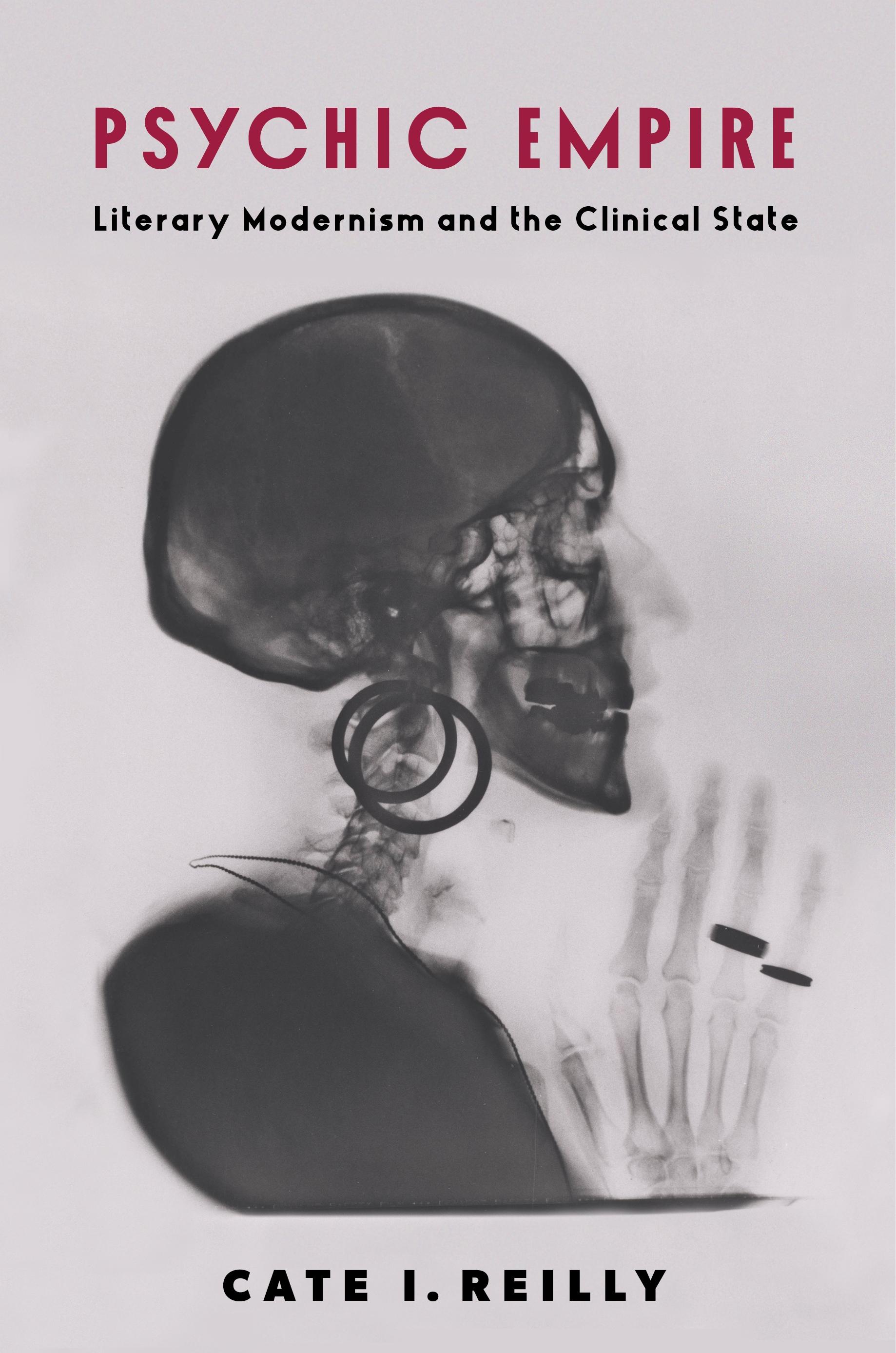
In nineteenth-century imperial Germany and the Austro-Hungarian Empire, new scientific fields like psychophysics, empirical psychology, clinical psychiatry, and neuroanatomy transformed the understanding of mental life in ways long seen as influencing modernism. Turning to the history of psychiatric classification for mental illnesses, Cate I. Reilly argues that modernist texts can be understood as critically responding to objective scientific models of the psyche, not simply illustrating their findings. Modernist works written in industrializing Central and Eastern Europe historicize the representation of consciousness as a quantifiable phenomenon within techno-scientific modernity.
Looking beyond modernism’s well-studied relationship to psychoanalysis, this book tells the story of the non-Freudian vocabulary for mental illnesses that forms the precursor to today’s Diagnostic and Statistical Manual of Mental Disorders. Developed by the German psychiatrist Emil Kraepelin in the 1890s, this psychiatric taxonomy grew from the claim that invisible mental illnesses were analogous to physical phenomena in the natural world. Reilly explores how figures such as Georg Büchner, Ernst Toller, Daniel Paul Schreber, Nikolai Evreinov, Vsevolod Ivanov, and Santiago Ramón y Cajal understood the legal and political consequences of representing mental life in physical terms. Working across literary studies, the history of science, psychoanalytic criticism, critical theory, and political philosophy, Psychic Empire is an original account of modernism that shows the link between nineteenth-century scientific research on the mental health of national populations and twenty-first-century globalized, neuroscientific accounts of psychopathology and sanity.
Before Memmo my notes were scattered across PDFs. Now a workspace pulls everything into one place — I see exactly what's still left to study.
Memmo's summaries are gold before exams. I don't have to re-read 800 pages two weeks before — just the important parts.
The AI chat has saved me the night before an exam more than once. I just keep asking until I get it — no waiting on a study group to reply.
The quizzes hit exactly what I need to know. Memmo tracks what I get stuck on — so I only practice what's worth it.
Flashcards with spaced repetition are magic. Memmo knows when I'm about to forget something and brings it back.
The AI podcasts are my favorite. I listen on my way to school and get a recap without sitting at a computer.

Handbok i kvalitativa metoder
281 kr

Hållbar utveckling: en introduktion för ingenjörer och andra problemlösare
334 kr

Brymans Samhällsvetenskapliga metoder
390 kr

Projektledning
491 kr

Den orättvisa hälsan: om socioekonomiska skillnader i hälsa och livslängd
326 kr

Vetenskapsteori för nybörjare
196 kr

Organizational Leadership
429 kr

På väg mot läraryrket
172 kr

Det sociala livet i skolan: Socialpsykologiska perspektiv
253 kr

Betygsättningens didaktik
151 kr

Personality
402 kr

Studying Leadership
404 kr

Managing Innovation
477 kr

Introduktion till samhällsvetenskaplig metod
347 kr

The Psychology of Sex and Gender
698 kr

Evidens och kunskap för socialt arbete
207 kr

Introduction to Leadership
605 kr