
Before Memmo my notes were scattered across PDFs. Now a workspace pulls everything into one place — I see exactly what's still left to study.
Honorable Mention, 2026 Joseph Levenson Prize (China, pre-1900), Association for Asian Studies
Shortlisted, 2024 Wallace K. Ferguson Prize, Canadian Historical Association
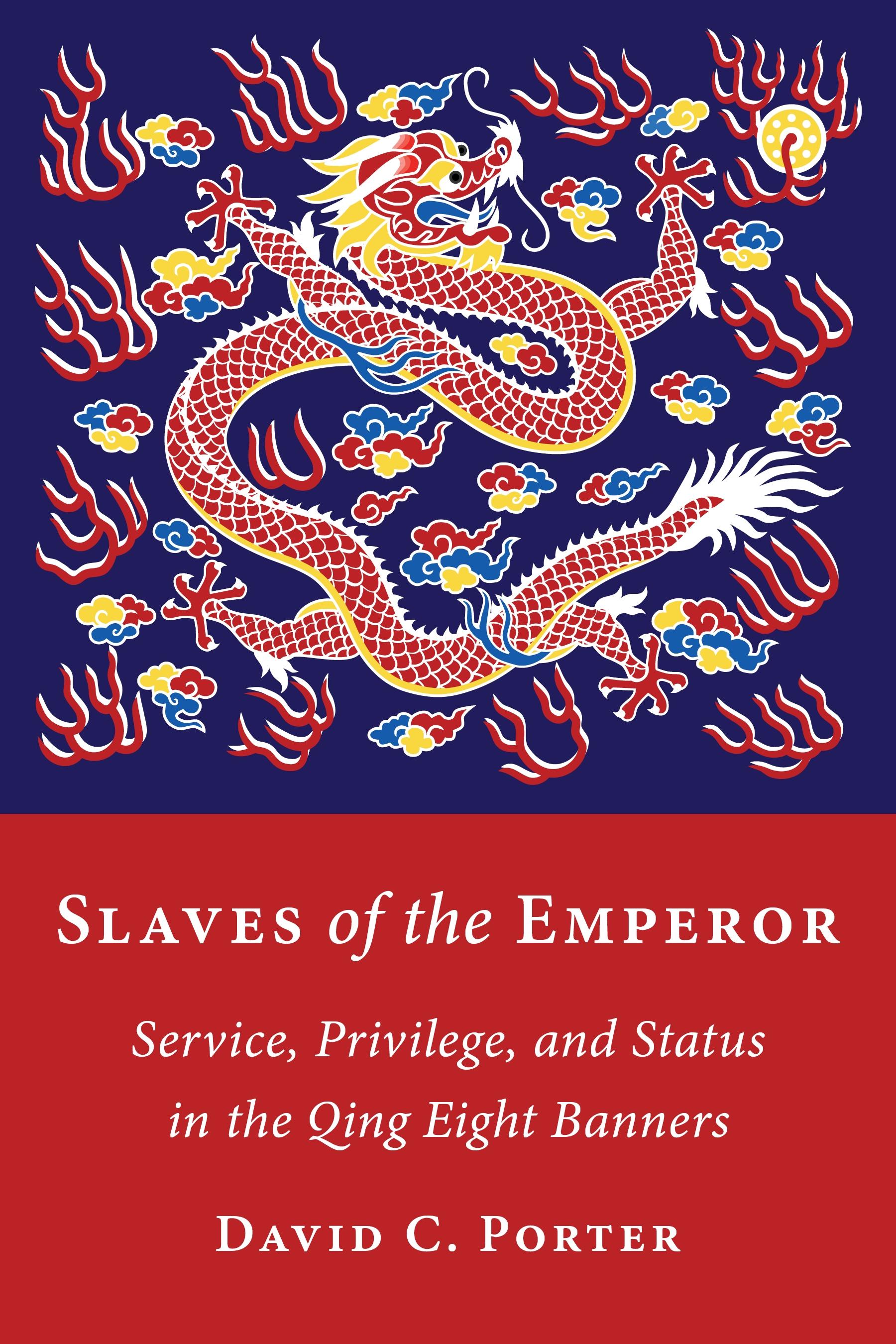
China’s last imperial dynasty governed a vast and culturally diverse territory, encompassing a wide range of local political systems and regional elites. But the Qing empire was built and held together by a single imperial elite: the more than two million members of the hereditary Eight Banner system who were at the core of both the military and the bureaucracy. The banner population was multiethnic, linked by shared membership in a clearly demarcated status group defined in law and administrative practice. Banner people were bound to the court by an exchange of loyal service for institutionalized privilege, a relationship symbolically conceptualized as one of slave to master.
Slaves of the Emperor explores the Qing approach to one of the fundamental challenges of early modern state-building: how to develop an effective bureaucracy with increasing administrative capacity to govern a growing polity while retaining the loyalty of the ruling family’s most important supporters. David C. Porter traces how the banner system created a service elite through its processes of incorporating new members, its employment of bannermen as technical specialists, its imposition of service obligations on women as well as men, and its response to fiscal and ideological challenges. Placing Qing practices in comparative perspective, he uncovers crucial parallels to similar institutions in Tokugawa Japan, imperial Russia, and the Ottoman Empire. Slaves of the Emperor provides a new framework for understanding the structure and function of elites both in China and across Eurasia in the early modern period.
Before Memmo my notes were scattered across PDFs. Now a workspace pulls everything into one place — I see exactly what's still left to study.
Memmo's summaries are gold before exams. I don't have to re-read 800 pages two weeks before — just the important parts.
The AI chat has saved me the night before an exam more than once. I just keep asking until I get it — no waiting on a study group to reply.
The quizzes hit exactly what I need to know. Memmo tracks what I get stuck on — so I only practice what's worth it.
Flashcards with spaced repetition are magic. Memmo knows when I'm about to forget something and brings it back.
The AI podcasts are my favorite. I listen on my way to school and get a recap without sitting at a computer.

Handbok i kvalitativa metoder
281 kr

Hållbar utveckling: en introduktion för ingenjörer och andra problemlösare
334 kr

Brymans Samhällsvetenskapliga metoder
390 kr

Projektledning
491 kr

Den orättvisa hälsan: om socioekonomiska skillnader i hälsa och livslängd
326 kr

Vetenskapsteori för nybörjare
196 kr

Organizational Leadership
429 kr

På väg mot läraryrket
172 kr

Det sociala livet i skolan: Socialpsykologiska perspektiv
253 kr

Betygsättningens didaktik
151 kr

Personality
402 kr

Studying Leadership
404 kr

Managing Innovation
477 kr

Introduktion till samhällsvetenskaplig metod
347 kr

The Psychology of Sex and Gender
698 kr

Evidens och kunskap för socialt arbete
207 kr

Introduction to Leadership
605 kr