
Before Memmo my notes were scattered across PDFs. Now a workspace pulls everything into one place — I see exactly what's still left to study.
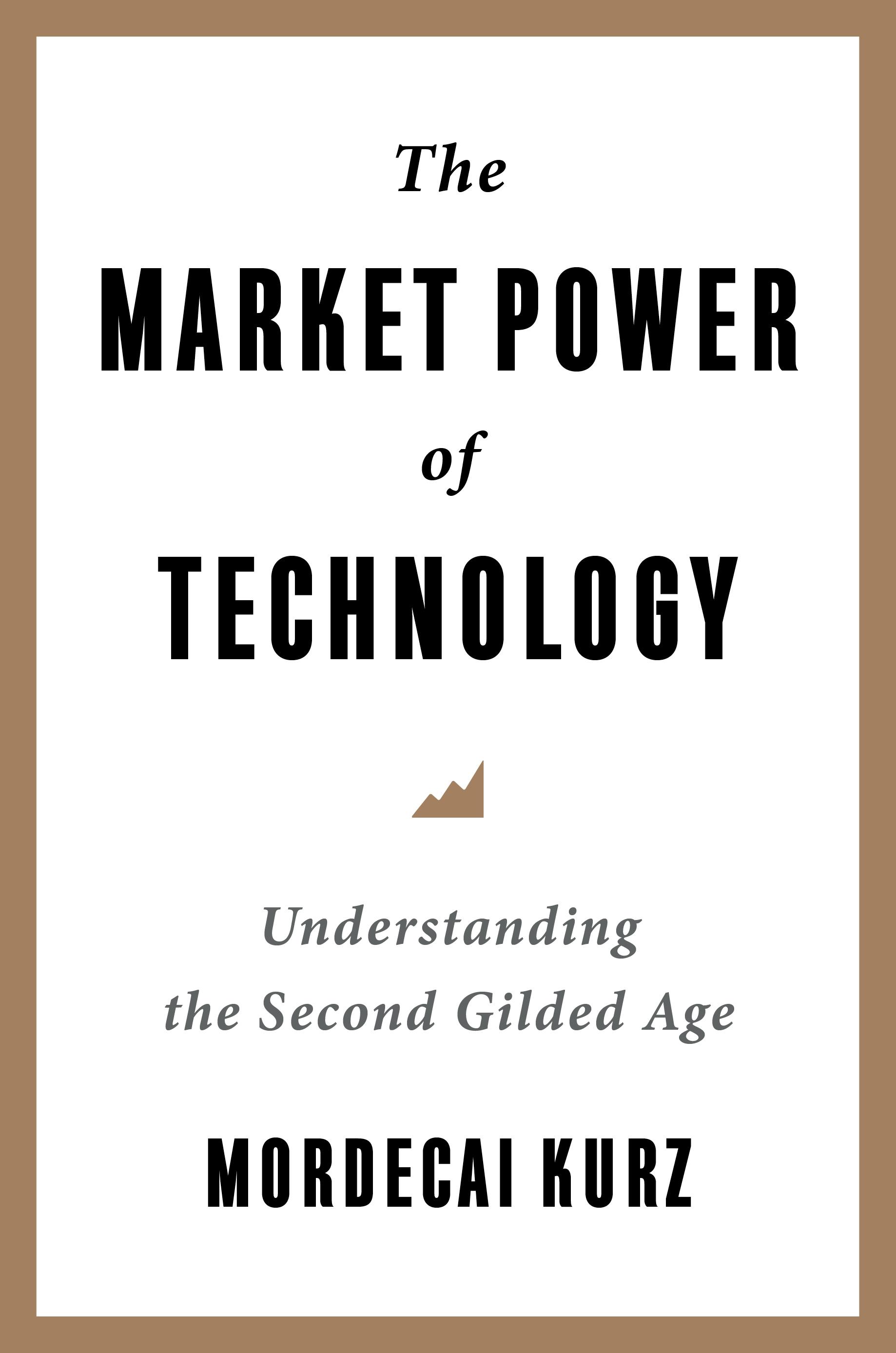
Since the 1980s, the United States has regressed to a level of economic inequality not seen since the Gilded Age in the late nineteenth century. At the same time, technological innovation has transformed society, and a core priority of public policy has been promoting innovation. What is the relationship between economic inequality and technological change?
Mordecai Kurz develops a comprehensive integrated theory of the dynamics of market power and income inequality. He shows that technological innovations are not simply sources of growth and progress: they sow the seeds of market power. In a free market economy with intellectual property rights, firms’ control over technology enables them to expand, attain monopoly power, and earn exorbitant profits. Competition among innovators does not eliminate market power because technological competition is different from standard competition; it results in only one or two winners. Kurz provides a pioneering analysis grounded on quantifying technological market power and its effects on inequality, innovation, and economic growth. He outlines what causes market power to rise and fall and details its macroeconomic and distributional consequences.
Kurz demonstrates that technological market power tends to rise, increasing inequality of income and wealth. Unchecked inequality threatens the foundations of democracy: public policy is the only counterbalancing force that can restrain corporate power, attain more egalitarian distribution of wealth, and make democracy compatible with capitalism. Presenting a new paradigm for understanding today’s vast inequalities, this book offers detailed proposals to redress them by restricting corporate mergers and acquisitions, reforming patent law, improving the balance of power in the labor market, increasing taxation, promoting upward mobility, and stabilizing the middle class.
Before Memmo my notes were scattered across PDFs. Now a workspace pulls everything into one place — I see exactly what's still left to study.
Memmo's summaries are gold before exams. I don't have to re-read 800 pages two weeks before — just the important parts.
The AI chat has saved me the night before an exam more than once. I just keep asking until I get it — no waiting on a study group to reply.
The quizzes hit exactly what I need to know. Memmo tracks what I get stuck on — so I only practice what's worth it.
Flashcards with spaced repetition are magic. Memmo knows when I'm about to forget something and brings it back.
The AI podcasts are my favorite. I listen on my way to school and get a recap without sitting at a computer.

Handbok i kvalitativa metoder
281 kr

Hållbar utveckling: en introduktion för ingenjörer och andra problemlösare
334 kr

Brymans Samhällsvetenskapliga metoder
390 kr

Projektledning
491 kr

Den orättvisa hälsan: om socioekonomiska skillnader i hälsa och livslängd
326 kr

Vetenskapsteori för nybörjare
196 kr

Organizational Leadership
429 kr

På väg mot läraryrket
172 kr

Det sociala livet i skolan: Socialpsykologiska perspektiv
253 kr

Betygsättningens didaktik
151 kr

Personality
402 kr

Studying Leadership
404 kr

Managing Innovation
477 kr

Introduktion till samhällsvetenskaplig metod
347 kr

The Psychology of Sex and Gender
698 kr

Evidens och kunskap för socialt arbete
207 kr

Introduction to Leadership
605 kr