
Before Memmo my notes were scattered across PDFs. Now a workspace pulls everything into one place — I see exactly what's still left to study.
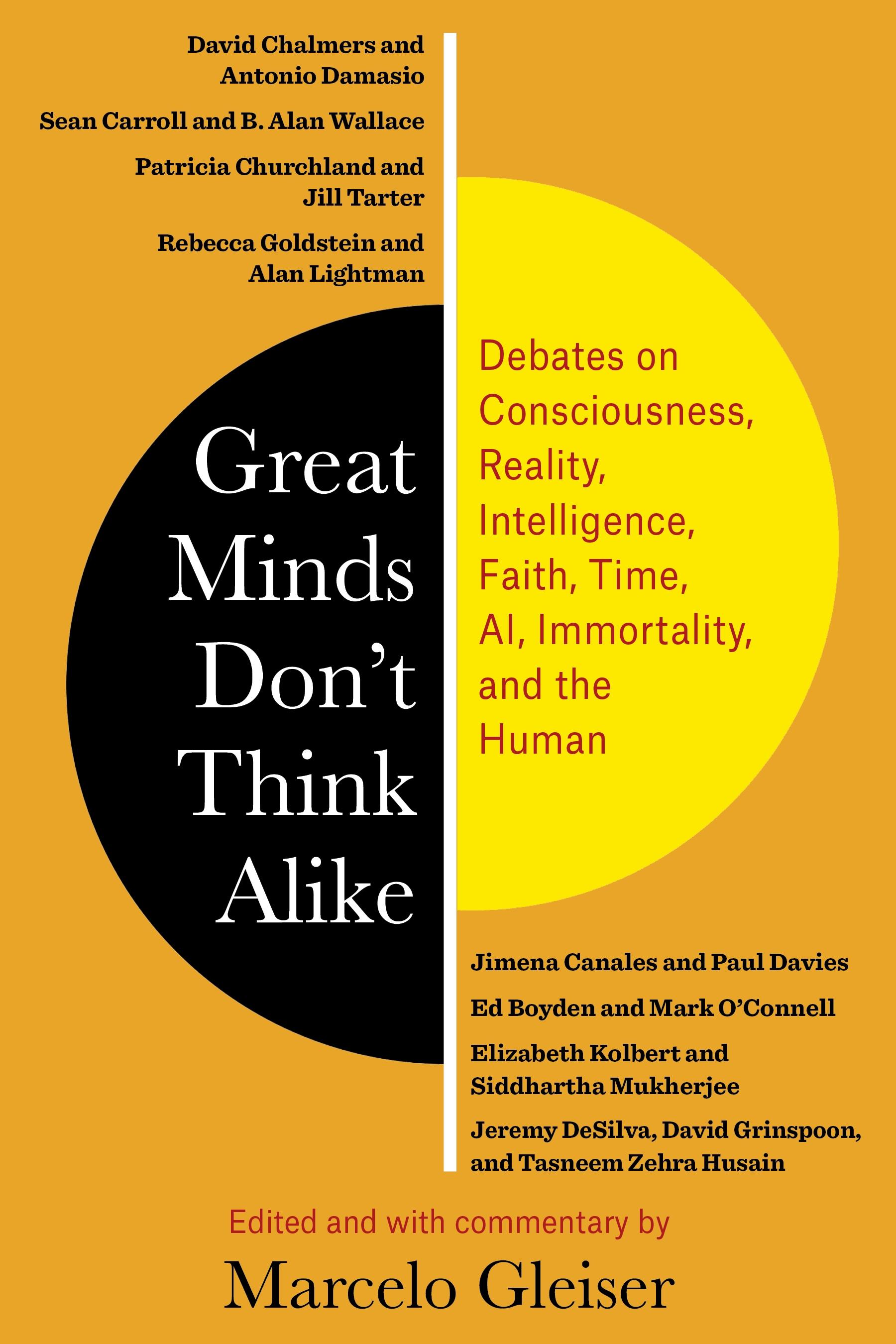
Does technology change who we are, and if so, in what ways? Can humanity transcend physical bodies and spaces? Will AI and genetic engineering help us reach new heights or will they unleash dystopias? How do we face mortality, our own and that of our warming planet? Questions like these—which are only growing more urgent—can be answered only by drawing on different kinds of knowledge and ways of knowing. They challenge us to bridge the divide between the sciences and the humanities and bring together perspectives that are too often kept apart.
Great Minds Don’t Think Alike presents conversations among leading scientists, philosophers, historians, and public intellectuals that exemplify openness to diverse viewpoints and the productive exchange of ideas. Pulitzer and Templeton Prize winners, MacArthur “genius” grant awardees, and other acclaimed writers and thinkers debate the big questions: who we are, the nature of reality, science and religion, consciousness and materialism, and the mysteries of time. In so doing, they also inquire into how uniting experts from different areas of study to consider these topics might help us address the existential risks we face today. Convened and moderated by the physicist and author Marcelo Gleiser, these public dialogues model constructive engagement between the sciences and the humanities—and show why intellectual cooperation is necessary to shape our collective future.
Contributors include David Chalmers and Antonio Damasio; Sean Carroll and B. Alan Wallace; Patricia Churchland and Jill Tarter; Rebecca Goldstein and Alan Lightman; Jimena Canales and Paul Davies; Ed Boyden and Mark O’Connell; Elizabeth Kolbert and Siddhartha Mukherjee; Jeremy DeSilva, David Grinspoon, and Tasneem Zehra Husain.
Before Memmo my notes were scattered across PDFs. Now a workspace pulls everything into one place — I see exactly what's still left to study.
Memmo's summaries are gold before exams. I don't have to re-read 800 pages two weeks before — just the important parts.
The AI chat has saved me the night before an exam more than once. I just keep asking until I get it — no waiting on a study group to reply.
The quizzes hit exactly what I need to know. Memmo tracks what I get stuck on — so I only practice what's worth it.
Flashcards with spaced repetition are magic. Memmo knows when I'm about to forget something and brings it back.
The AI podcasts are my favorite. I listen on my way to school and get a recap without sitting at a computer.

Handbok i kvalitativa metoder
281 kr

Hållbar utveckling: en introduktion för ingenjörer och andra problemlösare
334 kr

Brymans Samhällsvetenskapliga metoder
390 kr

Projektledning
491 kr

Den orättvisa hälsan: om socioekonomiska skillnader i hälsa och livslängd
326 kr

Vetenskapsteori för nybörjare
196 kr

Organizational Leadership
429 kr

På väg mot läraryrket
172 kr

Det sociala livet i skolan: Socialpsykologiska perspektiv
253 kr

Betygsättningens didaktik
151 kr

Personality
402 kr

Studying Leadership
404 kr

Managing Innovation
477 kr

Introduktion till samhällsvetenskaplig metod
347 kr

The Psychology of Sex and Gender
698 kr

Evidens och kunskap för socialt arbete
207 kr

Introduction to Leadership
605 kr