
Before Memmo my notes were scattered across PDFs. Now a workspace pulls everything into one place — I see exactly what's still left to study.
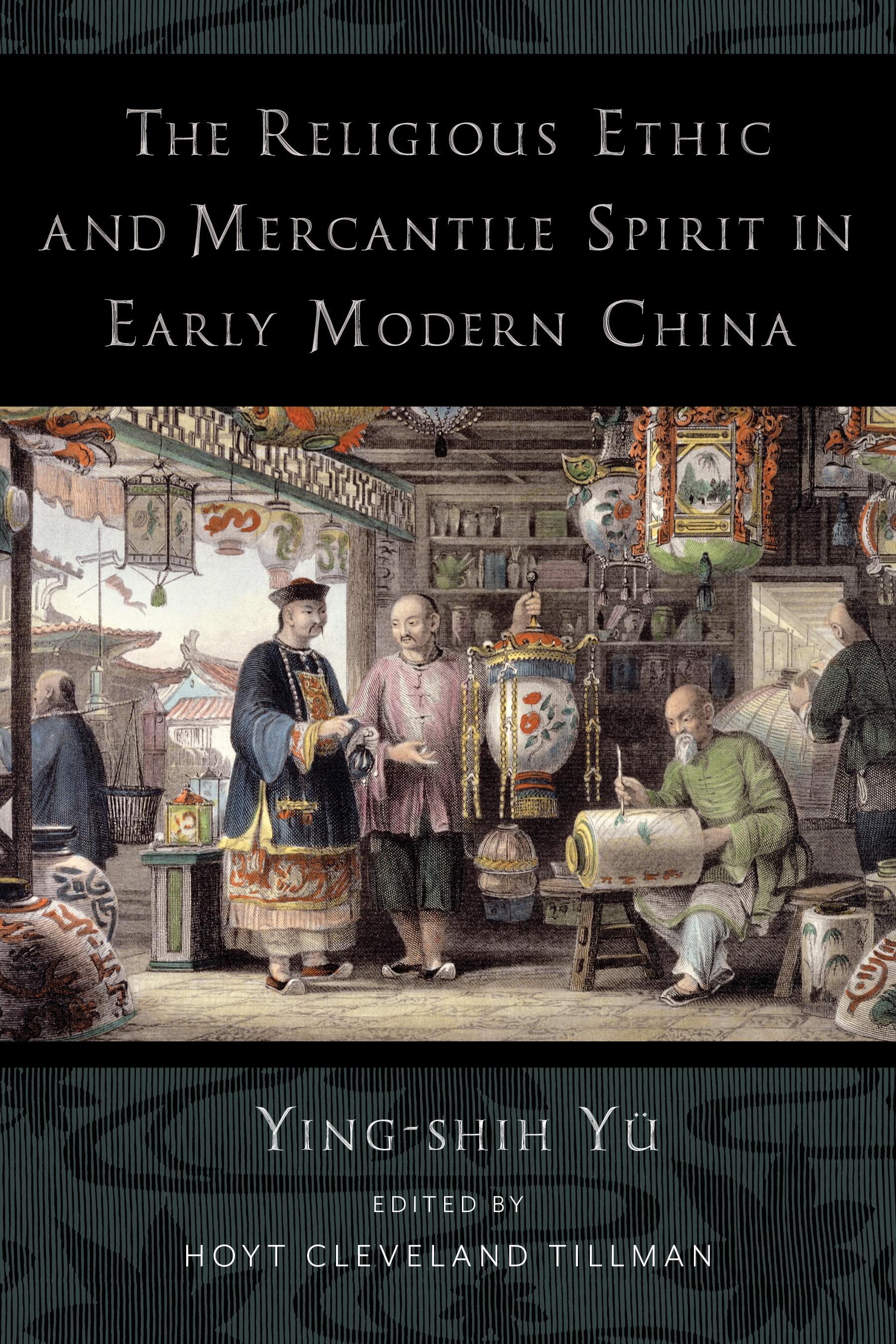
Why did modern capitalism not arise in late imperial China? One famous answer comes from Max Weber, whose The Protestant Ethic and the Spirit of Capitalism gave a canonical analysis of religious and cultural factors in early modern European economic development. In The Religions of China, Weber contended that China lacked the crucial religious impetus to capitalist growth that Protestantism gave Europe.
The preeminent historian Ying-shih Yü offers a magisterial examination of religious and cultural influences in the development of China’s early modern economy, both complement and counterpoint to Weber’s inquiry. The Religious Ethic and Mercantile Spirit in Early Modern China investigates how evolving forms of Buddhism, Confucianism, and Daoism created and promulgated their own concepts of the work ethic from the late seventh century into the Qing dynasty. The book traces how religious leaders developed the spiritual significance of labor and how merchants adopted this religious work ethic, raising their status in Chinese society. However, Yü argues, China’s early modern mercantile spirit was restricted by the imperial bureaucratic priority on social order. He challenges Marxists who championed China’s “sprouts of capitalism” during the fifteenth through eighteenth centuries as well as other modern scholars who credit Confucianism with producing dramatic economic growth in East Asian countries. Yü rejects the premise that China needed an early capitalist stage of development; moreover, the East Asian capitalism that flourished in the later half of the twentieth century was essentially part of the spread of global capitalism.
Now available in English translation, this landmark work has been greatly influential among scholars in East Asia since its publication in Chinese in 1987.
Before Memmo my notes were scattered across PDFs. Now a workspace pulls everything into one place — I see exactly what's still left to study.
Memmo's summaries are gold before exams. I don't have to re-read 800 pages two weeks before — just the important parts.
The AI chat has saved me the night before an exam more than once. I just keep asking until I get it — no waiting on a study group to reply.
The quizzes hit exactly what I need to know. Memmo tracks what I get stuck on — so I only practice what's worth it.
Flashcards with spaced repetition are magic. Memmo knows when I'm about to forget something and brings it back.
The AI podcasts are my favorite. I listen on my way to school and get a recap without sitting at a computer.

Handbok i kvalitativa metoder
281 kr

Hållbar utveckling: en introduktion för ingenjörer och andra problemlösare
334 kr

Brymans Samhällsvetenskapliga metoder
390 kr

Projektledning
491 kr

Den orättvisa hälsan: om socioekonomiska skillnader i hälsa och livslängd
326 kr

Vetenskapsteori för nybörjare
196 kr

Organizational Leadership
429 kr

På väg mot läraryrket
172 kr

Det sociala livet i skolan: Socialpsykologiska perspektiv
253 kr

Betygsättningens didaktik
151 kr

Personality
402 kr

Studying Leadership
404 kr

Managing Innovation
477 kr

Introduktion till samhällsvetenskaplig metod
347 kr

The Psychology of Sex and Gender
698 kr

Evidens och kunskap för socialt arbete
207 kr

Introduction to Leadership
605 kr