
Before Memmo my notes were scattered across PDFs. Now a workspace pulls everything into one place — I see exactly what's still left to study.
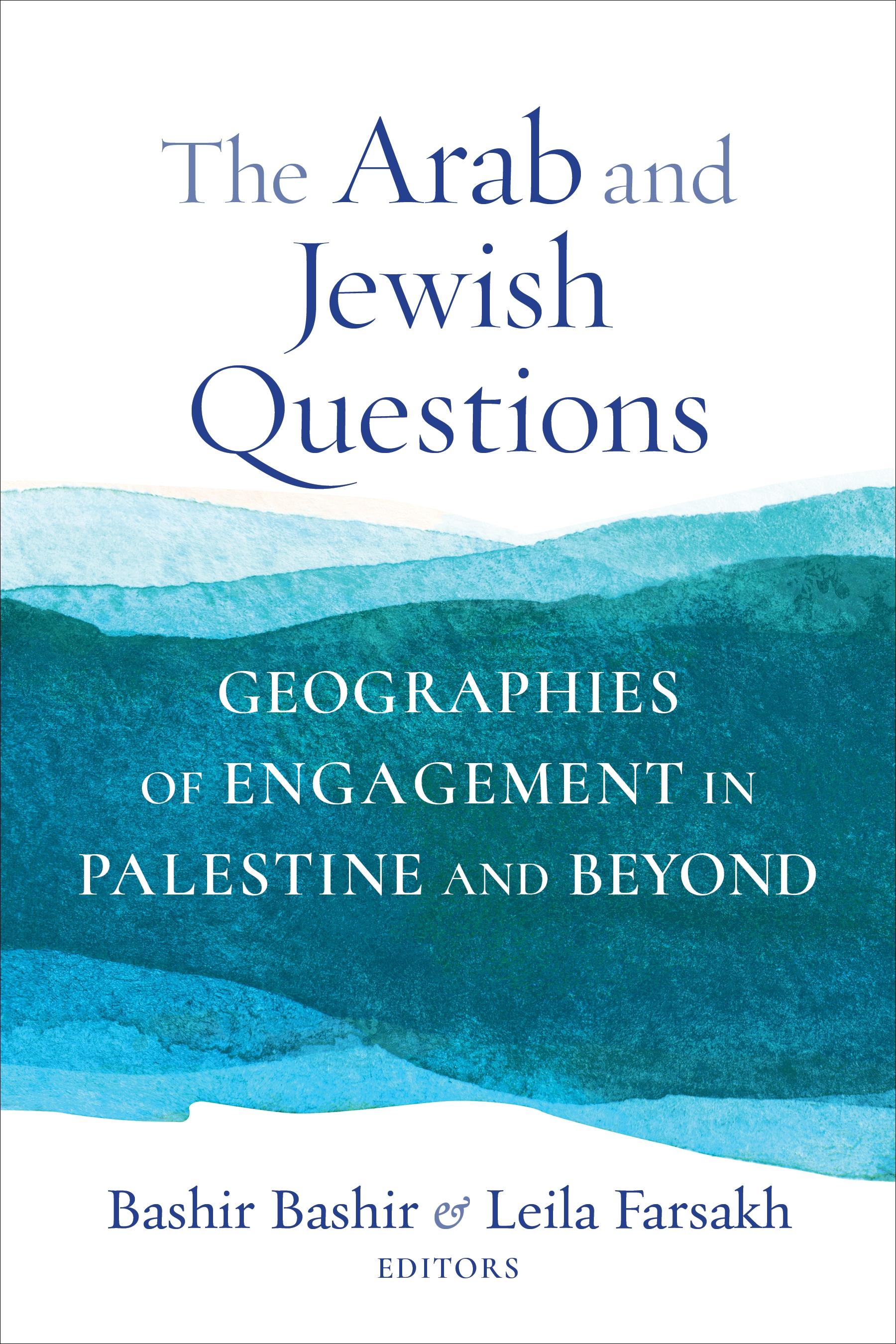
Nineteenth-century Europe turned the political status of its Jewish communities into the “Jewish Question,” as both Christianity and rising forms of nationalism viewed Jews as the ultimate other. With the onset of Zionism, this “question” migrated to Palestine and intensified under British colonial rule and in the aftermath of the Holocaust. Zionism’s attempt to solve the “Jewish Question” created what came to be known as the “Arab Question,” which concerned the presence and rights of the Arab population in Palestine. For the most part, however, Jewish settlers denied or dismissed the question they created, to the detriment of both Arabs and Jews in Palestine and elsewhere.
This book brings together leading scholars to consider how these two questions are entangled historically and in the present day. It offers critical analyses of Arab engagements with the question of Jewish rights alongside Zionist and non-Zionist Jewish considerations of Palestinian identity and political rights. Together, the essays show that the Arab and Jewish questions, and the Israeli-Palestinian conflict in which they have become subsumed, belong to the same thorny history. Despite their major differences, the historical Jewish and Arab questions are about the political rights of oppressed groups and their inclusion within exclusionary political communities—a question that continues to foment tensions in the Middle East, Europe, and the United States. Shedding new light on the intricate relationships among Orientalism, anti-Semitism, Islamophobia, colonialism, and the impasse in the Israeli-Palestinian conflict, this book reveals the inseparability of Arab and Jewish struggles for self-determination and political equality.
Contributors include Gil Anidjar, Brian Klug, Amal Ghazal, Ella Shohat, Hakem Al-Rustom, Hillel Cohen, Yuval Evri, Derek Penslar, Jacqueline Rose, Moshe Behar, Maram Masarwi, and the editors, Bashir Bashir and Leila Farsakh.
Before Memmo my notes were scattered across PDFs. Now a workspace pulls everything into one place — I see exactly what's still left to study.
Memmo's summaries are gold before exams. I don't have to re-read 800 pages two weeks before — just the important parts.
The AI chat has saved me the night before an exam more than once. I just keep asking until I get it — no waiting on a study group to reply.
The quizzes hit exactly what I need to know. Memmo tracks what I get stuck on — so I only practice what's worth it.
Flashcards with spaced repetition are magic. Memmo knows when I'm about to forget something and brings it back.
The AI podcasts are my favorite. I listen on my way to school and get a recap without sitting at a computer.

Handbok i kvalitativa metoder
281 kr

Hållbar utveckling: en introduktion för ingenjörer och andra problemlösare
334 kr

Brymans Samhällsvetenskapliga metoder
390 kr

Projektledning
491 kr

Den orättvisa hälsan: om socioekonomiska skillnader i hälsa och livslängd
326 kr

Vetenskapsteori för nybörjare
196 kr

Organizational Leadership
429 kr

På väg mot läraryrket
172 kr

Det sociala livet i skolan: Socialpsykologiska perspektiv
253 kr

Betygsättningens didaktik
151 kr

Personality
402 kr

Studying Leadership
404 kr

Managing Innovation
477 kr

Introduktion till samhällsvetenskaplig metod
347 kr

The Psychology of Sex and Gender
698 kr

Evidens och kunskap för socialt arbete
207 kr

Introduction to Leadership
605 kr