
Before Memmo my notes were scattered across PDFs. Now a workspace pulls everything into one place — I see exactly what's still left to study.
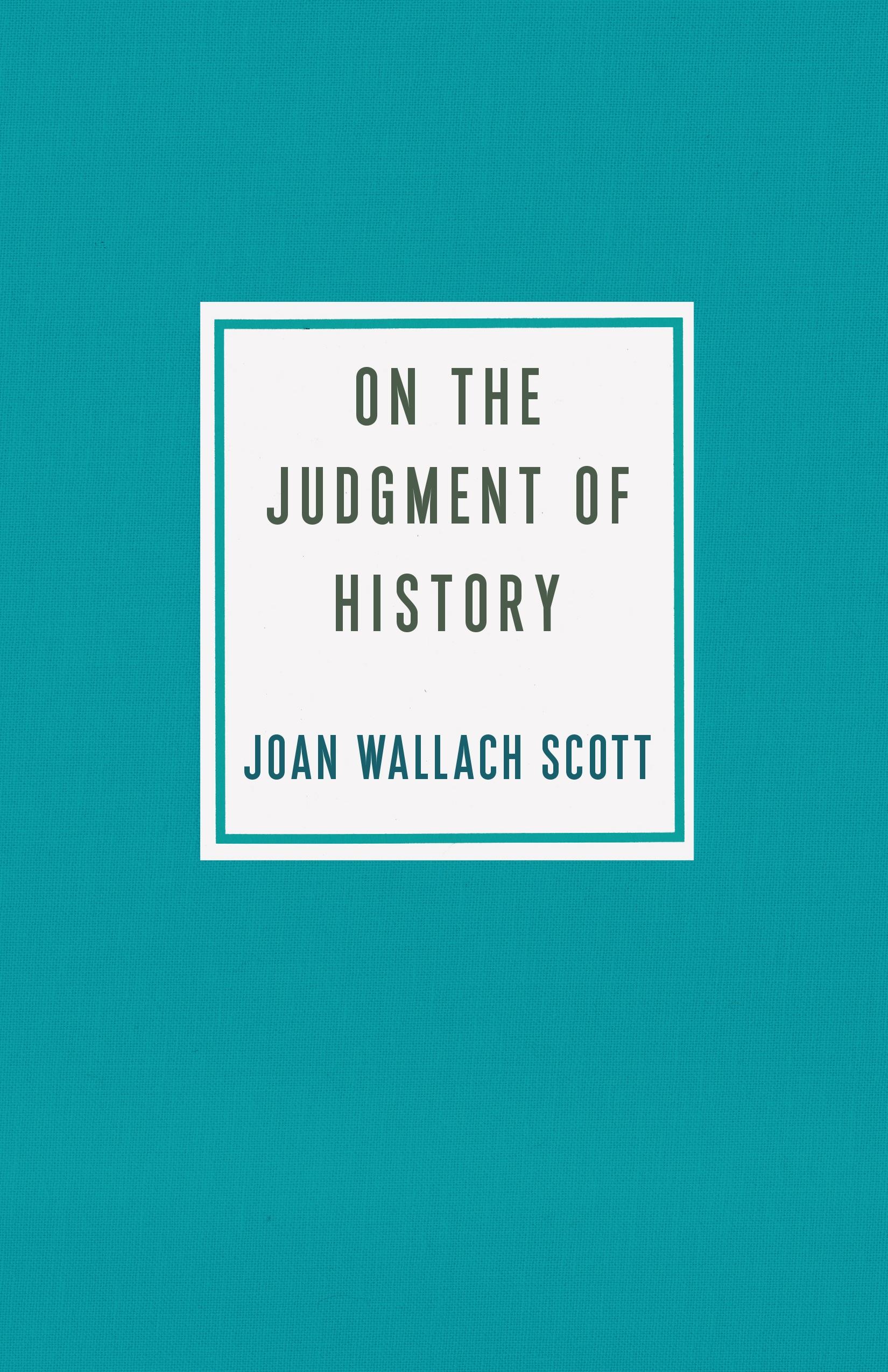
In the face of conflict and despair, we often console ourselves by saying that history will be the judge. Today’s oppressors may escape being held responsible for their crimes, but the future will condemn them. Those who stand up for progressive values are on the right side of history. As ideas once condemned to the dustbin of history—white supremacy, hypernationalism, even fascism—return to the world, threatening democratic institutions and values, can we still hold out hope that history will render its verdict?
Joan Wallach Scott critically examines the belief that history will redeem us, revealing the implicit politics of appeals to the judgment of history. She argues that the notion of a linear, ever-improving direction of history hides the persistence of power structures and hinders the pursuit of alternative futures. This vision of necessary progress perpetuates the assumption that the nation-state is the culmination of history and the ultimate source for rectifying injustice. Scott considers the Nuremberg Tribunal and South Africa’s Truth and Reconciliation Commission, which claimed to carry out history’s judgment on Nazism and apartheid, and contrasts them with the movement for reparations for slavery in the United States. Advocates for reparations call into question a national history that has long ignored enslavement and its racist legacies. Only by this kind of critical questioning of the place of the nation-state as the final source of history’s judgment, this book shows, can we open up room for radically different conceptions of justice.
Before Memmo my notes were scattered across PDFs. Now a workspace pulls everything into one place — I see exactly what's still left to study.
Memmo's summaries are gold before exams. I don't have to re-read 800 pages two weeks before — just the important parts.
The AI chat has saved me the night before an exam more than once. I just keep asking until I get it — no waiting on a study group to reply.
The quizzes hit exactly what I need to know. Memmo tracks what I get stuck on — so I only practice what's worth it.
Flashcards with spaced repetition are magic. Memmo knows when I'm about to forget something and brings it back.
The AI podcasts are my favorite. I listen on my way to school and get a recap without sitting at a computer.

Handbok i kvalitativa metoder
281 kr

Hållbar utveckling: en introduktion för ingenjörer och andra problemlösare
334 kr

Brymans Samhällsvetenskapliga metoder
390 kr

Projektledning
491 kr

Den orättvisa hälsan: om socioekonomiska skillnader i hälsa och livslängd
326 kr

Vetenskapsteori för nybörjare
196 kr

Organizational Leadership
429 kr

På väg mot läraryrket
172 kr

Det sociala livet i skolan: Socialpsykologiska perspektiv
253 kr

Betygsättningens didaktik
151 kr

Personality
402 kr

Studying Leadership
404 kr

Managing Innovation
477 kr

Introduktion till samhällsvetenskaplig metod
347 kr

The Psychology of Sex and Gender
698 kr

Evidens och kunskap för socialt arbete
207 kr

Introduction to Leadership
605 kr