
Before Memmo my notes were scattered across PDFs. Now a workspace pulls everything into one place — I see exactly what's still left to study.
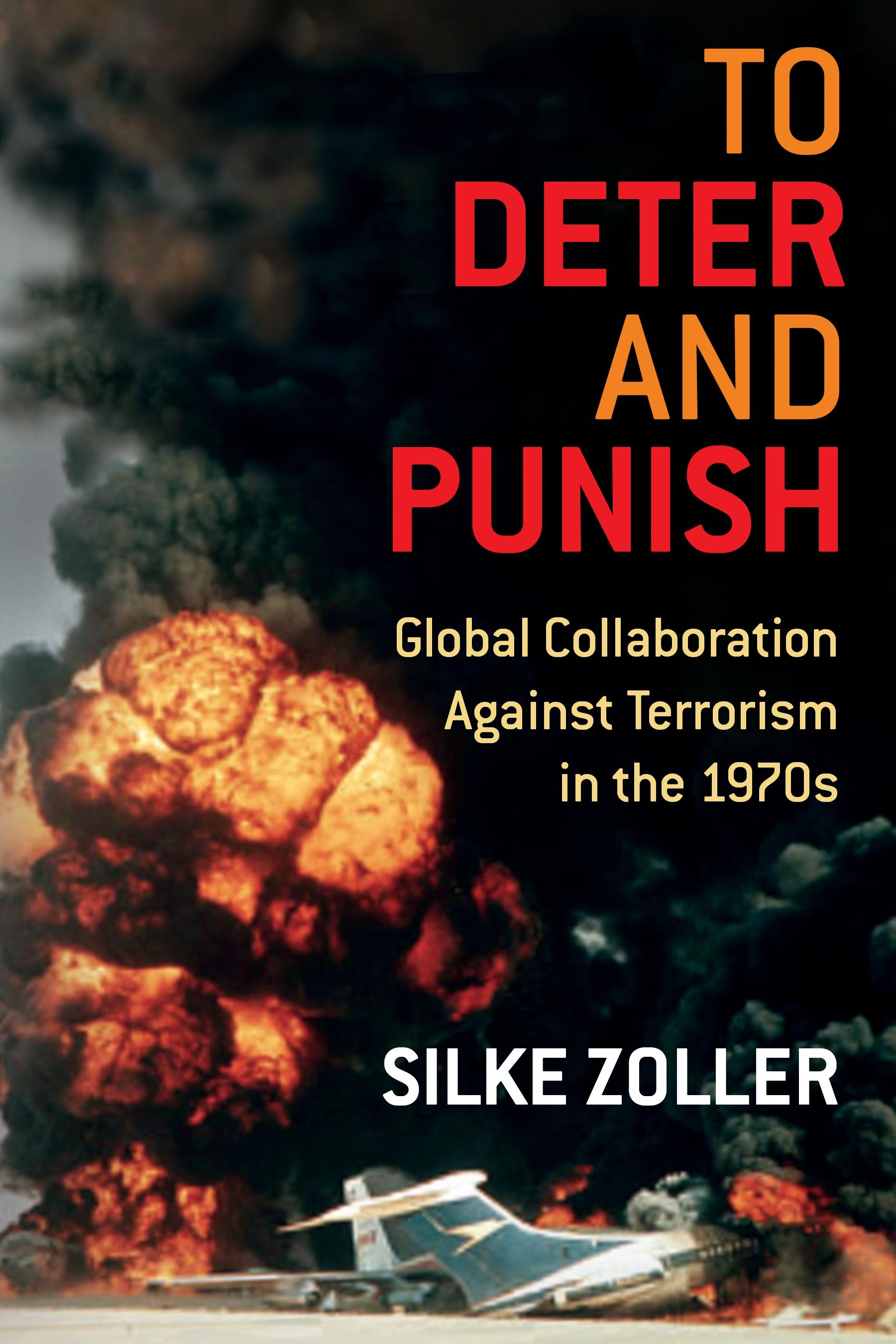
In the late 1960s and early 1970s, governments in North America and Western Europe faced a new transnational threat: militants who crossed borders with impunity to commit attacks. These violent actors cooperated in hijacking planes, taking hostages, and organizing assassinations, often in the name of national liberation movements from the decolonizing world. How did this form of political violence become what we know today as “international terrorism”—lacking in legitimacy and categorized first and foremost as a crime?
To Deter and Punish examines why and how the United States and its Western European allies came to treat nonstate “terrorists” as a key threat to their security and interests. Drawing on a multinational array of sources, Silke Zoller traces Western state officials’ attempts to control the meaning of and responses to terrorism from the first Palestinian hijacking in 1968 to Ronald Reagan’s militarization of counterterrorism in the early 1980s. She details how Western states sought to criminalize border-crossing nonstate violence—and thus delegitimized offenders’ political aspirations. U.S. and European officials pressured states around the world to join agreements requiring them to create and enforce criminal laws against alleged individual terrorists. Zoller underscores how recently decolonized states countered that only a more equitable global system capable of addressing political grievances would end the violence.
To Deter and Punish offers a new account of the emergence of modern counterterrorism that pinpoints its international dimensions—a story about diplomats and bureaucrats as well as national liberation militancy and the processes of decolonization.
Before Memmo my notes were scattered across PDFs. Now a workspace pulls everything into one place — I see exactly what's still left to study.
Memmo's summaries are gold before exams. I don't have to re-read 800 pages two weeks before — just the important parts.
The AI chat has saved me the night before an exam more than once. I just keep asking until I get it — no waiting on a study group to reply.
The quizzes hit exactly what I need to know. Memmo tracks what I get stuck on — so I only practice what's worth it.
Flashcards with spaced repetition are magic. Memmo knows when I'm about to forget something and brings it back.
The AI podcasts are my favorite. I listen on my way to school and get a recap without sitting at a computer.

Handbok i kvalitativa metoder
281 kr

Hållbar utveckling: en introduktion för ingenjörer och andra problemlösare
334 kr

Brymans Samhällsvetenskapliga metoder
390 kr

Projektledning
491 kr

Den orättvisa hälsan: om socioekonomiska skillnader i hälsa och livslängd
326 kr

Organizational Leadership
429 kr

Vetenskapsteori för nybörjare
196 kr

På väg mot läraryrket
172 kr

Det sociala livet i skolan: Socialpsykologiska perspektiv
253 kr

Betygsättningens didaktik
151 kr

Personality
402 kr

Studying Leadership
404 kr

Managing Innovation
477 kr

Introduktion till samhällsvetenskaplig metod
347 kr

The Psychology of Sex and Gender
698 kr

Evidens och kunskap för socialt arbete
207 kr

Introduction to Leadership
605 kr