
Before Memmo my notes were scattered across PDFs. Now a workspace pulls everything into one place — I see exactly what's still left to study.
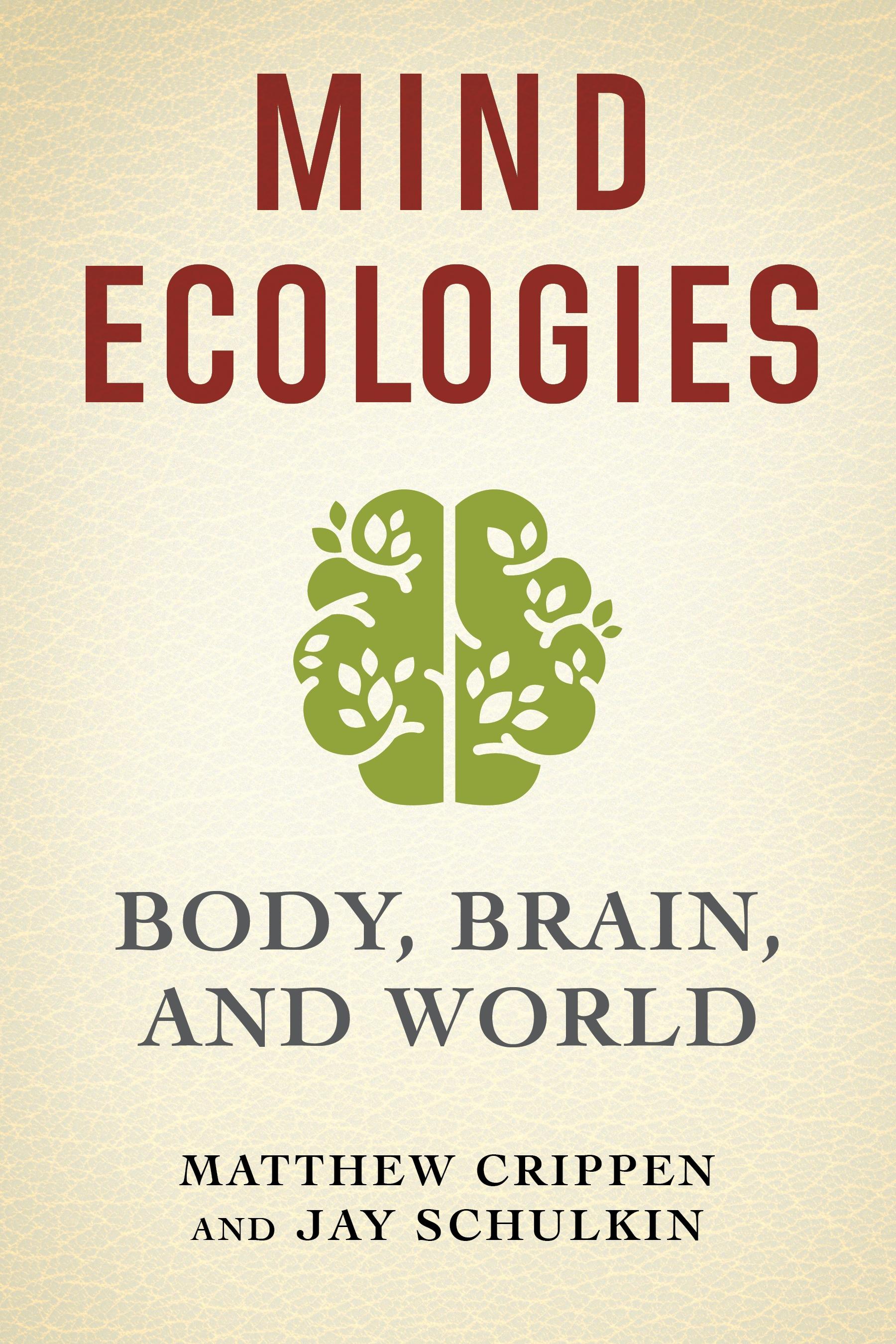
Pragmatism—a pluralistic philosophy with kinships to phenomenology, Gestalt psychology, and embodied cognitive science—is resurging across disciplines. It has growing relevance to literary studies, the arts, and religious scholarship, along with branches of political theory, not to mention our understanding of science. But philosophies and sciences of mind have lagged behind this pragmatic turn, for the most part retaining a central-nervous-system orientation, which pragmatists reject as too narrow.
Matthew Crippen, a philosopher of mind, and Jay Schulkin, a behavioral neuroscientist, offer an innovative interdisciplinary theory of mind. They argue that pragmatism in combination with phenomenology is not only able to give an unusually persuasive rendering of how we think, feel, experience, and act in the world but also provides the account most consistent with current evidence from cognitive science and neurobiology. Crippen and Schulkin contend that cognition, emotion, and perception are incomplete without action, and in action they fuse together. Not only are we embodied subjects whose thoughts, emotions, and capacities comprise one integrated system; we are living ecologies inseparable from our surroundings, our cultures, and our world. Ranging from social coordination to the role of gut bacteria and visceral organs in mental activity, and touching upon fields such as robotics, artificial intelligence, and plant cognition, Crippen and Schulkin stress the role of aesthetics, emotions, interests, and moods in the ongoing enactment of experience. Synthesizing philosophy, neurobiology, psychology, and the history of science, Mind Ecologies offers a broad and deep exploration of evidence for the embodied, embedded, enacted, and extended nature of mind.
Before Memmo my notes were scattered across PDFs. Now a workspace pulls everything into one place — I see exactly what's still left to study.
Memmo's summaries are gold before exams. I don't have to re-read 800 pages two weeks before — just the important parts.
The AI chat has saved me the night before an exam more than once. I just keep asking until I get it — no waiting on a study group to reply.
The quizzes hit exactly what I need to know. Memmo tracks what I get stuck on — so I only practice what's worth it.
Flashcards with spaced repetition are magic. Memmo knows when I'm about to forget something and brings it back.
The AI podcasts are my favorite. I listen on my way to school and get a recap without sitting at a computer.

Handbok i kvalitativa metoder
281 kr

Hållbar utveckling: en introduktion för ingenjörer och andra problemlösare
334 kr

Brymans Samhällsvetenskapliga metoder
390 kr

Projektledning
491 kr

Den orättvisa hälsan: om socioekonomiska skillnader i hälsa och livslängd
326 kr

Vetenskapsteori för nybörjare
196 kr

Organizational Leadership
429 kr

På väg mot läraryrket
172 kr

Det sociala livet i skolan: Socialpsykologiska perspektiv
253 kr

Betygsättningens didaktik
151 kr

Personality
402 kr

Studying Leadership
404 kr

Managing Innovation
477 kr

Introduktion till samhällsvetenskaplig metod
347 kr

The Psychology of Sex and Gender
698 kr

Evidens och kunskap för socialt arbete
207 kr

Introduction to Leadership
605 kr