
Before Memmo my notes were scattered across PDFs. Now a workspace pulls everything into one place — I see exactly what's still left to study.
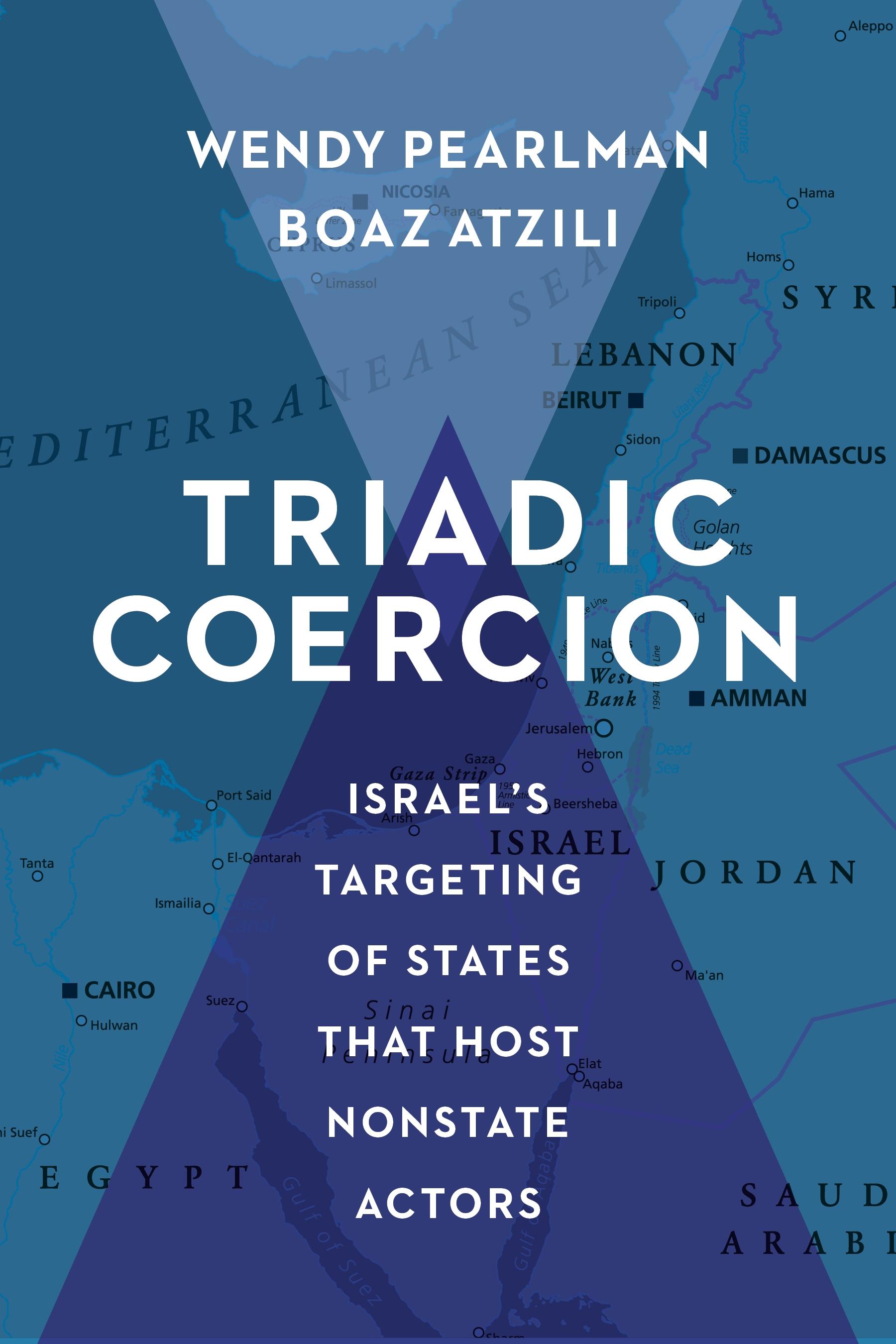
In the post–Cold War era, states increasingly find themselves in conflicts with nonstate actors. Finding it difficult to fight these opponents directly, many governments instead target states that harbor or aid nonstate actors, using threats and punishment to coerce host states into stopping those groups.
Wendy Pearlman and Boaz Atzili investigate this strategy, which they term triadic coercion. They explain why states pursue triadic coercion, evaluate the conditions under which it succeeds, and demonstrate their arguments across seventy years of Israeli history. This rich analysis of the Arab-Israeli conflict, supplemented with insights from India and Turkey, yields surprising findings. Traditional discussions of interstate conflict assume that the greater a state’s power compared to its opponent, the more successful its coercion. Turning that logic on its head, Pearlman and Atzili show that this strategy can be more effective against a strong host state than a weak one because host regimes need internal cohesion and institutional capacity to move against nonstate actors. If triadic coercion is thus likely to fail against weak regimes, why do states nevertheless employ it against them? Pearlman and Atzili’s investigation of Israeli decision-making points to the role of strategic culture. A state’s system of beliefs, values, and institutionalized practices can encourage coercion as a necessary response, even when that policy is prone to backfire.
A significant contribution to scholarship on deterrence, asymmetric conflict, and strategic culture, Triadic Coercion illuminates an evolving feature of the international security landscape and interrogates assumptions that distort strategic thinking.
Before Memmo my notes were scattered across PDFs. Now a workspace pulls everything into one place — I see exactly what's still left to study.
Memmo's summaries are gold before exams. I don't have to re-read 800 pages two weeks before — just the important parts.
The AI chat has saved me the night before an exam more than once. I just keep asking until I get it — no waiting on a study group to reply.
The quizzes hit exactly what I need to know. Memmo tracks what I get stuck on — so I only practice what's worth it.
Flashcards with spaced repetition are magic. Memmo knows when I'm about to forget something and brings it back.
The AI podcasts are my favorite. I listen on my way to school and get a recap without sitting at a computer.

Handbok i kvalitativa metoder
281 kr

Hållbar utveckling: en introduktion för ingenjörer och andra problemlösare
334 kr

Brymans Samhällsvetenskapliga metoder
390 kr

Projektledning
491 kr

Den orättvisa hälsan: om socioekonomiska skillnader i hälsa och livslängd
326 kr

Vetenskapsteori för nybörjare
196 kr

Organizational Leadership
429 kr

På väg mot läraryrket
172 kr

Det sociala livet i skolan: Socialpsykologiska perspektiv
253 kr

Betygsättningens didaktik
151 kr

Personality
402 kr

Studying Leadership
404 kr

Managing Innovation
477 kr

Introduktion till samhällsvetenskaplig metod
347 kr

The Psychology of Sex and Gender
698 kr

Evidens och kunskap för socialt arbete
207 kr

Introduction to Leadership
605 kr