
Before Memmo my notes were scattered across PDFs. Now a workspace pulls everything into one place — I see exactly what's still left to study.
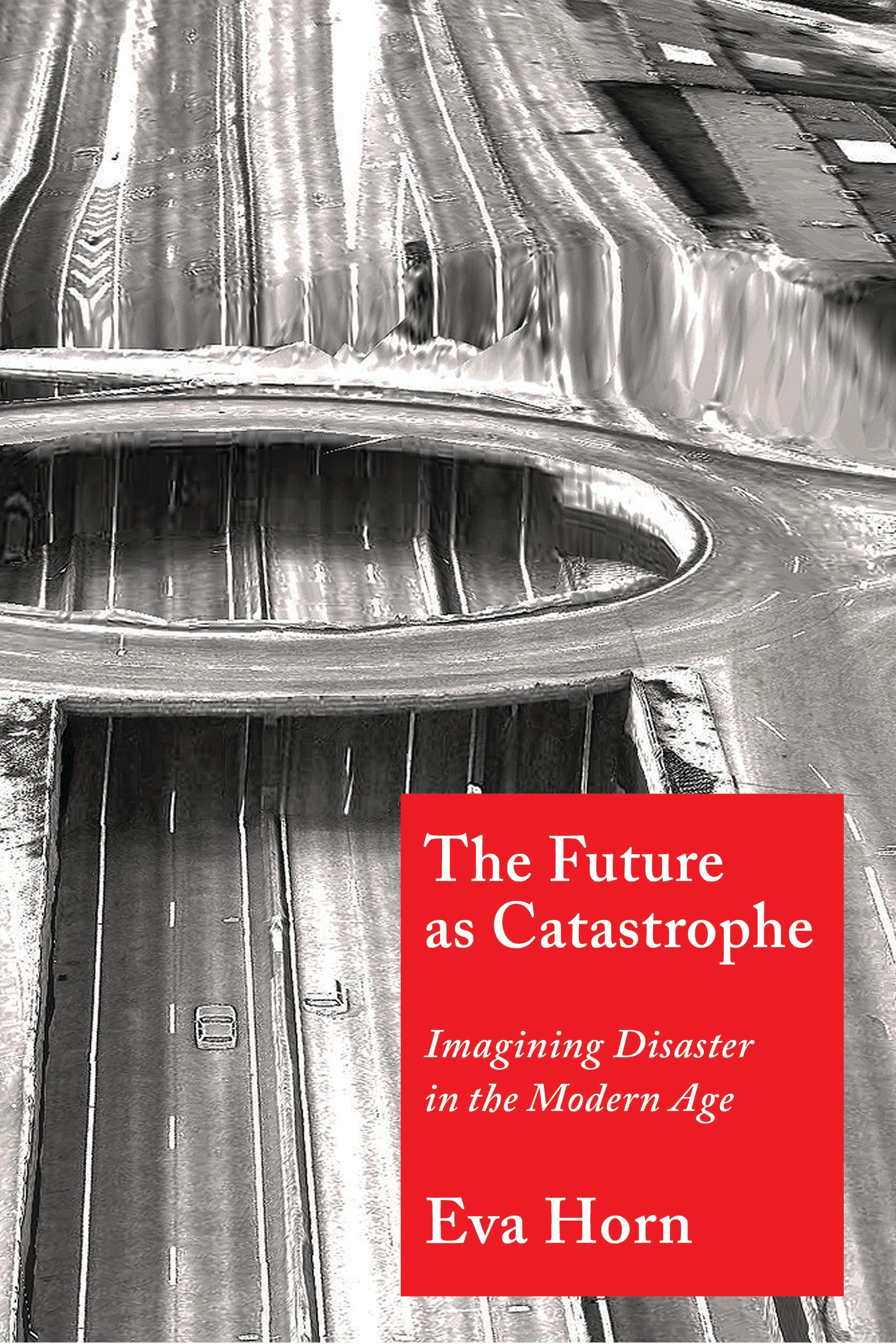
Why do we have the constant feeling that disaster is looming? Beyond the images of atomic apocalypse that have haunted us for decades, we are dazzled now by an array of possible catastrophe scenarios: climate change, financial crises, environmental disasters, technological meltdowns—perennial subjects of literature, film, popular culture, and political debate. Is this preoccupation with catastrophe questionable alarmism or complacent passivity? Or are there certain truths that can be revealed only in apocalypse?
In The Future as Catastrophe, Eva Horn offers a novel critique of the modern fascination with disaster, which she treats as a symptom of our relationship to the future. Analyzing the catastrophic imaginary from its cultural and historical roots in Romanticism and the figure of the Last Man, through the narratives of climatic cataclysm and the Cold War’s apocalyptic sublime, to the contemporary popularity of disaster fiction and end-of-the-world blockbusters, Horn argues that apocalypse always haunts the modern idea of a future that can be anticipated and planned. Considering works by Lord Byron, J. G. Ballard, and Cormac McCarthy and films such as 12 Monkeys and Minority Report alongside scientific scenarios and political metaphors, she analyzes catastrophic thought experiments and the question of survival, the choices legitimized by imagined states of exception, and the contradictions inherent in preventative measures taken in the name of technical safety or political security. What makes today’s obsession different from previous epochs’ is the sense of a “catastrophe without event,” a stealthily creeping process of disintegration. Ultimately, Horn argues, imagined catastrophes offer us intellectual tools that can render a future shadowed with apocalyptic possibilities affectively, epistemologically, and politically accessible.
Before Memmo my notes were scattered across PDFs. Now a workspace pulls everything into one place — I see exactly what's still left to study.
Memmo's summaries are gold before exams. I don't have to re-read 800 pages two weeks before — just the important parts.
The AI chat has saved me the night before an exam more than once. I just keep asking until I get it — no waiting on a study group to reply.
The quizzes hit exactly what I need to know. Memmo tracks what I get stuck on — so I only practice what's worth it.
Flashcards with spaced repetition are magic. Memmo knows when I'm about to forget something and brings it back.
The AI podcasts are my favorite. I listen on my way to school and get a recap without sitting at a computer.

Handbok i kvalitativa metoder
281 kr

Hållbar utveckling: en introduktion för ingenjörer och andra problemlösare
334 kr

Brymans Samhällsvetenskapliga metoder
390 kr

Projektledning
491 kr

Den orättvisa hälsan: om socioekonomiska skillnader i hälsa och livslängd
326 kr

Organizational Leadership
429 kr

Vetenskapsteori för nybörjare
196 kr

På väg mot läraryrket
172 kr

Det sociala livet i skolan: Socialpsykologiska perspektiv
253 kr

Betygsättningens didaktik
151 kr

Personality
402 kr

Studying Leadership
404 kr

Managing Innovation
477 kr

Introduktion till samhällsvetenskaplig metod
347 kr

The Psychology of Sex and Gender
698 kr

Evidens och kunskap för socialt arbete
207 kr

Introduction to Leadership
605 kr