
Before Memmo my notes were scattered across PDFs. Now a workspace pulls everything into one place — I see exactly what's still left to study.
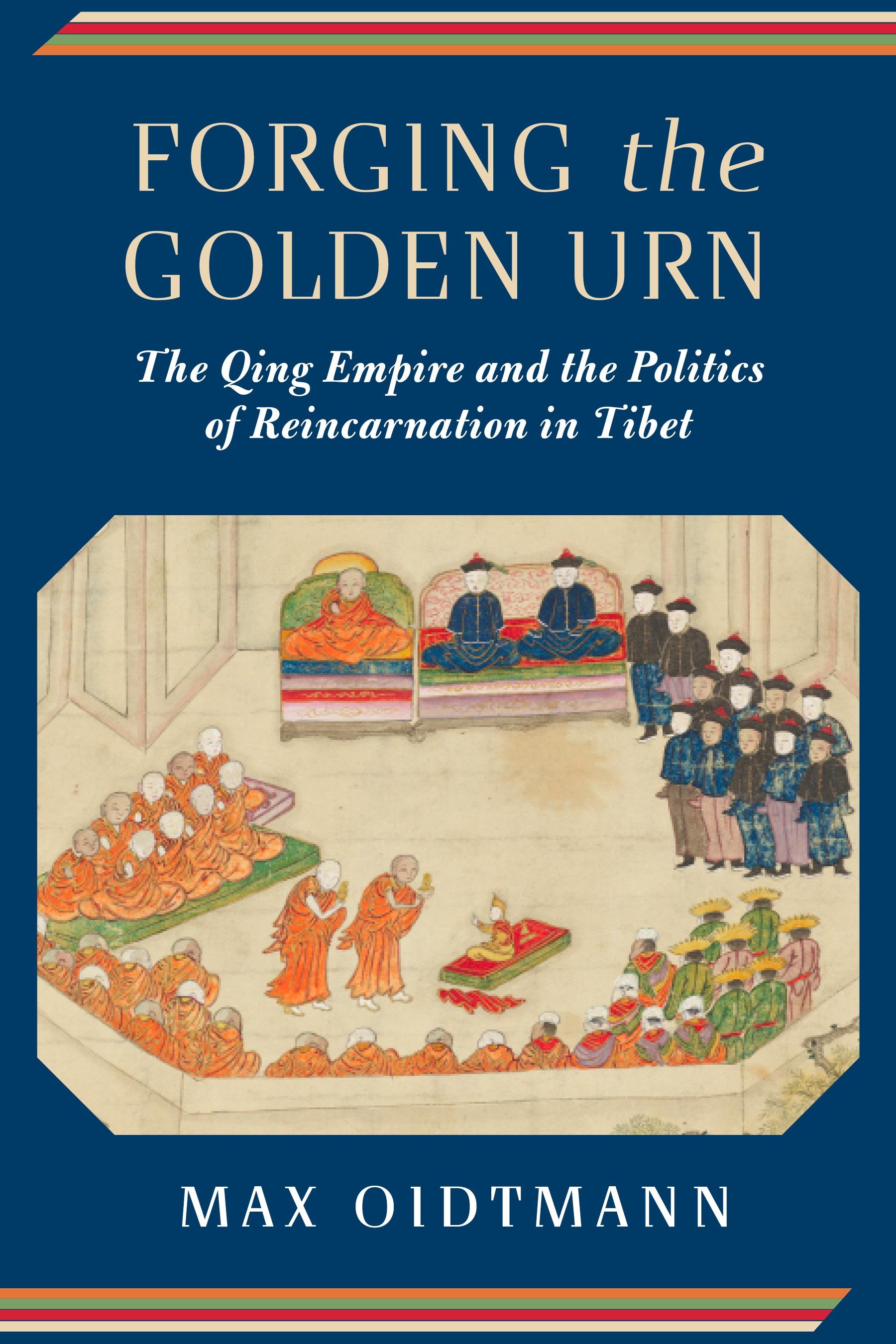
In 1995, the People’s Republic of China resurrected a Qing-era law mandating that the reincarnations of prominent Tibetan Buddhist monks be identified by drawing lots from a golden urn. The Chinese Communist Party hoped to limit the ability of the Dalai Lama and the Tibetan government-in-exile to independently identify reincarnations. In so doing, they elevated a long-forgotten ceremony into a controversial symbol of Chinese sovereignty in Tibet.
In Forging the Golden Urn, Max Oidtmann ventures into the polyglot world of the Qing empire in search of the origins of the golden urn tradition. He seeks to understand the relationship between the Qing state and its most powerful partner in Inner Asia—the Geluk school of Tibetan Buddhism. Why did the Qianlong emperor invent the golden urn lottery in 1792? What ability did the Qing state have to alter Tibetan religious and political traditions? What did this law mean to Qing rulers, their advisors, and Tibetan Buddhists? Working with both the Manchu-language archives of the empire’s colonial bureaucracy and the chronicles of Tibetan elites, Oidtmann traces how a Chinese bureaucratic technology—a lottery for assigning administrative posts—was exported to the Tibetan and Mongolian regions of the Qing empire and transformed into a ritual for identifying and authenticating reincarnations. Forging the Golden Urn sheds new light on how the empire’s frontier officers grappled with matters of sovereignty, faith, and law and reveals the role that Tibetan elites played in the production of new religious traditions in the context of Qing rule.
Before Memmo my notes were scattered across PDFs. Now a workspace pulls everything into one place — I see exactly what's still left to study.
Memmo's summaries are gold before exams. I don't have to re-read 800 pages two weeks before — just the important parts.
The AI chat has saved me the night before an exam more than once. I just keep asking until I get it — no waiting on a study group to reply.
The quizzes hit exactly what I need to know. Memmo tracks what I get stuck on — so I only practice what's worth it.
Flashcards with spaced repetition are magic. Memmo knows when I'm about to forget something and brings it back.
The AI podcasts are my favorite. I listen on my way to school and get a recap without sitting at a computer.

Handbok i kvalitativa metoder
281 kr

Hållbar utveckling: en introduktion för ingenjörer och andra problemlösare
334 kr

Brymans Samhällsvetenskapliga metoder
390 kr

Projektledning
491 kr

Den orättvisa hälsan: om socioekonomiska skillnader i hälsa och livslängd
326 kr

Vetenskapsteori för nybörjare
196 kr

Organizational Leadership
429 kr

På väg mot läraryrket
172 kr

Det sociala livet i skolan: Socialpsykologiska perspektiv
253 kr

Betygsättningens didaktik
151 kr

Personality
402 kr

Studying Leadership
404 kr

Managing Innovation
477 kr

Introduktion till samhällsvetenskaplig metod
347 kr

The Psychology of Sex and Gender
698 kr

Evidens och kunskap för socialt arbete
207 kr

Introduction to Leadership
605 kr