
Before Memmo my notes were scattered across PDFs. Now a workspace pulls everything into one place — I see exactly what's still left to study.
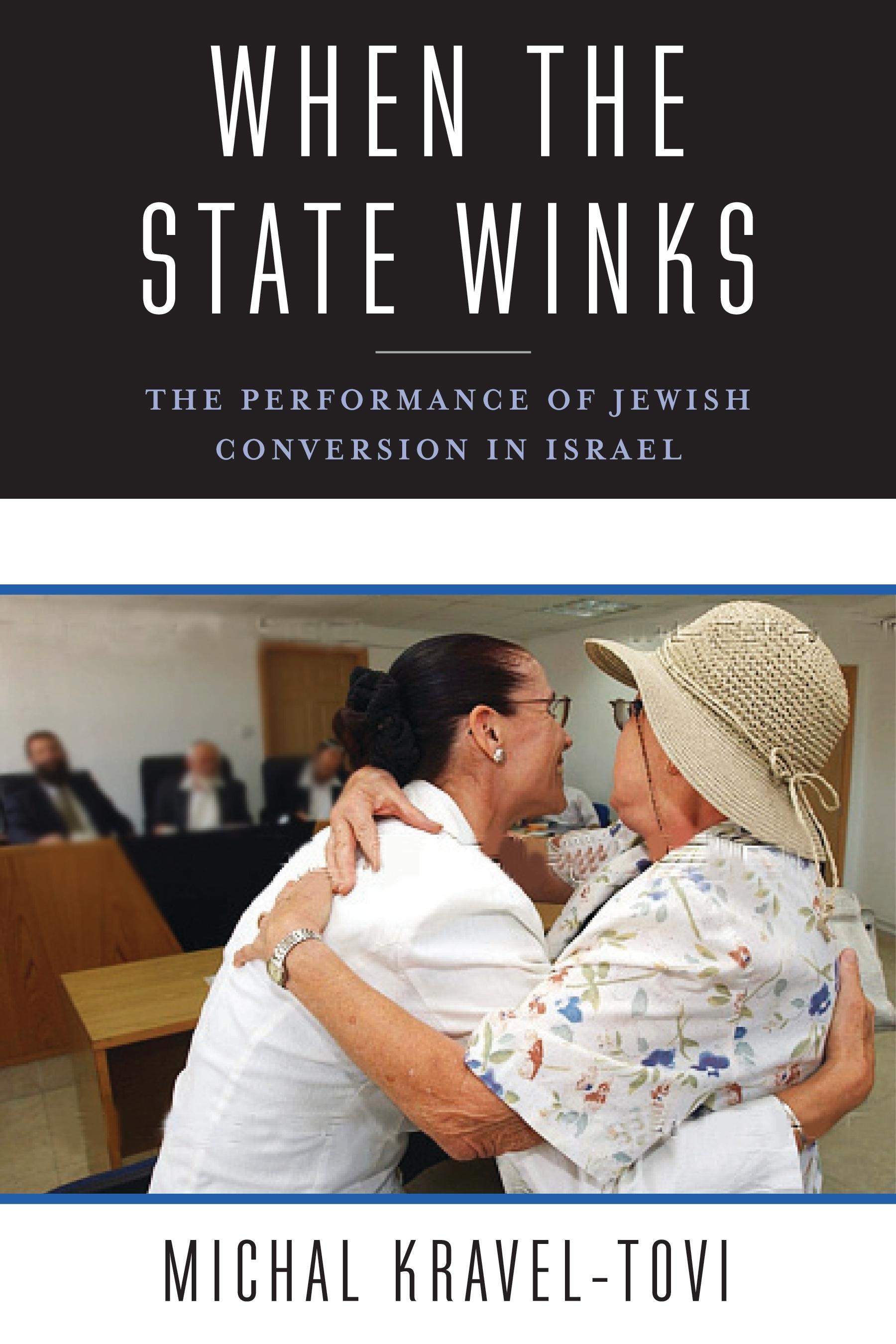
Religious conversion is often associated with ideals of religious sincerity. But in a society in which religious belonging is entangled with ethnonational citizenship and confers political privilege, a convert might well have multilayered motives. Over the last two decades, mass non-Jewish immigration to Israel, especially from the former Soviet Union, has sparked heated debates over the Jewish state’s conversion policy and intensified suspicion of converts’ sincerity. When the State Winks carefully traces the performance of state-endorsed Orthodox conversion to highlight the collaborative labor that goes into the making of the Israeli state and its Jewish citizens.
In a rich ethnographic narrative based on fieldwork in conversion schools, rabbinic courts, and ritual bathhouses, Michal Kravel-Tovi follows conversion candidates—mostly secular young women from a former Soviet background—and state conversion agents, mostly religious Zionists caught between the contradictory demands of their nationalist and religious commitments. She complicates the popular perception that conversion is a “wink-wink” relationship in which both sides agree to treat the converts’ pretenses of observance as real. Instead, she demonstrates how their interdependent performances blur any clear boundary between sincere and empty conversions. Alongside detailed ethnography, When the State Winks develops new ways to think about the complex connection between religious conversion and the nation-state. Kravel-Tovi emphasizes how state power and morality is managed through “winking”—the subtle exchanges and performances that animate everyday institutional encounters between state and citizen. In a country marked by tension between official religiosity and a predominantly secular Jewish population, winking permits the state to save its Jewish face.
Before Memmo my notes were scattered across PDFs. Now a workspace pulls everything into one place — I see exactly what's still left to study.
Memmo's summaries are gold before exams. I don't have to re-read 800 pages two weeks before — just the important parts.
The AI chat has saved me the night before an exam more than once. I just keep asking until I get it — no waiting on a study group to reply.
The quizzes hit exactly what I need to know. Memmo tracks what I get stuck on — so I only practice what's worth it.
Flashcards with spaced repetition are magic. Memmo knows when I'm about to forget something and brings it back.
The AI podcasts are my favorite. I listen on my way to school and get a recap without sitting at a computer.

Handbok i kvalitativa metoder
281 kr

Hållbar utveckling: en introduktion för ingenjörer och andra problemlösare
334 kr

Brymans Samhällsvetenskapliga metoder
390 kr

Projektledning
491 kr

Den orättvisa hälsan: om socioekonomiska skillnader i hälsa och livslängd
326 kr

Organizational Leadership
429 kr

Vetenskapsteori för nybörjare
196 kr

På väg mot läraryrket
172 kr

Det sociala livet i skolan: Socialpsykologiska perspektiv
253 kr

Betygsättningens didaktik
151 kr

Personality
402 kr

Studying Leadership
404 kr

Managing Innovation
477 kr

Introduktion till samhällsvetenskaplig metod
347 kr

The Psychology of Sex and Gender
698 kr

Evidens och kunskap för socialt arbete
207 kr

Introduction to Leadership
605 kr