
Before Memmo my notes were scattered across PDFs. Now a workspace pulls everything into one place — I see exactly what's still left to study.
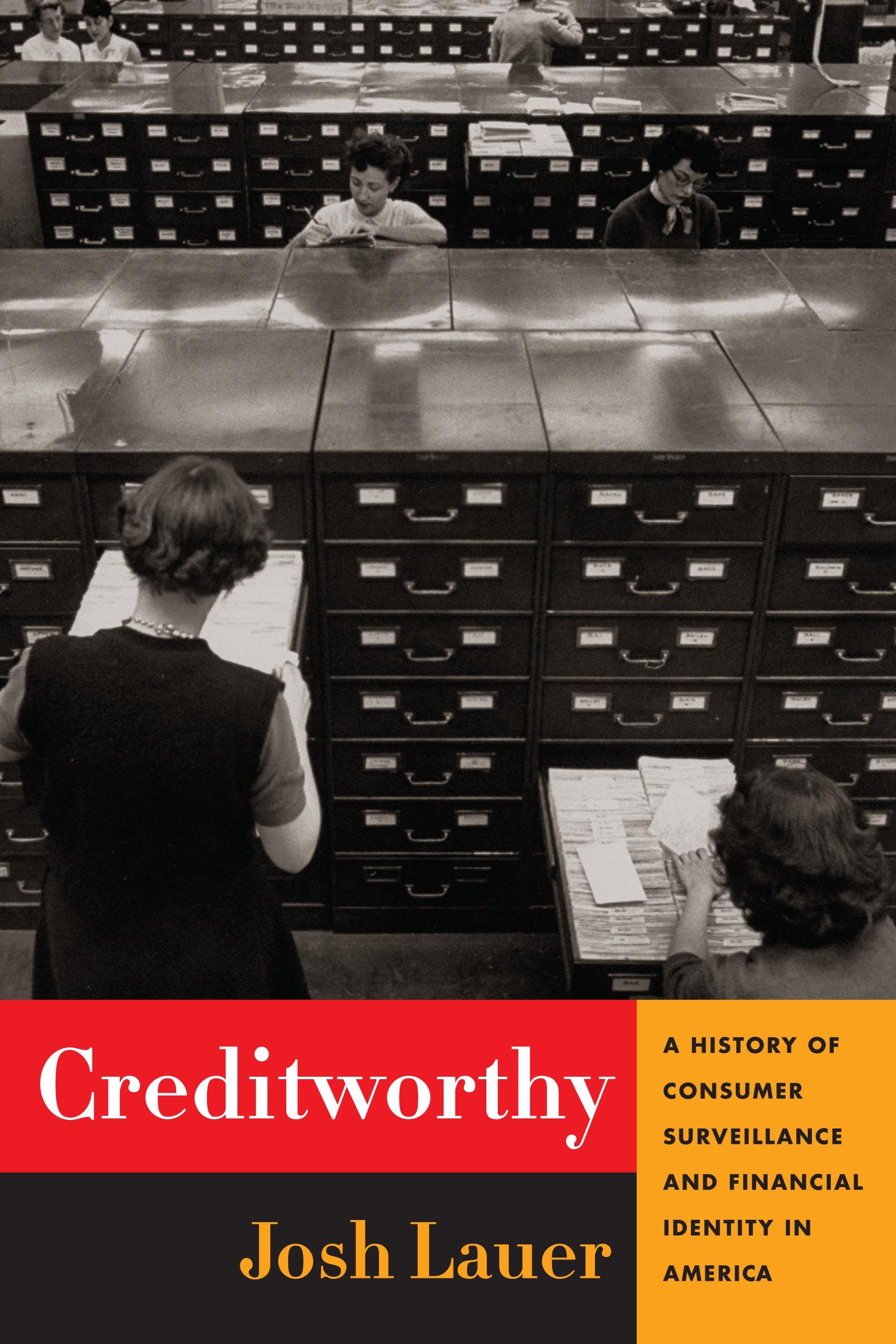
The first consumer credit bureaus appeared in the 1870s and quickly amassed huge archives of deeply personal information. Today, the three leading credit bureaus are among the most powerful institutions in modern life—yet we know almost nothing about them. Experian, Equifax, and TransUnion are multi-billion-dollar corporations that track our movements, spending behavior, and financial status. This data is used to predict our riskiness as borrowers and to judge our trustworthiness and value in a broad array of contexts, from insurance and marketing to employment and housing.
In Creditworthy, the first comprehensive history of this crucial American institution, Josh Lauer explores the evolution of credit reporting from its nineteenth-century origins to the rise of the modern consumer data industry. By revealing the sophistication of early credit reporting networks, Creditworthy highlights the leading role that commercial surveillance has played—ahead of state surveillance systems—in monitoring the economic lives of Americans. Lauer charts how credit reporting grew from an industry that relied on personal knowledge of consumers to one that employs sophisticated algorithms to determine a person's trustworthiness. Ultimately, Lauer argues that by converting individual reputations into brief written reports—and, later, credit ratings and credit scores—credit bureaus did something more profound: they invented the modern concept of financial identity. Creditworthy reminds us that creditworthiness is never just about economic "facts." It is fundamentally concerned with—and determines—our social standing as an honest, reliable, profit-generating person.
Before Memmo my notes were scattered across PDFs. Now a workspace pulls everything into one place — I see exactly what's still left to study.
Memmo's summaries are gold before exams. I don't have to re-read 800 pages two weeks before — just the important parts.
The AI chat has saved me the night before an exam more than once. I just keep asking until I get it — no waiting on a study group to reply.
The quizzes hit exactly what I need to know. Memmo tracks what I get stuck on — so I only practice what's worth it.
Flashcards with spaced repetition are magic. Memmo knows when I'm about to forget something and brings it back.
The AI podcasts are my favorite. I listen on my way to school and get a recap without sitting at a computer.

Handbok i kvalitativa metoder
281 kr

Hållbar utveckling: en introduktion för ingenjörer och andra problemlösare
334 kr

Brymans Samhällsvetenskapliga metoder
390 kr

Projektledning
491 kr

Den orättvisa hälsan: om socioekonomiska skillnader i hälsa och livslängd
326 kr

Vetenskapsteori för nybörjare
196 kr

Organizational Leadership
429 kr

På väg mot läraryrket
172 kr

Det sociala livet i skolan: Socialpsykologiska perspektiv
253 kr

Betygsättningens didaktik
151 kr

Personality
402 kr

Studying Leadership
404 kr

Managing Innovation
477 kr

Introduktion till samhällsvetenskaplig metod
347 kr

The Psychology of Sex and Gender
698 kr

Evidens och kunskap för socialt arbete
207 kr

Introduction to Leadership
605 kr